
Key Words: Silicon Wafer Dicing PCB Depaneling Glass Cutting
Home > News > Company News
【Description】:
This article explains how nitinol stents are made using advanced laser cutting technology. It covers NiTi tube preparation, precision laser cutting of heart stents, post-processing steps like electropolishing and cleaning, and final heat treatment, highlighting key medical manufacturing standards.
Nitinol (Nickel-Titanium alloy) is a highly advanced shape memory material widely used in minimally invasive medical devices, especially cardiovascular implants such as heart stents, vascular scaffolds, and catheter-based structures.
Its unique properties — super elasticity, kink resistance, and thermal shape memory — make it ideal for navigating complex vascular pathways and expanding safely inside the human body. Modern stent manufacturing relies heavily on precision laser cutting technology, which has become the industry standard for producing high-quality nitinol medical implants.
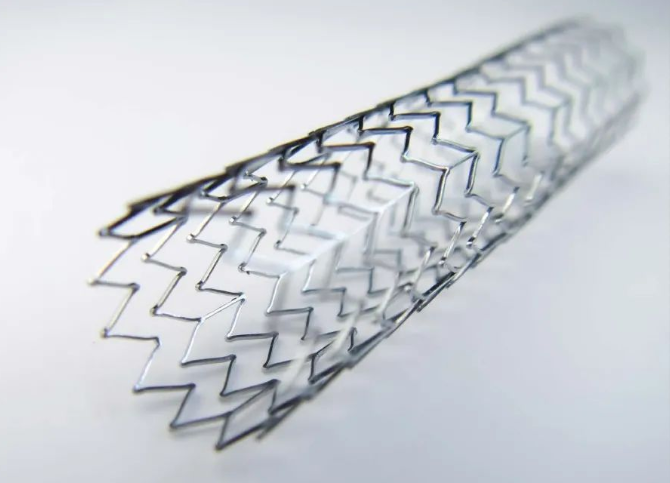
A nitinol stent is a small, expandable metal mesh tube used to open narrowed or blocked blood vessels. It is typically inserted in a compressed form and expands once it reaches body temperature. The working principle is based on:
Low-temperature deformation (martensite phase)
Body-temperature recovery (austenite phase)
Controlled structural expansion inside vessels
For this reason, the accuracy of laser cutting directly determines stent performance, safety, and fatigue life.
The manufacturing of nitinol stents involves several highly precise steps:
Medical-grade materials such as NiTi (Nitinol), SUS316L stainless steel, SUS304 stainless steel, and β-Titanium alloys are processed into ultra-thin metal tubes with strict dimensional control.
The most critical step is laser cutting of the stent pattern. A high-precision fiber laser system or ultrafast laser system is used to cut micro-scale geometries into the metal tube.
Key requirements include:
Kerf width control at micron level
Smooth strut edges
Minimal heat affected zone (HAZ)
High repeatability for complex patterns
This process defines the final mechanical properties of the stent, including radial strength, flexibility, fatigue resistance, and expansion uniformity.
In some advanced designs, laser engraving is used for identification markings, micro-texture structuring, and surface functionalization. This ensures traceability and functional optimization in medical environments.
After laser cutting, the stent undergoes multiple finishing processes:
Nano-scale electropolishing
Chemical cleaning (removal of oxides and debris)
Ultrasonic cleaning
Heat treatment for shape memory optimization
Final surface roughness can reach Ra ≤ 0.008 μm (mirror-level finish). This is essential for reducing thrombosis risk, improving biocompatibility, and ensuring smooth blood flow.
The stent is thermally treated to “program” its final expanded shape. Once deployed in the human body or warmed above transition temperature, it automatically returns to its designed structure.
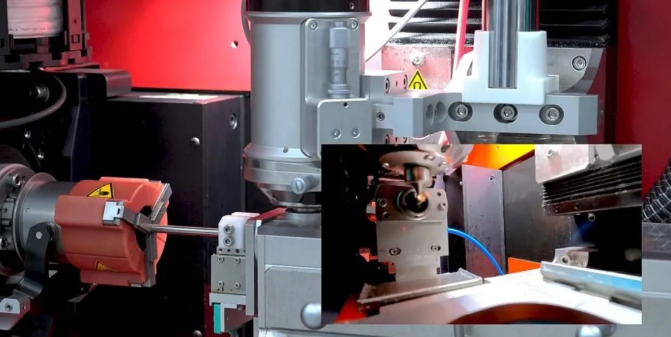
Laser cutting has become the dominant technology in stent manufacturing because it offers:
Ultra-high precision: Enables micron-level structural accuracy for complex geometries.
Non-contact processing: No mechanical stress or deformation on delicate NiTi tubes.
High repeatability: Ideal for mass production and consistent medical quality.
Flexibility in design: Supports rapid prototyping and customized stent structures.
Compatibility with automation: Enables CNC-controlled, fully automated production lines.
Laser processed nitinol stents are widely used in:
Coronary artery disease treatment
Peripheral vascular intervention
Neurovascular stenting
Aortic aneurysm repair
Biliary and tracheal stents
Catheter-based minimally invasive surgery systems
Typical medical-grade materials include:
Nitinol (NiTi alloy)
Stainless steel SUS316L / SUS304
β-Titanium alloys
Micro-scale medical tubing materials
These materials require extremely stable laser systems to maintain structural integrity during processing.
The manufacturing of nitinol stents is a highly advanced process combining material science, precision laser cutting, and post-processing engineering. Among all steps, laser cutting heart stents is the most critical stage, directly determining the performance and safety of the final medical implant. With the advancement of high-precision laser systems, stent production is becoming more efficient, more accurate, and more suitable for personalized medical applications.
Nitinol stents are manufactured using medical-grade nickel-titanium tubes that are precisely cut using high-precision laser systems. After laser cutting the stent pattern, the structure undergoes electropolishing, cleaning, and heat treatment to activate its shape memory properties.
Laser cutting is essential because it provides micron-level precision without mechanical stress. It allows manufacturers to create extremely complex micro-patterns on nitinol tubes while maintaining structural integrity and ensuring smooth, burr-free edges.
Most modern stent manufacturing uses fiber lasers or ultrafast lasers (picosecond/femtosecond). These systems minimize heat-affected zones and ensure high-precision cutting of delicate medical-grade materials like Nitinol and stainless steel.
Common materials include Nitinol (NiTi alloy), Stainless steel (SUS316L, SUS304), and Titanium alloys. These materials are selected for their biocompatibility, flexibility, and durability.
Advanced laser systems can achieve positioning accuracy down to micron levels (±0.01 mm or better depending on system configuration), ensuring highly consistent and repeatable stent geometries.
After laser cutting, stents typically undergo electropolishing (nano-scale surface smoothing), chemical cleaning (oxide removal), ultrasonic cleaning, and heat treatment for shape memory activation. These steps ensure biocompatibility and optimal performance.
Surface roughness directly affects blood flow and biocompatibility. Medical-grade stents often require mirror-like finishes (e.g., Ra ≤ 0.008 μm) to reduce thrombosis risk and improve patient safety.
Yes. Laser cutting is widely used for rapid prototyping and low-volume production because it allows quick design iteration, high precision, and flexible programming for different stent geometries.
Laser-cut stents offer higher precision and consistency, zero mechanical deformation, complex micro-geometry capability, faster production cycles, and better fatigue resistance after finishing.
Laser-cut stents are mainly used in cardiovascular treatment (coronary stents), peripheral vascular intervention, neurovascular surgery, minimally invasive medical devices, and catheter-based implant systems.
Looking for high-precision laser medical systems for stent cutting or micro-tubing processing?
Contact Chanxan Medical Experts| Free solution