
Key Words: Silicon Wafer Dicing PCB Depaneling Glass Cutting
Home > News > Industry News
【Description】:
Overcome brittleness bottlenecks with Chanxan quartz glass laser cutting solutions. Achieve 3x higher edge strength and zero micro-cracking for displays & electronics.
Silicon carbide (SiC) has emerged as one of the most important materials in modern power electronics, prized for its wide bandgap, high mechanical strength, and strong heat transfer performance. These same properties make SiC wafer laser cutting essential — and genuinely difficult. SiC's growing role in electric vehicles, solar inverters, and radar systems has placed real pressure on manufacturers to find a cutting process that can keep pace with rising demand, because SiC is simultaneously very hard and very brittle, making it one of the more challenging semiconductor materials to process, particularly in downstream manufacturing steps.
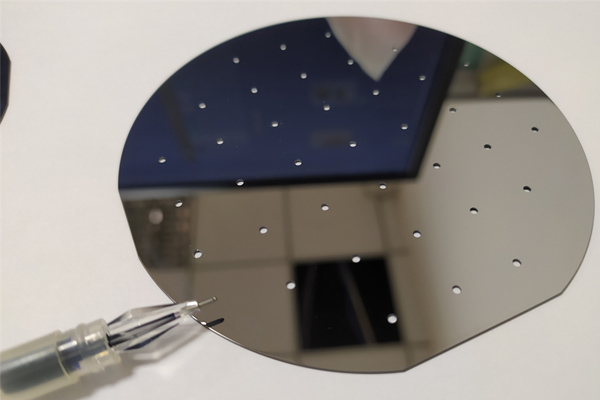
Wafer cutting is one of the most consequential steps in SiC power device manufacturing. The method and quality of the cut directly affect the resulting wafer's thickness, surface roughness, dimensional accuracy, and overall production cost, all of which feed directly into the performance of the finished power device. Get the cutting process wrong, and every downstream step inherits the problem.
Today, SiC wafer cutting is generally split between two approaches: diamond blade cutting and laser cutting. Diamond blade cutting is the more traditional mechanical method, but as with sapphire substrate dicing and silicon wafer separation, mechanical tooling runs into the same fundamental limitations when confronted with an extremely hard, brittle material — tool wear, mechanical stress, and compromised edge quality.
Laser cutting addresses these limitations directly. The process uses a focused laser beam to process the surface or interior of the SiC workpiece and separate it, without any physical tool ever contacting the material. Because it is non-contact, laser cutting avoids the tool-wear and mechanical-stress problems that plague blade-based methods, which translates into meaningfully improved roughness and processing accuracy on the cut surface. This is the same core advantage that defines UV laser dicing of sapphire and non-destructive laser scribing of silicon: removing mechanical contact from the equation removes an entire category of stress-related defects.
The benefits extend past the cut itself. Laser cutting can reduce the burden on subsequent polishing and finishing steps, since a cleaner initial cut requires less corrective processing afterward. This in turn reduces material damage and overall cost, while also cutting down on the environmental impact associated with traditional grinding and polishing processes — an increasingly relevant consideration as production volumes scale up across the EV and power-electronics supply chains.
It's worth noting that laser cutting's role in this space is not new — the underlying technology has a long track record in silicon carbide cutting, silicon ingot cutting, and quartz material cutting, including laser cutting and splitting processes used in color filter manufacturing. SiC wafer cutting represents a natural extension of that established capability into a newer, harder, and increasingly strategically important material.
Taken together with UV laser dicing for sapphire, wafer laser marking for chip traceability, quartz and glass laser cutting for displays and automotive applications, and silicon wafer cutting for fingerprint and camera modules, SiC laser cutting completes a picture of an industry-wide shift. Across nearly every hard or fragile substrate used in modern electronics — sapphire, silicon, quartz, glass, and now silicon carbide — laser-based, non-contact processing is displacing mechanical cutting as the standard, driven by the same combination of higher precision, better yield, and lower long-term cost.
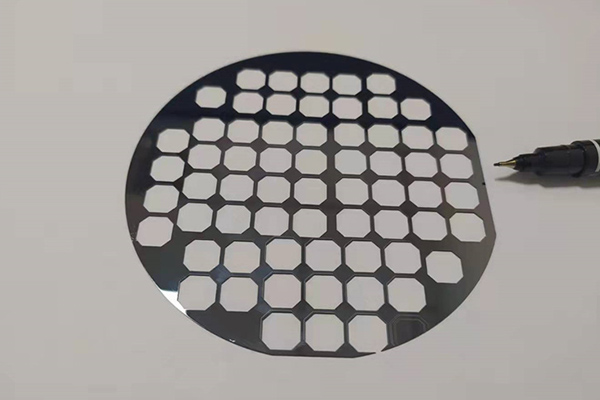
Need high-precision, crack-free laser dicing solutions for Silicon Carbide (SiC) wafers or hard semiconductor substrates?
Contact Chanxan SiC Experts| Free solution