

Key Words: Silicon Wafer Dicing PCB Depaneling Glass Cutting
Home > News > Company News
【Description】:
laser cutting machine CW -1390 gives excellent output on paper and is widely used for sticker or label
Future development of laser die cutting
▼

Application field
In the future, laser die cutting technology will have room for development in the following areas, and its market share will gradually increase.
(1) Web labeling field
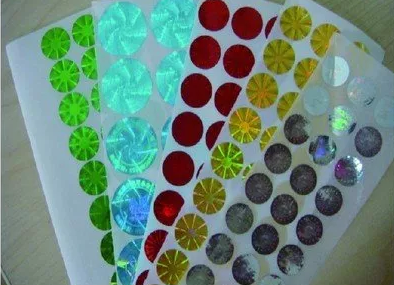
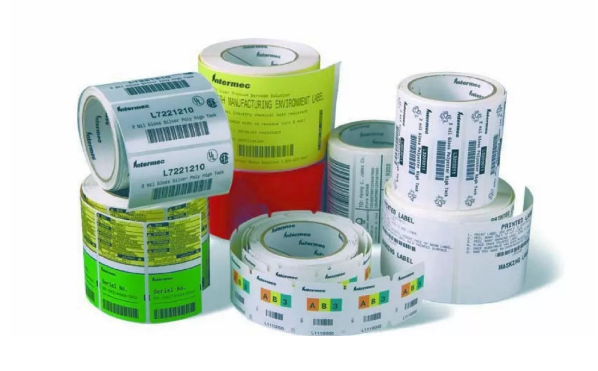
Nowadays, there are many kinds of roll label materials, including self-adhesive paper, PET, PT and other film, gold foil, silver foil and so on. Laser die cutting on these materials perfectly demonstrates its cutting flexibility. The label printing volume has also been changed from the original large order to multiple batches and small batches. Especially for special promotion products, the style is novel and the changes are frequent. The short order advantage and flexible personalization of laser die cutting are highlighted.
(2) Combined business stickers
Commercial composite stickers are die-cut files of different shapes and different customers. These products are small in number and different in shape, and often have small die-cut graphics. Traditional die cutting is aimed at this kind of business, making knife molds difficult, long alignment time, and high production costs. Laser die-cutting equipment does not need to make a die, and can directly obtain the die file through the computer, and can complete the die-cut registration and laser parameter settings in a short time.
(3) Packaging jam
Cardboard die cutting of complex lines has always been an area that traditional die cutting dare not touch. The production process of the knife plate can not meet the requirements, and the customer's recognition of the finished effect is not high. Such as greeting cards, craft gift cards, paper cutting, etc.
2. Shaped packaging
In special-shaped packaging, the traditional die-cutting process is complicated, and the processes such as die-cutting, creasing, and easy tearing line are cumbersome. These are the short boards of traditional die cutting.
Laser die cutting can just meet the requirements of the above products and processes. By setting different laser parameters, complex pattern lines, half cutting, full cutting, and surface cutting can be completed at one time. Fully reflects the "magic" of laser die cutting.
3. Die cutting processing method
Then analyze the development of laser technology in the field of unprinted die cutting according to the die cutting processing method.
Laser die cutting equipment mainly uses intermittent die cutting and flying die cutting.
Intermittent die-cutting starts when the target print is at rest. It takes a certain amount of time to run to a fixed position, and when the format is increased, it is difficult to achieve multi-laser stitching. Flying die cutting is a target printed product in continuous continuous linear motion. This die-cutting processing method will perform die-cutting as the product travels, and the die-cutting waiting time is short. For large-format printed matter, multi-laser stitching can be achieved, improving die-cutting efficiency and increasing the range of die-cutting.
With the continuous development of laser technology, software technology and digital control, the laser cutting lines will become thinner and faster, and the laser cutting speed will become faster and faster. In this way, the effect of laser die cutting products will be closer to or even exceed traditional die cutting. At the same time, the efficiency of die cutting will gradually increase, the advantages of laser die cutting equipment will become more and more obvious, and will gradually expand the market share in the field of post-press die cutting.
An "eyeball economy" with creativity and individuality is gradually forming and is rapidly fermenting. On the road of future development, in order to meet the personalized creative needs of customers, the printing industry will usher in the development prospects of digitalization, automation, and intelligence, and laser die cutting will become an inevitable trend in the development of the printing industry.
| Free solution