
Key Words: Silicon Wafer Dicing PCB Depaneling Glass Cutting
Home > News > Industry News
【Description】:
Explore how ultrafast laser processing (femtosecond and picosecond lasers) enables precision micromachining, cutting, drilling, and thin film processing in modern electronics manufacturing.
The electronics manufacturing industry is rapidly evolving toward miniaturization, high-density integration, flexible materials, and advanced packaging technologies. Traditional mechanical processing methods often struggle to meet the increasingly strict requirements for precision, yield, edge quality, and thermal control. As a result, ultrafast laser processing has become one of the most important enabling technologies in modern electronic manufacturing.
Ultrafast lasers, particularly femtosecond and picosecond laser systems, generate extremely short pulse durations that allow materials to be processed with minimal heat-affected zones (HAZ). This “cold processing” capability makes ultrafast lasers ideal for precision micromachining of sensitive electronic materials such as glass, sapphire, ceramics, silicon, copper foil, flexible polymers, and multilayer composites.
Compared with conventional laser systems and mechanical tools, ultrafast laser processing offers several significant advantages for electronics production:
Micron-level precision
Minimal thermal damage
Non-contact processing
Excellent edge quality
High repeatability and consistency
Compatibility with fragile and ultra-thin materials
Flexible processing without tooling changes
Easy integration into automated production lines
These advantages make ultrafast laser systems highly suitable for manufacturing advanced consumer electronics, semiconductor devices, wearable technologies, automotive electronics, and precision electronic components.
One of the most common applications of ultrafast lasers in electronics manufacturing is precision laser cutting. Modern smartphones, tablets, smartwatches, and foldable devices rely heavily on ultra-thin and brittle materials that require highly controlled processing.
Ultrafast laser cutting is widely used for:
OLED flexible display cutting
Cover glass cutting
Sapphire processing
Camera lens cover cutting
Flexible circuit board contour cutting
Ceramic substrate cutting
Micro-component trimming
Because femtosecond lasers produce almost no thermal deformation, manufacturers can achieve smooth edges, reduced cracking, and improved product reliability.
In flexible OLED display manufacturing, ultrafast lasers are especially valuable for cutting polyimide (PI) films and multilayer optical materials without causing delamination or carbonization.
Laser micro drilling has become essential for high-density electronics manufacturing. As devices continue shrinking in size, PCB and semiconductor packaging technologies require increasingly smaller and more accurate microvias.
Ultrafast laser drilling is commonly applied in:
HDI PCB microvia drilling
FPC drilling
Through Glass Via (TGV) processing
Semiconductor substrate drilling
Ceramic substrate drilling
MEMS device fabrication
Compared with mechanical drilling, ultrafast laser drilling provides cleaner hole quality, higher aspect ratios, and superior positioning accuracy.
For advanced semiconductor packaging, TGV drilling using picosecond and femtosecond lasers enables high-speed processing of ultra-thin glass substrates while minimizing microcracks and chipping.
Modern electronic products contain complex multilayer structures that require highly selective material removal processes. Ultrafast laser systems can precisely remove coatings, conductive films, and functional layers without damaging underlying materials.
Key applications include:
ITO film removal
Coating removal
Laser stripping
Paint removal
Copper layer patterning
OLED laser lift-off (LLO)
Battery electrode coating removal
In OLED display manufacturing, laser lift-off technology is widely used to separate flexible displays from temporary carrier substrates. Ultrafast lasers improve process stability and reduce thermal stress during film separation.
Selective coating removal is also critical in lithium battery manufacturing, where laser systems precisely remove electrode coatings to prepare welding areas for battery tabs and busbars.
Ultrafast laser technology is increasingly used in precision joining and micro welding applications across electronics manufacturing.
Common laser welding applications include:
Battery tab welding
Busbar welding
Micro connector welding
Sensor assembly
Medical electronics assembly
Precision metal component joining
Laser welding offers several advantages over traditional soldering methods:
Smaller weld seams
Reduced heat input
Higher welding precision
Improved electrical conductivity
Better automation compatibility
Laser curing and precision bonding technologies are also widely used for optical component assembly, camera module production, and MEMS packaging.
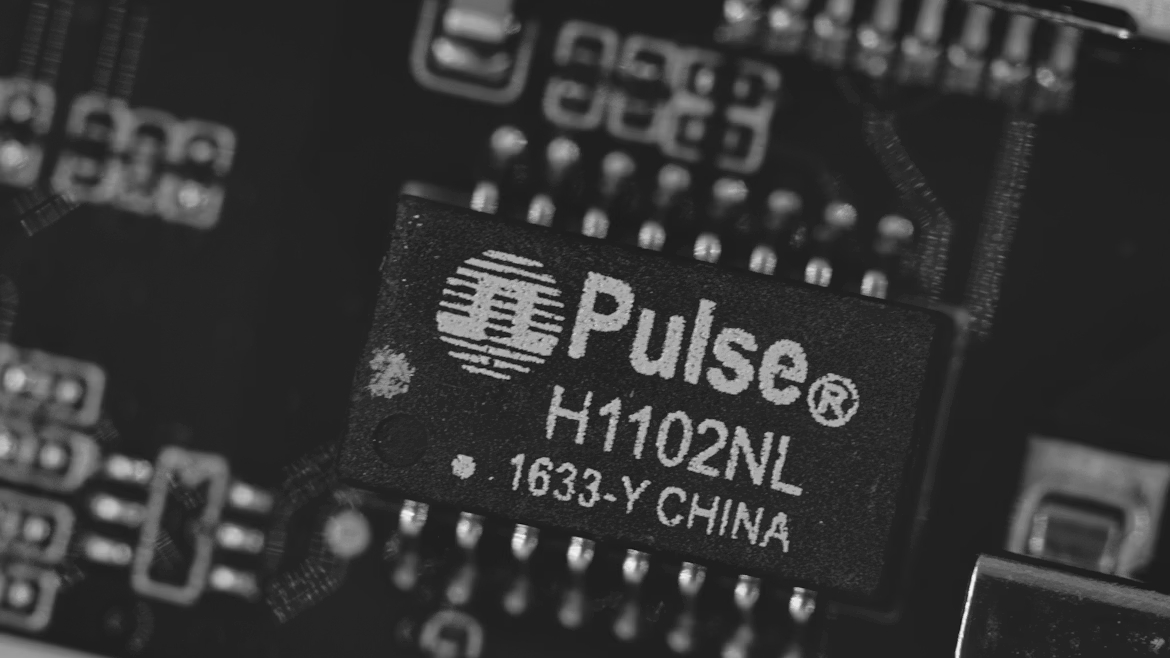
As electronics manufacturing becomes more automated and traceability requirements increase, laser marking systems play a critical role in product identification and quality control.
Ultrafast laser marking enables:
QR code marking
Data Matrix marking
PCB traceability marking
Black marking on anodized aluminum
Precision engraving on miniature components
Laser marking creates permanent, high-contrast markings that resist wear, chemicals, and environmental exposure. This is especially important for automotive electronics, semiconductor packaging, and medical electronic devices.
Surface functionalization is another growing area for ultrafast laser processing in electronics manufacturing.
Applications include:
Surface texturing
Functional etching
Surface activation
Hydrophobic surface generation
Heat dissipation enhancement
Adhesion improvement
Laser surface texturing can improve thermal management in semiconductor devices and electronic housings by increasing surface area and optimizing heat transfer performance.
Surface activation is also commonly used before adhesive bonding or electroplating to improve coating adhesion on plastics and metals.
As electronics continue evolving toward smaller, thinner, and more intelligent designs, the demand for ultrafast laser micromachining will continue growing.
Emerging applications include:
Micro LED manufacturing
Advanced semiconductor packaging
Foldable electronics
AR/VR optical systems
Wearable medical electronics
Automotive sensor modules
AI hardware components
With the advantages of high precision, low thermal impact, and excellent automation compatibility, ultrafast laser systems are becoming indispensable tools for next-generation electronics manufacturing.
Manufacturers adopting ultrafast laser solutions can achieve higher product quality, greater production flexibility, and improved manufacturing efficiency while meeting increasingly demanding industry standards.
| Free solution
Previous: Laser Processing in Semiconductor Manufacturing: 5 Key Applications
Next: Medical Device Data Matrix Laser Marking: The Application Guide