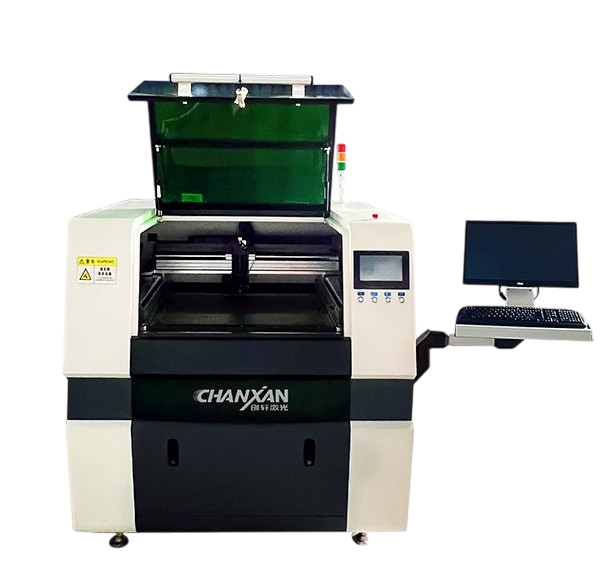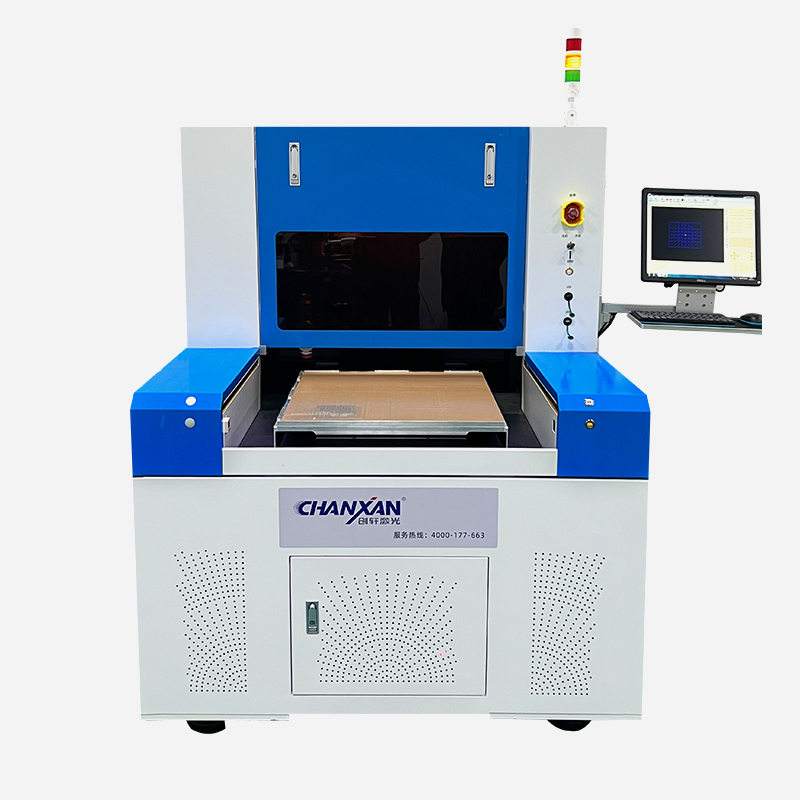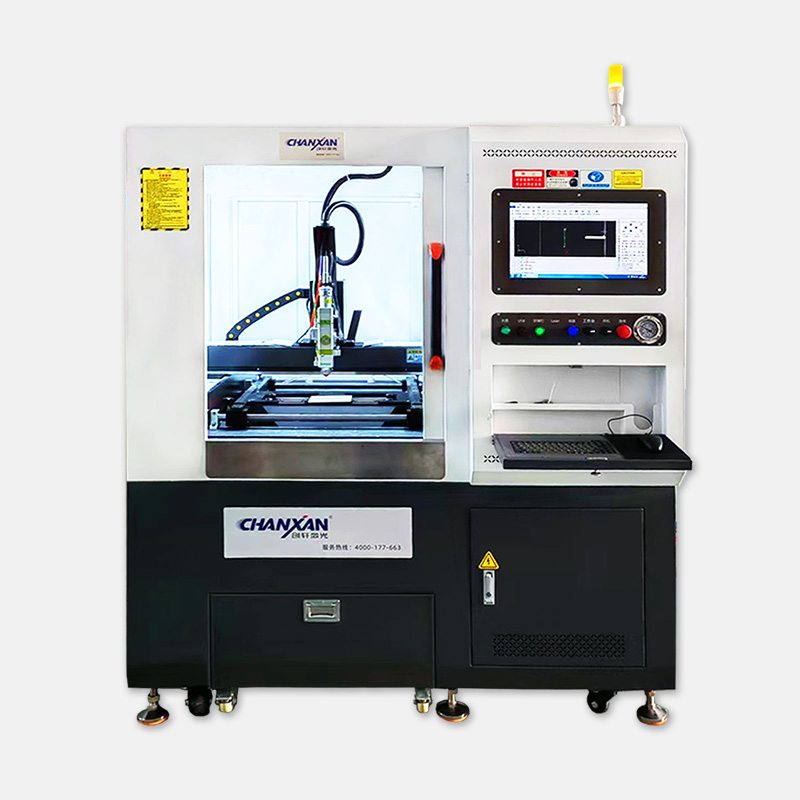

Key Words: Silicon Wafer Dicing PCB Depaneling Glass Cutting
Home > News > Industry News
【Description】:
Picosecond lasers achieve absolute burr-free scribing by operating via non-thermal photo-ablation (cold processing). Because the pulse duration is shorter than the material's electron-phonon relaxation time, the silicon vaporizes instantly before heat can conduct into the substrate.
TL;DR (Too Long; Didn't Read)
In high-density semiconductor packaging and microelectronics manufacturing, dicing monocrystalline or polycrystalline silicon wafers presents severe challenges regarding backside chipping and surface burrs. Picosecond lasers achieve absolute burr-free scribing by operating via non-thermal photo-ablation (cold processing). Because the pulse duration is shorter than the material's electron-phonon relaxation time, the silicon vaporizes instantly before heat can conduct into the substrate. Paired with high-speed digital galvanometer scanning pathways, this ultra-short pulse width completely eliminates micro-cracks, recast layers, and molten slag, ensuring a pristine die edge profile for subsequent wafer thinning and wire bonding.
Traditional nanosecond lasers or diamond dicing saws rely heavily on photothermal melting or mechanical shearing forces. When a laser pulse interacts with a silicon wafer for too long, the energy diffuses sideways into the crystal lattice, melting the boundary walls. As the liquid silicon cools, it forms a recast layer, structural slag, and jagged edge burrs. Chanxan Laser ultra-short picosecond systems utilize an ultra-short pulse width (measured in trillionths of a second). The energy is deposited into the material at a rate faster than the thermal diffusion time of the silicon crystal matrix, forcing the targeted track to transition instantly from solid to gas phase. This direct sublimation ensures that adjacent structures experience zero thermal distress.
Attempting to penetrate or heavy-scribe a silicon wafer in a single, high-energy slow pass traps ionized gas and expanding plasma vapor within the narrow trench. This localized micro-explosion exerts tremendous mechanical back-pressure against the fragile crystalline sidewalls, leading to significant micro-chipping and tensile stress fractures on the wafer backside. The optimal configuration involves high-frequency, optimized energy density pulses combined with high-velocity galvanometer scanning tracking. By executing multiple fast, incremental scanning passes, the system gradually clears out thin material strata, allowing vaporized particles to vent out unobstructed and ensuring zero micro-fracture propagation.
Traditional mechanical dicing blades require substantial kerf streets (often exceeding 60 to 100 microns) to prevent immediate wafer cracking, sacrificing valuable semiconductor wafer real estate. Ultra-short pulse laser systems, paired with premium high Numerical Aperture telecentric lenses, focus the beam down to a microscopic spot diameter of under 15 microns. This extremely concentrated spatial energy focus generates an ultra-narrow scribing trench, dropping the heat affected zone to near zero and allowing designers to maximize circuit nesting layout densities across expensive silicon wafers.
The following performance matrix defines the technical tolerances and processing output benchmarks across different industrial wafer dicing configurations on a standard 0.2mm thin silicon wafer:
| Processing Technology Configuration | Edge Burr Height Profile | Heat Affected Zone (HAZ) | Backside Chipping Dimensions | Post-Scribing Cleansing |
|---|---|---|---|---|
| Traditional Mechanical Dicing Saw | Variable (Heavy mechanical flash) | None (Mechanical stress only) | exceeding 25 microns | Mandatory high-pressure wash |
| Standard Industrial Nanosecond Laser | 15 microns to 30 microns (Molten slag) | 30 microns to 50 microns | Minor micro-cracking risk | Ultrasonic chemical solvent bath |
| Chanxan Advanced Picosecond Workstation | Absolute Zero (Burr-Free) | under 3 microns | under 5 microns (Prismatic Edge) | None (Ready for thinning) |
Implementing ultra-short pulse non-thermal laser processing is critical across high-end electronics and optical manufacturing sectors where micro-scale edge perfection is non-negotiable:
High-Density Semiconductor Memory Packaging: Scribing dense multi-die Flash and DRAM silicon arrays where kerf streets are minimized to enhance wafer space efficiency. Clean edge execution prevents internal structural layer separation during rapid pick-and-place automation.
Silicon Photonics and Optical Sensors: Processing delicate image sensor dies and optical transceiver circuits. Eliminating thermal melting and molten recast slag ensures that sensitive surface photodiodes and microscopic micro-lens arrays remain completely unpolluted by debris.
Ultra-Thin MEMS Micro-Devices: Dicing complex Micro-Electro-Mechanical Systems containing fragile internal mechanical bridges or deep microscopic cavities. Burr-free processing removes the risk of flying debris or micro-cracks compromising the mechanical resonance tolerances.
To satisfy rigorous cleanroom chip yield standards and eliminate microscopic defect profiles, Chanxan Laser recommends the following professional hardware configurations:
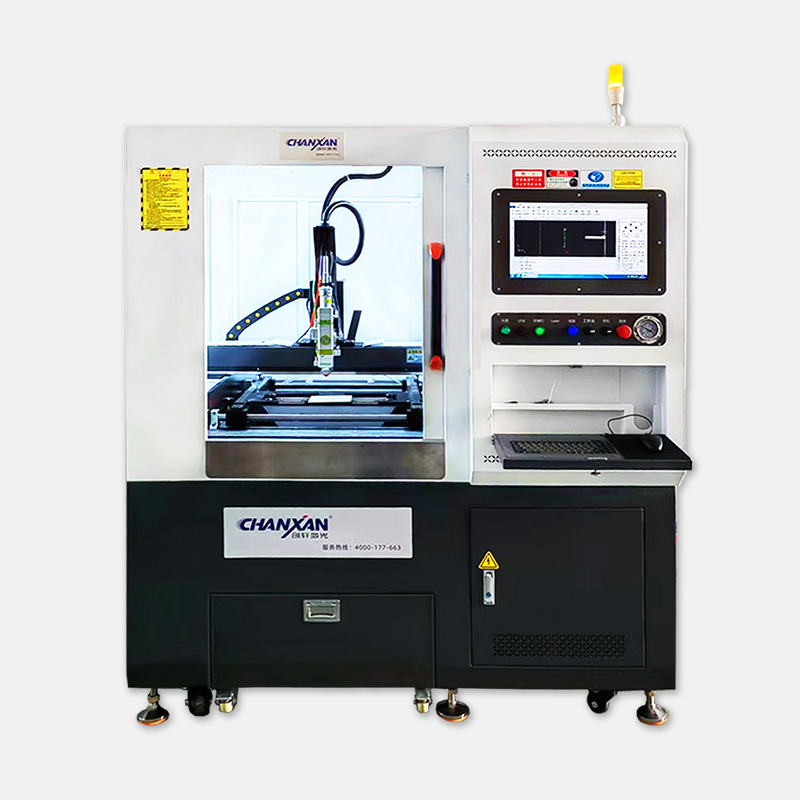
The flagship system for absolute burr-free scribing, cutting, and micro-drilling of delicate semiconductor substrates. This versatile work platform supports multiple laser sources options, allowing for seamless integration of high-performance ultra-short picosecond green or UV configurations to completely eliminate thermal defects via true cold sublimation ablation.
Multi-Light Options: Supports optimized wavelengths perfectly tuned to match the specific absorption characteristics of silicon and underlying dielectric thin films.
Telecentric Optical Path: Employs custom precision telecentric field lenses to ensure the laser beam strikes the silicon wafer at a perfect 90-degree orthogonal vector across the processing envelope.
Porous Vacuum Clamping: Features integrated flat segmented micro-porous vacuum fixtures to maintain excellent wafer coplanarity, neutralizing focal depth drift.
Best Suited For: High-density semiconductor die singulation, wafer dicing, and ultra-thin MEMS structuring.
A high-efficiency, high-speed industrial configuration engineered for rapid scribing routines. Utilizing fine pulse modulation configurations and high peak power density, it offers exceptional performance and cost-effectiveness for continuous production lines.
High Peak Power: Delivers short, high-intensity pulses to achieve fast material removal with limited energy interaction time on wafer surfaces.
Galvanometer Sync Software: Pairs perfectly with high-speed digital scanner modules to handle complex array multi-pass cutting routes without positional deviation.
Industrial Robustness: Engineered with a high-stability granite base to eliminate mechanical micro-vibrations during heavy continuous operations.
Best Suited For: High-speed silicon wafer scribing, photovoltaic solar cell profiling, and rigid circuit substrates.
Q: Does picosecond laser scribing introduce micro-cracks inside the silicon crystal lattice?
A: No. Unlike nanosecond processing, which creates stress-inducing temperature gradients, picosecond ablation transfers energy directly to the electronic system of the silicon atom matrix before thermal vibration occurs. This completely suppresses residual tensile stress propagation, ensuring a stress-free crystalline structure with zero micro-crack defects.
Q: Can this technology scribe silicon wafers that have thin metal or oxide layers on the surface?
A: Yes. Chanxan Laser's high-performance picosecond workstations easily handle multi-layer structures. The ultra-short pulse width cuts cleanly through surface copper, aluminum, or passivating silicon dioxide layers without inducing film peeling, delamination, or metallic edge rolling.
Q: What assistance gas configuration is recommended for wafer scribing?
A: For silicon wafer micro-machining, low-pressure clean dry air or Nitrogen gas is delivered through a coaxial nozzle structure. The goal is to clear out submicron debris vapor clouds and protect the final processing lens, rather than performing a heavy thermal melting blow-out.
Disclaimer: To protect intellectual property and honor customer Non-Disclosure Agreements (NDAs), specific corporate background details in application scenarios have been anonymized. However, all technical processing parameters, workflow data matrices, and operational cost-effectiveness metrics remain fully verified by Chanxan Laser's engineering applications laboratory.
| Free solution
Previous: What Is the Maximum Aspect Ratio for High-Precision Laser Hole Drilling in Quartz?
Next: CO2 vs. UV Laser for Ceramic Substrate Dicing: How to Choose?