
Key Words: Silicon Wafer Dicing PCB Depaneling Glass Cutting
Home > News > Industry News
【Description】:
Choosing femtosecond systems eliminates microscopic heat-affected zones, prevents micro-cracks, and suppresses molten recast burrs, radically slashing post-processing chemical polishing costs and eliminating structural fatigue failure risks.
TL;DR (Too Long; Didn't Read)
In the ultra-precision fabrication of implantable medical devices like coronary and peripheral stents, minimizing edge roughness and material degradation is non-negotiable. While picosecond lasers deliver excellent micro-machining capabilities, femtosecond lasers scale pulse widths down to quadrillionths of a second, completely bypassing thermal equilibrium boundaries. This ultra-short duration ensures true cold-ablation processing of Nitinol, Cobalt-Chromium, and bio-resorbable polymers. Choosing femtosecond systems eliminates microscopic heat-affected zones, prevents micro-cracks, and suppresses molten recast burrs, radically slashing post-processing chemical polishing costs and eliminating structural fatigue failure risks.
Both picosecond and femtosecond lasers are categorized as ultrafast systems capable of non-thermal ablation. However, when cutting high-precision medical stents with complex, fragile struts, pulse width differences become critical. A picosecond pulse (trillionths of a second) is brief enough to severely restrict thermal conduction, yet it still allows minor photon-to-phonon energy transfers within metal lattices like Nitinol. This minor leakage can generate a submicron heat-affected zone and superficial recast layers. A femtosecond laser (quadrillionths of a second) deposits its total pulse energy faster than the thermal lattice relaxation time. The targeted material ionizes via multi-photon absorption instantly, bypassing the liquid phase completely to prevent micro-burrs and edge deformation.
Medical stents endure millions of cyclic expansions inside arterial pathways, demanding flawless structural integrity. Standard thermal or long-pulse laser dicing induces microscopic tensile stresses along strut radii, creating micro-cracks that propagate into catastrophic structural failures. By deploying femtosecond cold ablation, the molecular bonds of the alloy are broken cleanly. This stress-free cutting path maintains the native grain orientation of the biocompatible alloy, preserving structural flexibility, maintaining wall thickness uniformity, and preventing delayed mechanical failure.
Stents sliced via nanosecond or traditional picosecond configurations require intensive post-process electrochemical polishing and ultrasonic acid etching to strip away thermal slag and rough recast burrs. For next-generation bio-resorbable polymer stents (PLLA), these chemical baths can degrade the polymer matrix. Femtosecond precision processing yields clean, burr-free strut sidewalls straight out of the machining chamber. Reducing post-processing steps preserves thin-wall designs and significantly increases automated optical inspection (AOI) yields.
The following evaluation matrix illustrates the material and mechanical output variations between ultrafast technologies when profiling a standard 150-micron thin-walled Nitinol cardiovascular stent tube:
| Processing Parameter | Industrial Picosecond Laser Machine | High-Precision Femtosecond Laser Machine |
|---|---|---|
| Typical Pulse Duration | 1 picosecond to 15 picoseconds | 100 femtoseconds to 400 femtoseconds |
| Heat Affected Zone (HAZ) | under 5 microns (Ultra-narrow) | Absolute Cold Process |
| Sidewall Surface Roughness (Ra) | ~ 0.5 microns to 0.8 microns | under 0.2 microns (Mirror finish quality) |
| Recast Layer and Burrs | Minor superficial micro-droplets | Absolute Zero (Burr-free strut profile) |
| Bio-resorbable Polymer Compatibility | Moderate (Requires precise power balancing) | Excellent (Zero structural polymer damage) |
| Post-Processing Polishing Time | Standard cycle required | Minimized or Eliminated entirely |
Deploying high-frequency, ultra-short pulse configurations is essential across medical component assembly lines where precision limits are heavily regulated:
Intravascular Coronary Nitinol Stents: Profiling dense, flexible mesh structures from raw shape-memory alloy tubes. Eliminating micro-chipping and thermal fatigue nodes ensures safe long-term deployment inside arterial geometries.
Bio-absorbable Scaffold (BRS) Processing: Slicing temperature-sensitive poly-L-lactic acid (PLLA) polymer tubes. Using femtosecond pulses prevents molecular degradation and thermal distortion, preserving designated drug-delivery degradation schedules.
Neurovascular Flow Diverters and Heart Valves: Cutting micro-scale, thin-walled frame architectures used in brain aneurysm interventions. Burr-free precision cutting prevents micro-tears in arterial walls and ensures optimal biocompatibility.
To satisfy strict international regulatory compliance and maximize multi-axis precision on micro-tubes, Chanxan Laser recommends the following professional industrial configurations:
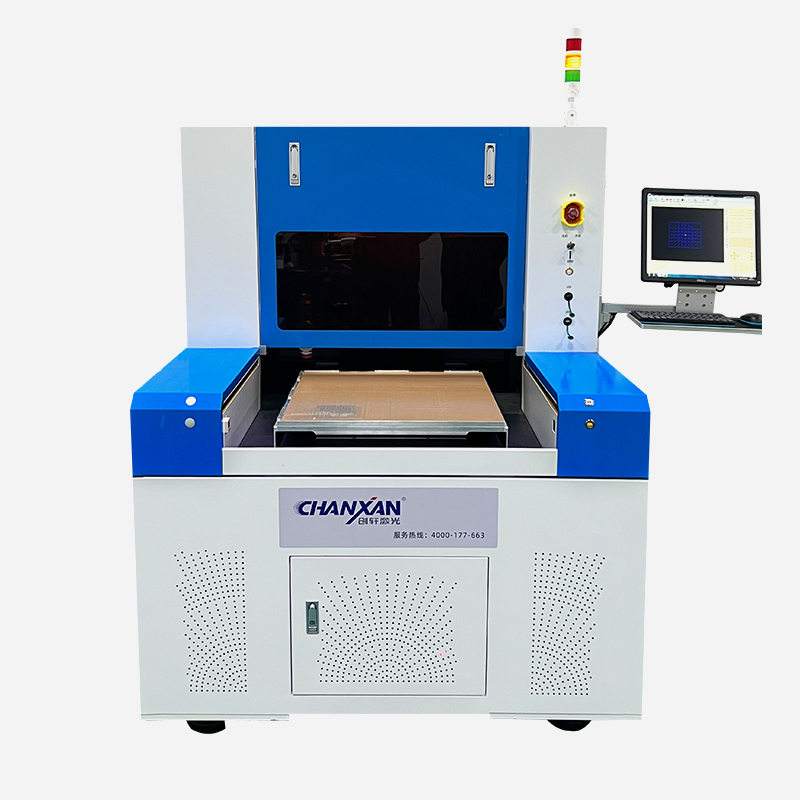
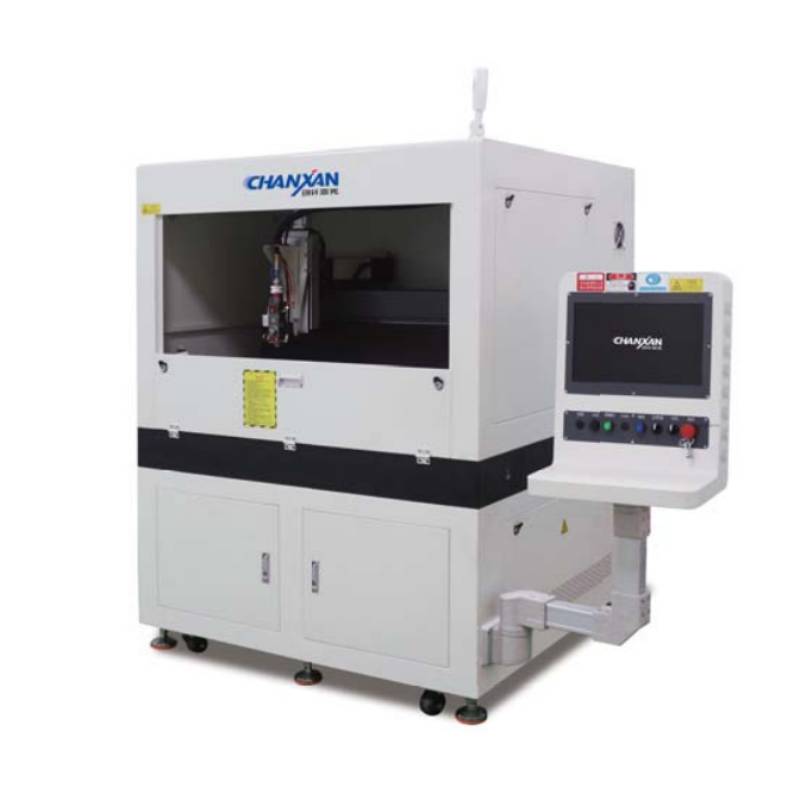
The flagship cleanroom solution engineered for elite medical device manufacturing. Utilizing ultra-short laser pulse options, this platform delivers unmatched edge quality, making it the industry benchmark for complex cardiovascular stent cutting and bio-resorbable micro-machining.
True Cold Ablation: Eliminates heat transfer entirely, delivering a completely recast-free and stress-free micro-strut cut.
Multi-Axis Rotation Sync: Integrates high-speed, direct-drive rotary axes to continuously spin micro-tubing without introducing mechanical vibration or concentricity drift.
Best Suited For: Next-generation bio-resorbable polymer scaffolds, thin-wall Nitinol coronary stents, and precision neurovascular implants.

A highly efficient, stable workhorse utilizing fine pulse modulation configurations and exceptional peak power density. It offers an outstanding speed-to-yield ratio for heavy-duty production runs of traditional metallic medical implants.
High-Speed Processing: Delivers intense, short picosecond bursts to achieve high throughput on tougher alloys while restricting heat-affected zones under 5 microns.
Digital Galvanometer Integration: Dynamic optical synchronization software coordinates beam movement smoothly across intricate slot layouts.
Granite Base Foundations: Engineered with an ultra-stable granite core to suppress shop-floor mechanical resonance, ensuring repeatable submicron tracking.
Best Suited For: Peripheral structural stents, orthopedic implant textures, and larger-gauge stainless steel medical tubing components.
Q: Why choose a picosecond laser machine if femtosecond systems offer superior edge quality?
A: Cost-per-part optimization and processing throughput are key factors. Chanxan's industrial picosecond systems feature lower initial capital expenditure and excellent processing speeds. For thicker structural components or devices where standard post-process electropolishing is already integrated, picosecond systems offer exceptional return on investment.
Q: Can these ultrafast systems cut mixed multi-layer stent materials?
A: Yes. Because both femtosecond and picosecond configurations rely on non-linear multi-photon absorption rather than standard wavelength matching, they cleanly cut multi-layer components (such as platinum-cored nitinol tubes used for radiopacity) without causing layer separation or core melting.
Disclaimer: To protect intellectual property and honor customer Non-Disclosure Agreements (NDAs), specific corporate background details in application scenarios have been anonymized. However, all technical processing parameters, workflow data matrices, and operational cost-effectiveness metrics remain fully verified by Chanxan Laser's engineering applications laboratory.
| Free solution
Previous: How Does "Cold Ablation" in Picosecond Laser Cutting Improve Material Edge Quality?
Next: How to Control the Heat Affected Zone (HAZ) in Ceramic Laser Machining?