
Key Words: Silicon Wafer Dicing PCB Depaneling Glass Cutting
Home > News > Industry News
【Description】:
A Practical Guide to Ultrafast Laser Cutting of Chemically Strengthened Glass for Smartphones, Automotive Displays, and Consumer Electronics
Aluminosilicate glass has become the material of choice for protective covers in modern electronics. From smartphone screens to automotive displays, this glass composition—typically strengthened through chemical ion‑exchange—offers an exceptional balance of mechanical strength, scratch resistance, and optical clarity.
The manufacturing challenge: While aluminosilicate glass is robust after strengthening, it presents a unique processing difficulty. The compressive surface layer—which gives the glass its strength—creates internal stress that must be managed during cutting. Mechanical methods induce stress concentrations that cause catastrophic cracking. Thermal cutting creates heat‑affected zones that weaken the strengthened layer.
UV picosecond laser cutting has become the industry standard for aluminosilicate glass. Its cold ablation mechanism enables crack‑free cutting without introducing stress, preserving the material's as‑strengthened properties.
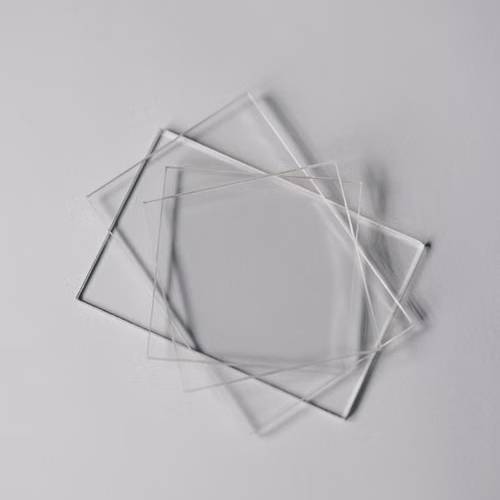
Aluminosilicate glass is a glass composition containing aluminium oxide (Al₂O₃) in addition to silica (SiO₂) and other network formers. The alumina content (typically 5–15% by weight) significantly improves:
Mechanical strength – higher fracture toughness and resistance to crack propagation.
Scratch resistance – higher surface hardness (Mohs 6–7).
Chemical durability – improved resistance to alkali and acid attack.
Ion‑exchange response – the alumina content facilitates rapid and deep K⁺‑for‑Na⁺ ion exchange.
Key suppliers and brands:
| Supplier | Brand Name | Key Characteristics |
|---|---|---|
| Corning | Gorilla Glass (various generations) | Industry standard for smartphones and consumer electronics. |
| AGC | Dragontrail | High strength and scratch resistance. |
| Schott | Xensation Cover | Optimised for automotive and industrial applications. |
| NEG | DINEX Cover | High reliability; used in automotive displays. |
The processing challenge of aluminosilicate glass is directly related to its strengthening mechanism:
Ion‑exchange process: The glass is immersed in a molten potassium salt (KNO₃) bath at ~400–450°C.
Larger ions replace smaller ions: K⁺ ions (larger) replace Na⁺ ions (smaller) in the glass surface.
Surface compression: The larger K⁺ ions occupy more volume, creating a compressive stress layer (typically 40–100 µm deep, >600 MPa).
Strengthened surface: This compressive layer resists crack initiation and propagation—the glass becomes significantly stronger.
| Method | Mechanism | Why It Fails / Works |
|---|---|---|
| Mechanical scribe & break | Scoring + fracture | Compressive layer prevents clean fracture; cracks propagate unpredictably. |
| Diamond saw | Abrasive grinding | Produces chipping and subsurface cracks; weakens the strengthened edge. |
| CO₂ laser | Thermal melting | Heat creates thermal stress that disrupts compressive‑tensile balance; causes catastrophic cracking. |
| UV nanosecond laser | Photothermal ablation | Some thermal component remains; HAZ weakens the strengthened layer. |
| UV picosecond laser | Cold ablation | Works – no heat, no mechanical force, preserves the strengthened layer. |
| Application | Typical Products | Laser Cutting Requirement |
|---|---|---|
| Main display cover | 2D, 2.5D, and 3D curved glass | High‑precision cutting; curved profiles; camera holes; ±50 µm accuracy. |
| Back cover | Glass back panels | Large‑area cutting; consistent edge quality. |
| Camera lens cover | Ultra‑thin glass | Small, precision cuts; no chips affecting optical quality. |
| Application | Typical Products | Laser Cutting Requirement |
|---|---|---|
| Central infotainment screens | Large‑format glass displays | Large‑area cutting; curved edges; smooth edges for bonding. |
| Dashboard displays | Instrument cluster glass covers | Precision cutting; thermal shock resistance. |
| Head‑up display (HUD) | Projection glass | Optical clarity; smooth edges to prevent light scattering. |
| Application | Typical Products | Laser Cutting Requirement |
|---|---|---|
| Smartwatches | Wearable display covers | Small, precision‑cut curved glass; high strength. |
| Tablets | Large‑format display covers | Large panels; consistent edge quality. |
| Laptops | Touchscreen covers | High precision; smooth edges. |
Strengthened aluminosilicate glass cannot tolerate heat. The compressive layer is thermally sensitive—any significant temperature rise reduces surface compression, creating a weak point at the cut edge.
UV picosecond laser cutting uses cold ablation:
Ultrashort pulses (<10 ps) deposit energy faster than heat can diffuse.
Nonlinear absorption creates a micro‑plasma at the focal point.
Material is vaporised directly—no melt phase, no heat‑affected zone.
The compressive layer remains intact at the cut edge.
There are three principal laser‑based approaches to cutting strengthened cover glass. Each has its place depending on the application.
The laser beam follows a spiral or concentric path, removing one layer of glass at a time. Each pass deepens the cut by 5–15 µm until the glass is fully separated.
When to use: All standard cover glass cutting—rectangular parts, simple curves, and general panel singulation.
The laser is focused inside the glass, not on the surface. The high peak power creates a filament of modified glass through the thickness. The panel is then separated by mechanical or thermal stress along the filament path.
When to use: Very thin glass (<200 µm); applications where surface finish is absolutely critical; when edge chipping must be avoided at all costs.
Note: Separation of the strengthened glass after filament formation can be unpredictable. The compressive layer resists fracture, making clean separation more difficult than in unstrengthened glass. For thick strengthened glass (>0.5 mm), the filamentation method is difficult to control. The compressive layer prevents the filament from propagating cleanly, and the glass may shatter during separation.
A combination of internal filamentation (to create a stress‑relief line) and surface ablation (to cut through the strengthened layer). This method is increasingly used for thick strengthened glass where pure ablation is too slow. The filamentation step reduces the compressive stress along the cut path. Surface ablation then removes the remaining material with minimal stress. The combination reduces total processing time while preserving edge quality.
When to use: Thick strengthened glass (>0.7 mm); high‑throughput production where pure ablation is too slow.
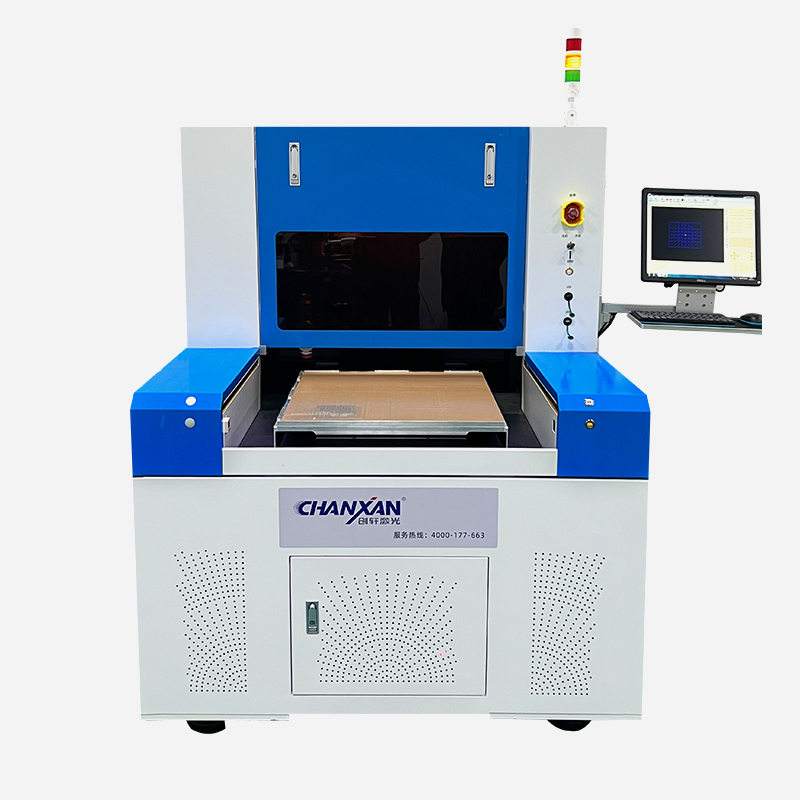
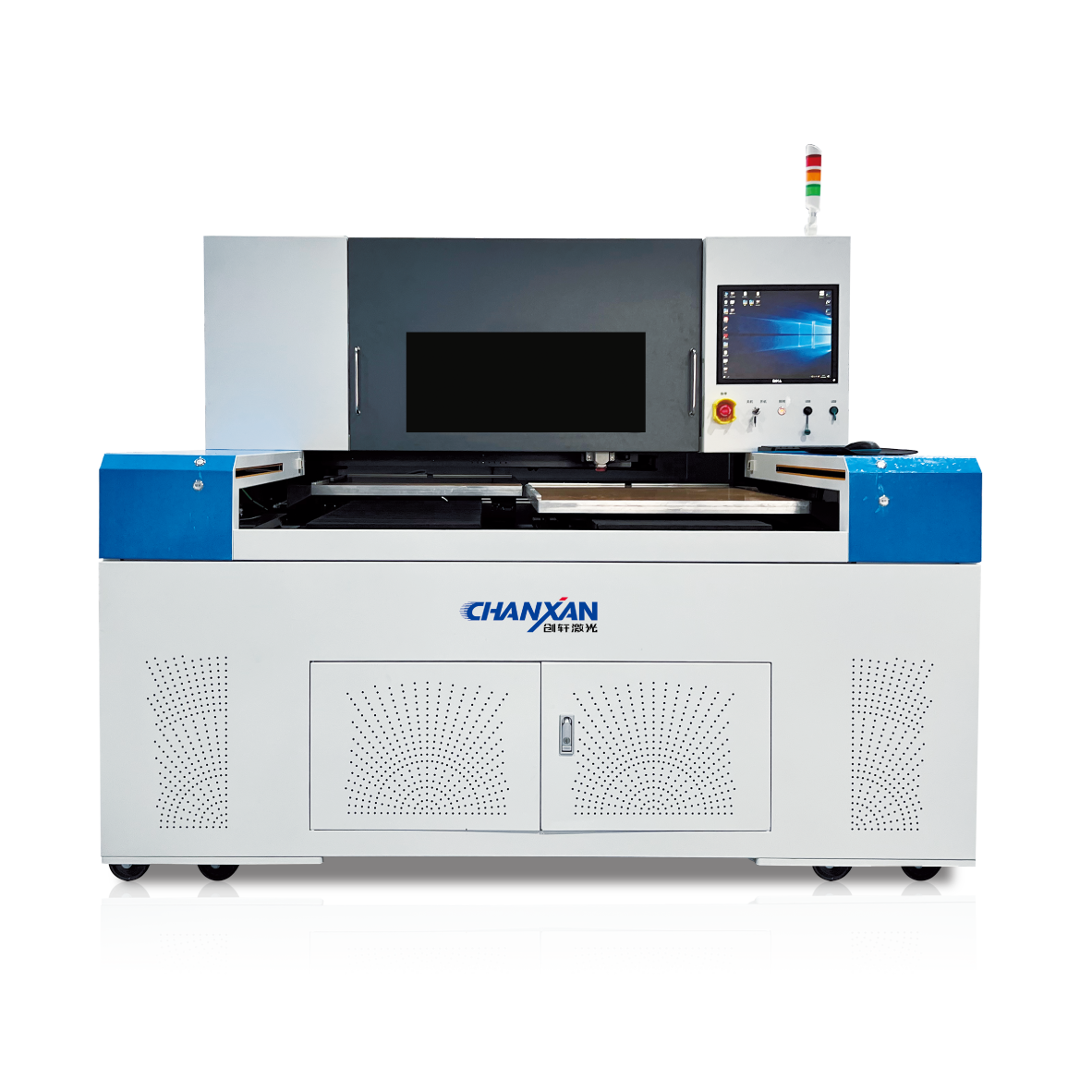
Chanxan Laser provides the UV Picosecond Laser Micro‑Machining System—purpose‑built for high‑precision cutting of strengthened cover glass.
| Parameter | Specification | Why It Matters for Cover Glass |
|---|---|---|
| Laser type | UV Picosecond (355 nm) | Enables cold ablation; preserves strengthened layer. |
| Pulse width | <10 ps | Eliminates thermal damage—essential for strengthened glass. |
| Average power | 30W | High throughput for large‑volume production. |
| Processing accuracy | ≤20 µm | Meets cover glass manufacturing tolerances. |
| X/Y repeatability | ±2 µm | Consistent part‑to‑part quality. |
| Working area | 600 mm × 500 mm | Supports large panels; high material utilisation. |
| Platform | Granite base + linear motors | Vibration‑free; long‑term precision. |
| CCD alignment | Auto‑recognition | Accurate cut placement; compensates for panel position. |
| Focus tracking | Dynamic Z‑axis | Maintains focus across warped panels; consistent edge quality. |
| Software | Self‑developed; DXF/DWG import | Rapid job changeover; process database; supports multiple cutting strategies. |
| Free solution
Previous: OLED Glass Laser Cutting – Precision Processing for Display Substrates
Next: Optical Glass Laser Cutting – High‑Precision Processing for Optical Components