
Key Words: Silicon Wafer Dicing PCB Depaneling Glass Cutting
Home > News > Industry News
【Description】:
A comprehensive guide to process control, system selection, and quality optimization for achieving micron-level precision in glass laser cutting.
A Practical Guide to Process Control, System Selection, and Quality Optimisation
Achieving micron‑level precision in glass laser cutting is not simply a matter of purchasing a high‑power laser and turning it on. It is the result of careful orchestration across multiple domains: laser source selection, optical beam delivery, motion system precision, process parameter optimisation, and environmental control. Each element must work in harmony to produce cuts with edge roughness below 0.5 micrometres, zero chipping, and no subsurface damage.
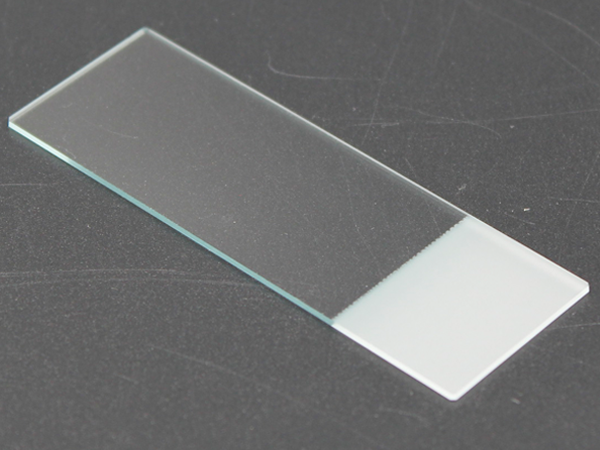
Before discussing how to achieve it, it is useful to define what “micron‑level precision” means in the context of glass cutting. The term encompasses several distinct quality metrics:
| Metric | Definition | Acceptance Criterion |
|---|---|---|
| Positional accuracy | The deviation between the intended cut path and the actual cut location | ±2–5 µm |
| Repeatability | The consistency of cut placement from part to part | ±2 µm |
| Edge roughness (Ra) | The average surface deviation of the cut edge | <0.5 µm |
| Edge chipping | Material loss at the cut edge | <5 µm (ideally none) |
| Micro‑cracks | Subsurface cracks below the visible surface | None |
| Heat‑affected zone | The depth of thermal damage adjacent to the cut | <2 µm |
| Taper angle | The deviation of the cut wall from vertical | <2° |
Achieving all of these simultaneously is the challenge. A process that delivers excellent positional accuracy may still produce poor edge quality. A process that produces smooth edges may create micro‑cracks that reduce strength. The art of precision glass cutting lies in optimising across all metrics.
Achieving micron‑level precision glass cutting requires addressing four fundamental requirements:
The first and most fundamental requirement is the use of cold ablation. When glass is cut with heat, two things happen: the heat‑affected zone weakens the material, and thermal stress creates micro‑cracks. Even a small heat‑affected zone—measured in micrometres—can degrade edge strength and compromise reliability.
Why cold ablation is essential: Cold ablation removes material through direct vaporisation, without melting. The pulse duration is shorter than the thermal diffusion time of the material, so heat does not have time to spread. The material is converted from solid to plasma, bypassing the melt phase entirely. This is the only mechanism that eliminates thermal damage.
What enables cold ablation: Cold ablation requires pulse durations of picoseconds or less. UV nanosecond lasers, while often described as “cold” compared to CO₂ lasers, still generate measurable heat. Only picosecond and femtosecond systems achieve true cold ablation.
The practical implication: For micron‑level precision, the laser source must have pulse duration below 10 picoseconds.
The second requirement is wavelength matching. The laser wavelength must be absorbed efficiently by the glass. Without absorption, there is no cutting.
UV vs. IR: Most glasses are transparent to IR wavelengths (1064 nm). IR lasers pass through without absorption, making them ineffective for precision cutting. UV wavelengths (355 nm) are absorbed more efficiently. The shorter wavelength also enables a tighter focus, contributing to higher precision.
The practical implication: For precision glass cutting, a UV wavelength (355 nm) is preferred. This is the standard for UV picosecond laser systems.
The quality of the laser beam determines how small the focused spot can be—and therefore the achievable resolution. A poor‑quality beam cannot be focused to a tight spot, limiting both precision and edge quality.
Beam quality metrics: Beam quality is typically expressed as M², where 1.0 is the diffraction limit. For precision cutting, an M² of less than 1.3 is desirable. This ensures that the beam can be focused to a spot size of 15–25 micrometres, enabling fine detail and narrow kerf widths.
The practical implication: The laser system must deliver high beam quality (M² <1.3) to achieve micron‑level precision.
Even with the perfect laser, the motion system must position the beam accurately. A deviation of a few micrometres in the motion system translates directly to a deviation in the cut.
Positioning accuracy: The ability to place the beam at a specific location. For micron‑level precision, this must be ±5 µm or better.
Repeatability: The ability to return to the same location consistently. This is critical for high‑volume production, where consistent part quality is required.
The practical implication: The motion system—whether linear stages or galvanometer scanners—must deliver positioning accuracy of ±3–5 µm and repeatability of ±2 µm. The system must also be stable, with minimal thermal drift and vibration.
Beyond the core requirements of laser source, wavelength, beam quality, and motion system, achieving micron‑level precision depends on careful control of the process parameters. The following variables must be optimised for each glass material and thickness:
Pulse energy determines how much material is removed per pulse. Too little energy and the cut is incomplete; too much energy and the edge quality degrades.
Finding the balance: For micron‑level precision, pulse energy must be set just above the ablation threshold—high enough to remove material efficiently, but low enough to avoid thermal damage and chipping. This threshold varies with glass composition and thickness.
The overlap between adjacent pulses determines the smoothness of the cut edge. Insufficient overlap creates scalloping; excessive overlap reduces throughput.
The role of trepanning: For complex shapes and holes, a trepanning or spiral scanning strategy is used. The beam follows a path that gradually expands the cut, removing material layer by layer. This strategy reduces stress and produces smoother edges than single‑pass cutting.
The focus position—where the beam is focused relative to the glass surface—is critical for micron‑level precision. For surface cutting, focus is on the surface. For internal modification, focus is below the surface.
Dynamic focus control: Glass panels are not perfectly flat. Warpage, thickness variation, and mounting imperfections all affect the distance from the lens to the glass surface. Dynamic focus tracking—where the focus position is adjusted in real time—maintains consistent cut quality across the entire panel.
Ablation generates debris—fine particles of glass that can redeposition on the cut surface. If not removed, these particles create defects and reduce edge quality. Nitrogen assist gas is used to blow debris away from the cutting area, preventing redeposition and maintaining clean surfaces.
| Requirement | What to Look For | Why It Matters |
|---|---|---|
| Laser source | UV wavelength, <10 ps pulse duration | Enables cold ablation – eliminates thermal damage |
| Beam quality | M² <1.3 | Enables tight focusing – determines achievable resolution |
| Motion platform | ±3–5 µm accuracy, ±2 µm repeatability | Ensures accurate cut placement – consistent quality |
| Focus control | Dynamic Z‑axis tracking | Compensates for warpage – maintains focus across panel |
| Assist gas | Nitrogen, integrated | Removes debris – prevents contamination |
| Process software | Parameter‑to‑job binding | Ensures consistent quality – reduces operator error |
| Platform stability | Granite base, linear motors | Minimises vibration – long‑term precision |
Chanxan Laser provides a range of UV picosecond laser systems designed for micron‑level precision glass cutting. The Picosecond laser glass cutting system combines:
UV wavelength (355 nm) with pulse duration below 10 picoseconds
High beam quality (M² <1.2) for tight focusing
Granite base and linear motor stages with ±2 µm repeatability
Dynamic Z‑axis focus tracking for consistent quality across warped panels
Integrated nitrogen assist and vacuum extraction for clean processing
Self‑developed software supporting parameter‑to‑job binding
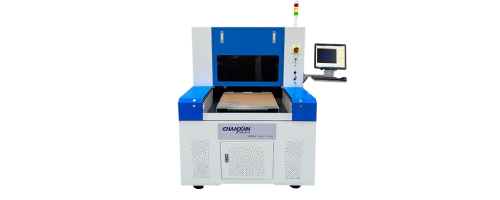
This combination of capabilities enables micron‑level precision across a wide range of glass cutting applications, including cover glass, UTG for foldable displays, OLED panel glass, optical components, and glass interposers for semiconductor packaging.
Consult with Chanxan Laser engineers to test your glass samples and receive customized laser cutting solutions tailored to your production standards.
Contact Us for a Fast Quote| Free solution