
Key Words: Silicon Wafer Dicing PCB Depaneling Glass Cutting
Home > News > Industry News
【Description】:
A comprehensive TCO & ROI breakdown for FPC coverlay processing. Learn how Chanxan digital laser cutting eliminates tooling costs ($500-$3,000) and material waste.
TL;DR (Too Long; Didn't Read)
When mass-producing Flexible Printed Circuits (FPCs), selecting the right tool for coverlay (polyimide protective film) windowing and profiling is a critical financial decision. While mechanical die punching offers high single-stroke speed for static, long-run designs, laser coverlay cutting delivers superior long-term cost-effectiveness by completely eliminating hard tooling costs ($500–$3,000 per die), slashing engineering setup times from hours to seconds, and securing a 0% mechanical deformation scrap rate. For modern electronic manufacturing characterized by high product mix, rapid prototyping, and ultra-dense trace layouts, a precision laser workstation yields a significantly higher Return on Investment (ROI) within less than a year.
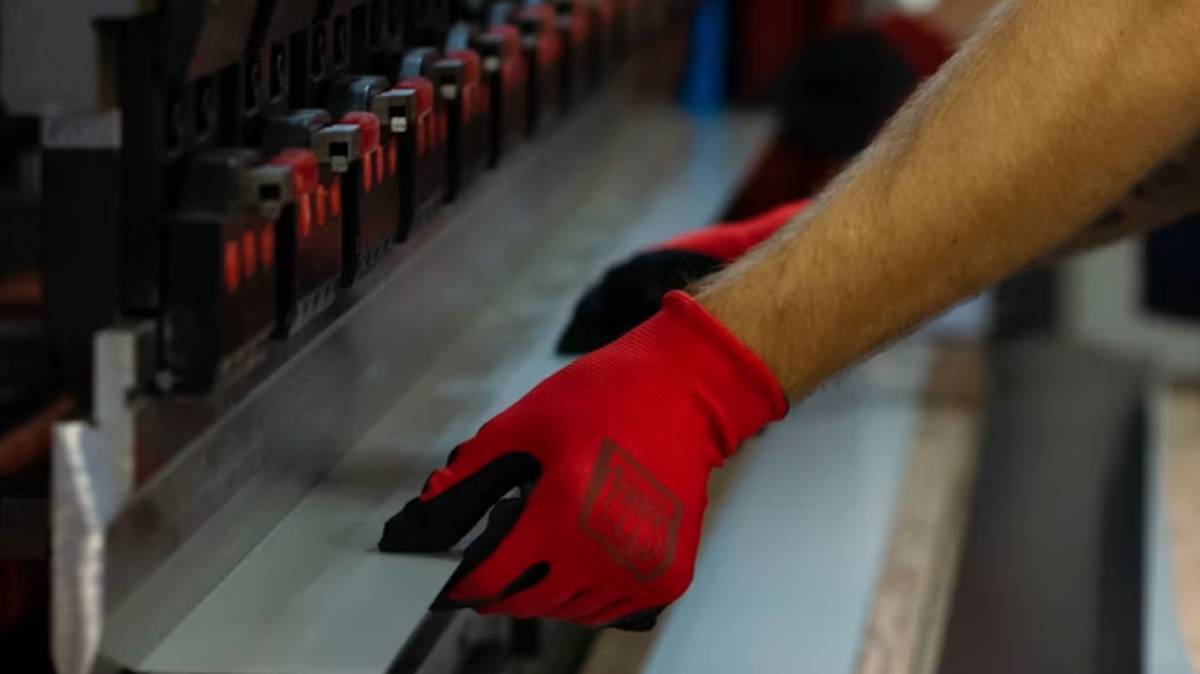
Mechanical die punching relies on custom-machined steel-rule or male/female matrix dies. Every single engineering modification or new product introduction (NPI) forces the factory to source a brand-new mold, costing between $500 and $3,000 depending on complexity, paired with a 3- to 7-day lead time bottleneck. Furthermore, these mechanical edges wear down rapidly when shearing abrasive polyimide, requiring costly re-sharpening every 30,000 to 50,000 strokes. Chanxan Laser systems utilize a software-driven digital CAD/CAM layout workflow. Transitioning to a new design requires zero physical tooling costs, zero lead time, and experiences absolute zero tool wear.
Because physical punch dies exert massive kinetic shear stress, they require a substantial material border clearance (often 1.0mm to 1.5mm) between tightly nested FPC patterns to prevent the flexible laminate from warping, tearing, or tearing the polyimide web. Laser coverlay processing is a non-contact, stress-free thermal or photolytic ablation methodology. The focused laser spot cuts with a kerf width under 25 microns, allowing engineers to nest components almost trace-to-trace. This optimization slashes raw polyimide material waste by 8% to 15%, directly generating significant raw material cost savings over large production batches.
Calibrating a mechanical stamping press to perfect alignment requires high-salaried setup technicians and hours of physical micro-adjustments. During this setup window, the machine sits idle, earning zero revenue, and typically scraps dozens of test sheets to fix alignment drift. Chanxan Laser workstations leverage high-definition automated CCD registration cameras. The software automatically captures fiducial markers on the printed substrate, recalculates the path orientation in real-time, and compensates for material shrinkage or stretching in milliseconds, driving setup scrap rates to absolute zero.
The following financial and processing comparison benchmarks the Total Cost of Ownership (TCO) based on processing a 50,000-unit batch of complex multi-window FPC coverlays (0.05mm PI + 0.025mm Acrylic adhesive):
| Cost & Performance Metrics | Chanxan Precision Laser Workstation | Traditional Mechanical Die Punching |
|---|---|---|
| Initial Mold Cost (Per Design) | $0 (Software Driven) | $800 - $2,500 (Hard Tooling) |
| Lead Time for Design Change | Instant (< 1 Minute CAD Import) | 3 to 5 Working Days |
| Consumables / Wearable Parts | None (Zero wearable mechanics) | Frequent die re-sharpening / replacement |
| Average Material Yield Rate | 99.6% (CCD Auto-Alignment) | 93.5% (Due to positioning/shear errors) |
| Edge Quality & Micro-Burrs | Clean, sealed edges / Zero stress | Frequent micro-fractures, burrs, delamination |
| Economic Breakeven Threshold | Highly profitable from 1 unit to 100k+ | Only cost-effective for massive, static runs |
Q: Is mechanical punching faster than laser cutting for large mass production?
A: For simple, completely static geometries produced in millions of units without any design adjustments, a mechanical stamping press offers a rapid single-stroke execution. However, when factoring in the total timeline—including design revisions, tool wear maintenance downtime, and the strict quality audits demanded by premium electronics brands—Chanxan’s high-speed laser cutting over multiple panels matches or exceeds the net economic throughput of punching lines by eliminating operational bottlenecks.
Q: Can your laser system process adhesive-backed coverlays without causing adhesive squeeze?
A: Yes. Traditional die stamping squeezing forces the soft acrylic or epoxy adhesive out of the cut edge, contaminating solder pads. By optimizing Chanxan Laser's high-repetition short pulse profiles and configuring precise beam pathways, the laser instantly vaporizes both the polyimide layer and the underlying adhesive matrix, guaranteeing a completely clean vertical edge with zero adhesive residue or squeeze out.
Q: What is the maintenance overhead cost of an industrial laser workstation?
A: Unlike mechanical stamping presses that require continuous hydraulic checks and tool sharpening, a solid-state or sealed RF laser platform is practically maintenance-free. The primary operational costs are limited to standard electrical power consumption and small exhaust filter elements, leading to exceptionally low cost-per-part metrics over time.
Profile: Engineering Operations Director & Financial Controller at a High-Reliability Aerospace Electronics Manufacturer.
The Challenge: The facility specialized in high-reliability multi-layer flexible circuits for avionics sensor arrays. Due to customized customer profiles, their production model was strictly High-Mix Low-Volume (HMLV), managing over 35 distinct coverlay layouts per quarter. Under their legacy mechanical tooling workflow, hard mold acquisition costs consumed over $60,000 annually in CapEx. Worse, a single design revision during product validation cycles regularly triggered severe project delivery delays and wasted thousands of dollars in scrapped raw materials.
The Solution: The facility replaced its mechanical stamping cell with a Chanxan Laser High-Speed Flexible Circuit Digital Cut-off System featuring precision galvanometer scanning and automated vision alignment.
The Outcome: The transition to a digital, tooling-free CAD production workflow completely eradicated the $60,000 annual tooling budget. Product design iterations dropped from a 4-day outsourcing delay to an instant, under-the-hour software update. Thanks to the non-contact processing nature of the laser, micro-cracks and delamination at sensitive polyimide junctions were dropped to zero, stabilizing overall assembly qualification yields at a flawless 99.8% and cutting total lead times by two full weeks.
Disclaimer: To protect intellectual property and honor customer Non-Disclosure Agreements (NDAs), specific corporate background details in this industry scenario have been anonymized. However, all technical processing parameters, workflow data matrices, and operational cost-effectiveness metrics remain fully verified by Chanxan Laser's engineering applications laboratory.
| Free solution
Previous: How Do You Avoid Micro-Cracks When Drilling Alumina Ceramics with Lasers?
Next: What Is the Minimum Kerf Width Achievable in Picosecond FPC Cutting?