
Key Words: Silicon Wafer Dicing PCB Depaneling Glass Cutting
Home > News > Industry News
【Description】:
Learn about the laser drilling technology for PTCA coronary balloon catheters.
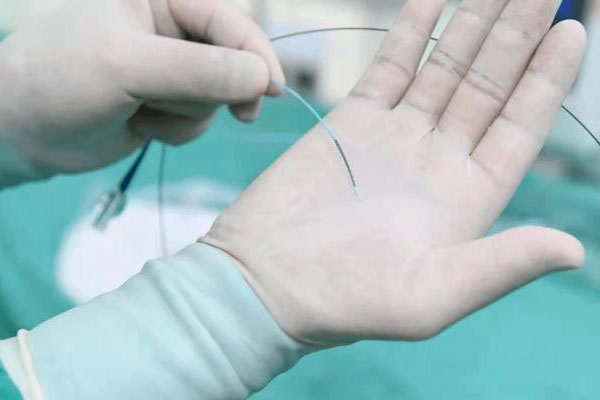
The coronary balloon catheter is a critical medical device used in percutaneous transluminal coronary angioplasty (PTCA) – a minimally invasive procedure to treat coronary artery stenosis. This life-saving device consists of a folded polyethylene balloon attached to a metal push rod and a flexible catheter shaft. It is inserted through peripheral blood vessels and guided to the coronary arteries, where the balloon is inflated to dilate narrowed vessels, restoring blood flow to the heart muscle.
PTCA has become a routine and highly effective treatment for coronary artery disease, which remains one of the leading causes of death worldwide. The success of the procedure depends not only on the physician's skill but also on the precision and reliability of the balloon catheter itself.
The manufacturing challenge: During the production of coronary balloon catheters, one of the most critical steps is creating precise holes in the catheter shaft. These holes serve multiple functions:
Inflation ports for balloon expansion.
Guidewire ports for device tracking.
Fluid delivery channels for contrast media or therapeutic agents.
Traditional mechanical drilling methods often fail to meet the stringent requirements of medical device manufacturing. They can cause burrs, rough edges, material deformation, and even contamination – all of which are unacceptable in a Class II/III medical device.
Enter laser drilling technology. Medical catheter laser drilling machines have emerged as the gold standard for creating clean, precise, and consistent holes in polymer-based medical tubing.
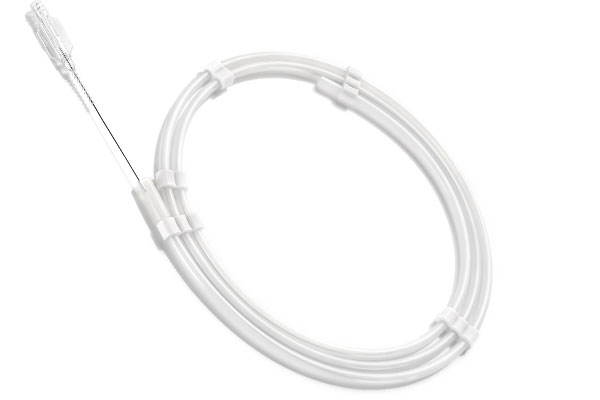
| Component | Material | Function |
|---|---|---|
| Balloon | Polyethylene (PE), Nylon, or PET | Expands to dilate the narrowed artery. |
| Catheter Shaft | Polyamide, Polyurethane, or PEBAX | Provides a conduit for the balloon and guidewire; delivers inflation fluid. |
| Push Rod / Guidewire | Stainless steel or Nitinol | Enables precise navigation through the vascular system. |
| Inflation Port | Integrated into the catheter hub | Connects to an inflation device for balloon expansion. |
| Drilling Holes | Laser-machined openings in the catheter shaft | Allow inflation fluid to pass from the lumen to the balloon. |
The catheter shaft is typically made of thin-walled, flexible polymer tubing. Mechanical drilling of such materials results in:
Burrs and rough edges: Can damage blood vessels during insertion.
Material deformation: Weakens the catheter structure.
Inconsistent hole sizes: Affects balloon inflation uniformity.
Contamination risk: Mechanical processes can introduce particles.
Laser drilling solves all these problems by offering a non-contact, highly precise, and repeatable process that is perfectly suited for medical device manufacturing.
Medical catheter laser drilling is a non-contact thermal process. A high-energy laser beam is focused onto the surface of the catheter tube, creating a localised heat-affected zone that melts and vaporises the material, forming a clean hole.
The choice of laser wavelength is critical for processing polymer materials:
| Laser Type | Wavelength | Absorption in Polymers | Suitability for Catheter Drilling |
|---|---|---|---|
| CO₂ Laser | 10.6 µm | Strong surface absorption | Produces significant heat-affected zone; risk of charring. |
| IR Fibre Laser | 1064 nm | Low absorption (transparent) | Not suitable – energy passes through. |
| UV Laser (355 nm) | 355 nm | Excellent – clean ablation | Ideal – minimal heat-affected zone; no charring or yellowing. |
UV lasers are the preferred choice for medical catheter drilling because:
The short wavelength (355 nm) is strongly absorbed by most polymers.
The high photon energy enables photochemical ablation, reducing thermal damage.
The heat-affected zone is minimal, preserving material integrity.
Holes are clean, with no carbonisation or yellowing at the edges.
| Hole Type | Description | Typical Application |
|---|---|---|
| Circular holes | Standard round openings | Inflation ports, guidewire ports |
| Slots / elongated holes | Oval or rectangular openings | Fluid delivery channels |
| Micro-holes | Diameter <0.1 mm | Drug-eluting catheter ports |
| Single-side holes | Drilled from one side only | Standard catheter designs |
| Double-side holes | Paired holes on opposite sides | Balanced inflation for balloon symmetry |
| Mobile/rotary drilling | Holes drilled along the length or circumference of the tube | Spiral or patterned hole arrays for special applications |
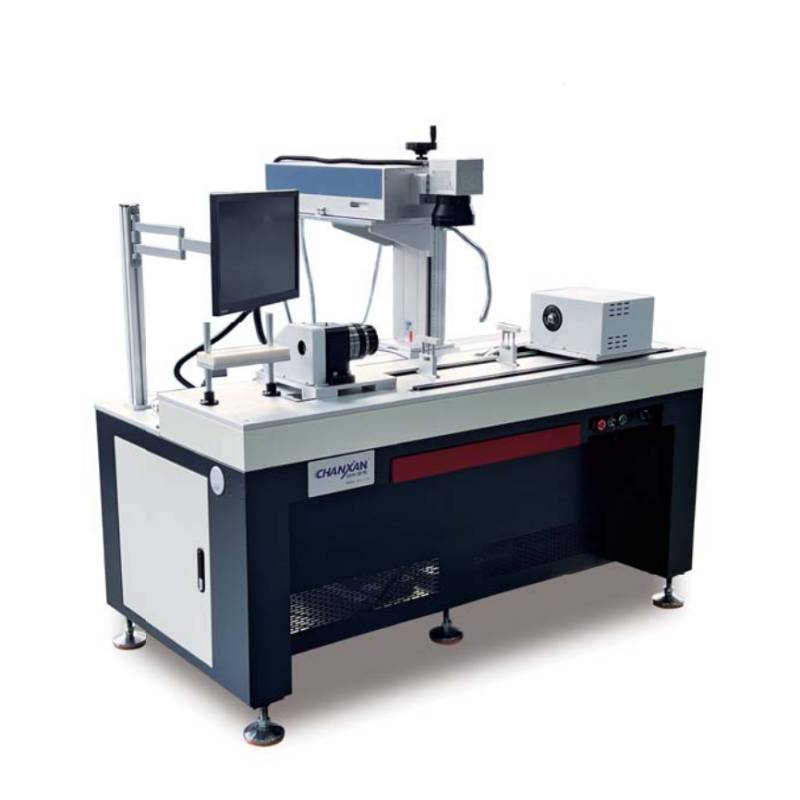
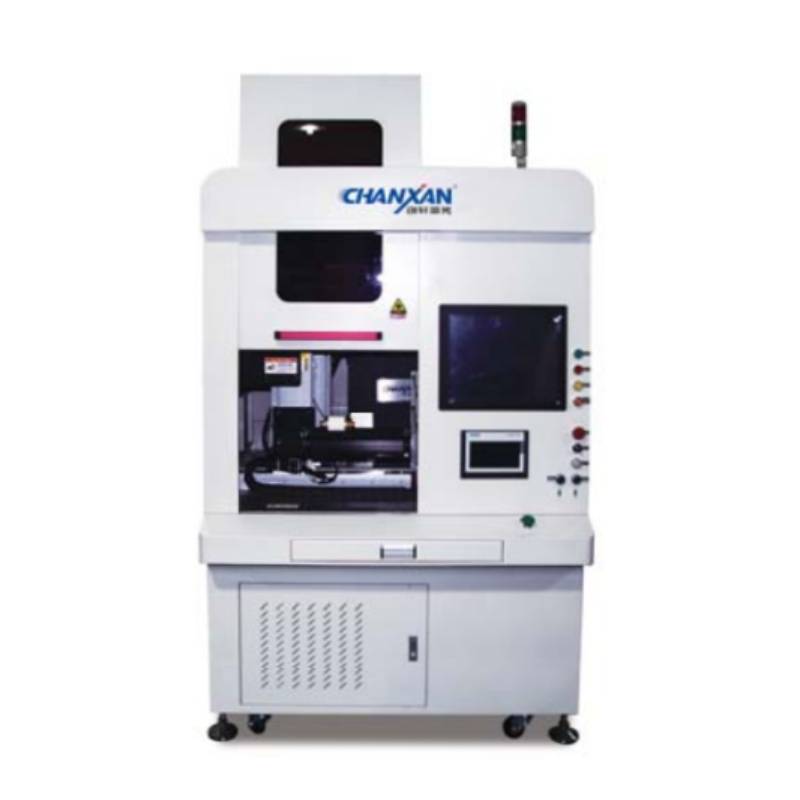
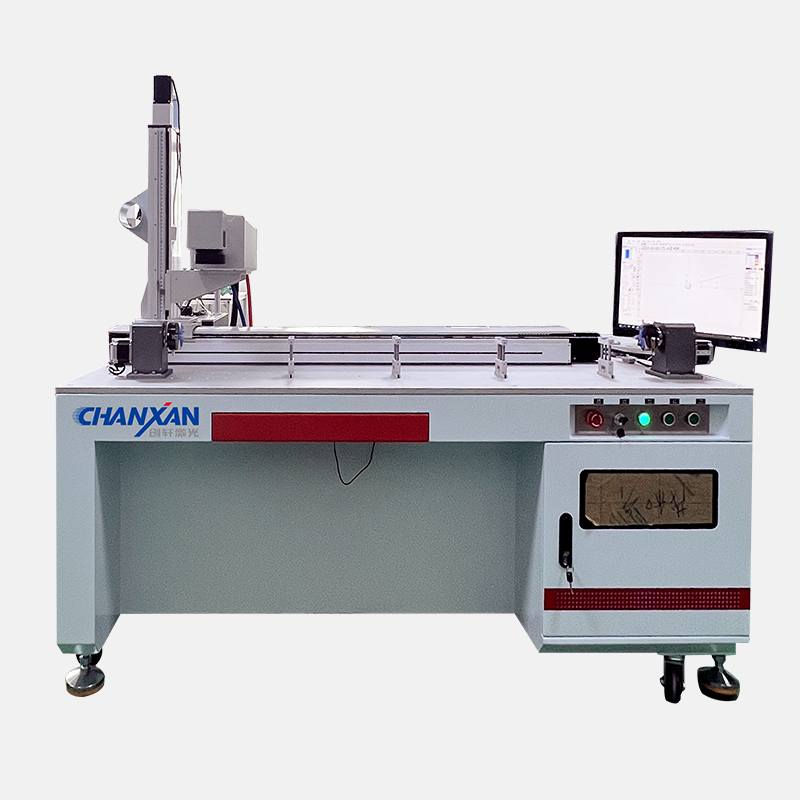
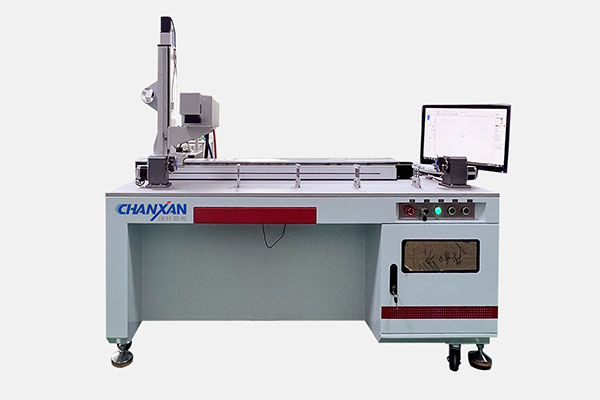
Chanxan Laser has developed a dedicated medical catheter laser drilling machine specifically for the medical device industry. This system is designed to meet the rigorous quality, precision, and reliability requirements of Class II/III medical device manufacturing.
| Component | Specification | Purpose |
|---|---|---|
| Laser Source | UV Laser (355 nm) | Provides clean, cold ablation with minimal heat-affected zone. |
| Automatic Rotating Table | Motorised rotary stage | Enables rotational and mobile hole drilling; supports complex patterns. |
| Beam Delivery System | Galvanometer or fixed optics | Precisely directs the laser beam to the target location. |
| Fixturing / Jig System | Customisable tube holders | Secures the catheter tube during processing; supports mobile drilling configurations. |
| Vision / Alignment System | CCD camera (optional) | Enables precise positioning and quality inspection. |
| Control Software | Chanxan self-developed | Intuitive interface; supports free adjustment of hole size and shape. |
| Feature | Description | Benefit for Catheter Manufacturing |
|---|---|---|
| Free adjustment of hole size and shape | Operators can freely adjust hole diameter and shape via software. | Flexibility for different catheter designs; no tooling changes. |
| Rotary and mobile drilling | Automatic rotating table enables holes to be drilled at any position along the length or circumference. | Supports complex patterns; enables spiral drilling for specialised catheters. |
| High edge quality | UV laser produces clean, smooth edges with no burrs or charring. | Ensures device safety – no sharp edges to damage blood vessels. |
| Excellent consistency | Laser parameters are software-controlled, ensuring uniform hole quality across production batches. | Meets regulatory requirements for repeatability and traceability. |
| High efficiency | Fast processing speeds; suitable for high-volume production. | Reduces manufacturing costs and lead times. |
| Non-contact process | No mechanical contact; no tool wear or contamination. | Improves yield and reduces consumable costs. |
The medical catheter laser drilling machine is compatible with a wide range of polymer materials used in catheter manufacturing:
| Material | Typical Application |
|---|---|
| Polyethylene (PE) | Balloon catheters, general-purpose tubes |
| Polyurethane (PU) | Angiography catheters, drainage tubes |
| PEBAX | High-performance catheter shafts |
| Nylon (Polyamide) | Balloon materials, catheter shafts |
| Silicone | Drainage tubes, soft catheters |
| PET | High-pressure balloon materials |
| PTFE / ePTFE | Guidewire tubes, liners |
| Free solution
Previous: UDI Laser Marking in Medical Devices: A Complete Guide to Compliance
Next: Application of Laser Marking Technology in Automobile Steering Wheels