
Key Words: Silicon Wafer Dicing PCB Depaneling Glass Cutting
Home > News > Industry News
【Description】:
Explore PET film laser cutting for RFID, membrane switches, flexible sensors, and heating elements. Chanxan CO2 laser systems deliver clean edges, low thermal distortion, and efficient high-volume PET/Mylar processing.
TL;DR: Too Long; Didn't Read
Polyethylene Terephthalate PET films, often branded as Polyester or Mylar, serve as the foundational substrate for modern low-cost flexible electronics, including RFID tags, membrane switches, and flexible printed sensors. While highly economical, PET is a thermoplastic material with extreme thermal sensitivity, making it highly prone to localized edge melting and structural warping when processed under generic industrial machinery. Utilizing a precisely calibrated low-power CO2 laser platform transforms this bottleneck. By balancing localized energy density and optimized pulse parameters, Chanxan Laser systems achieve high-precision micro-cutting and immaculate edge quality without incurring the heavy capital costs of ultrafast laser engines—delivering maximum manufacturing yield and rapid payback for high-volume flexible circuit production lines.
Unlike thermoset materials like Polyimide, Polyethylene Terephthalate PET belongs to the thermoplastic family. This means it possesses a distinct, relatively low melting point around 260 degrees Celsius. When processed with standard thermal cutting equipment, the material along the cut path does not simply vaporize; it liquefies and pulls back due to surface tension.
If the laser dwell time is too long or the pulse energy is excessive, this thermal melting overpowers the intended cutting path, creating a pronounced, raised bead along the edge. This edge accumulation prevents flat lamination and compromises downstream conductive ink screen printing. Shifting to controlled, high-speed laser ablation ensures that energy is delivered faster than the material can conduct heat laterally, vaporizing the polyester matrix while keeping the adjacent heat-affected zone remarkably narrow.
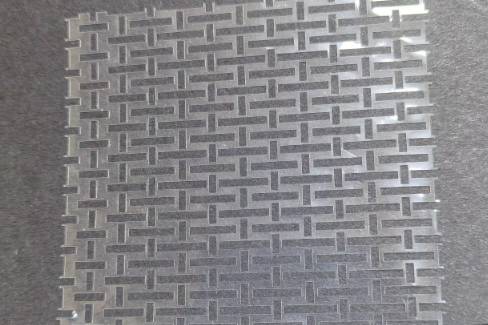
In the mass production of flexible electronics, sheet flatness is non-negotiable. PET films used for flex circuits are incredibly thin, often specified between 25μm and 125μm. Because polyester film features a high coefficient of thermal expansion, any excess heat trapped in the substrate causes immediate, permanent dimensional distortion.
For automated roll-to-roll assembly lines, a warped PET sheet is catastrophic: it causes registration errors during component pick-and-place, triggers trace fractures in printed silver inks, and leads to delamination of the adhesive layers. Preventing this distortion requires a cutting tool that treats the film with absolute mechanical and thermal gentleness.
For most polyester and Mylar film applications, RF CO₂ laser systems provide the optimal balance of throughput, edge quality, and production cost. UV and ultrafast lasers are typically reserved for specialized medical, microelectronic, or ultra-high-precision applications where minimizing the heat affected zone outweighs equipment investment considerations. While ultraviolet UV or picosecond laser systems can cut PET with near-perfect aesthetics, their high initial capital expenditure makes them economically unviable for low-cost flexible electronics manufacturing. This is where specialized low-power CO2 laser systems (typically operating below 100 watts) create an unbeatable competitive advantage.
Operating at a 10.6-micron infrared wavelength, CO2 laser energy is highly absorbed by organic polymers like polyester and Mylar. By matching a low-power, high-beam-quality laser tube with ultra-fast galvanometer scanners or rapid linear motors, the system slices through the film at incredible linear speeds. This configuration delivers the exact amount of localized energy needed to ablate the cutting lane without bleeding excess heat into the surrounding substrate—achieving clean cuts at a fraction of the hardware cost of solid-state micro-machining lasers.
The sweet spot for high-speed PET laser cutting lies in markets where cost-per-part thresholds are measured in pennies, yet quality parameters remain strict:
Passive RFID and NFC Antenna Inlays: High-volume profiling of polyester antenna carriers where edge burrs or warping could tear thin aluminum or copper foils.
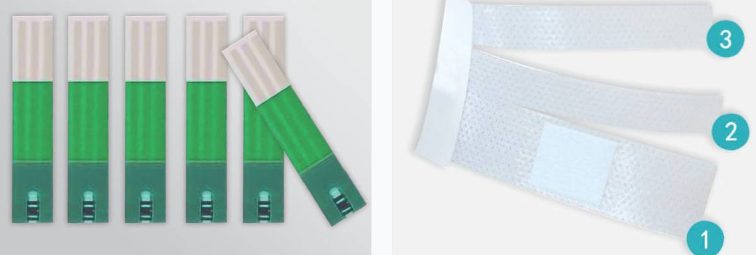
Flexible Printed Sensors and Medical Strips: Precision profiling of mass-produced glucose test strips and flexible pressure sensors requiring zero chemical contamination.
Membrane Switches and Graphic Overlays: Intricate internal window cutouts and venting slots on Mylar layers used in industrial control panels and household appliances.
Flexible Heating Elements: Clean singulation of thin-film PET heating pads utilized in automotive mirrors and wearable consumer electronics.
The following performance dashboard highlights the operational and financial improvements realized when transitioning to automated polyester film cutting:
| Operational Metric | Traditional Mechanical Die Shearing | Chanxan High-Speed Low-Power CO2 Laser |
|---|---|---|
| Edge Bead and Burr Height | Raised micro-burrs and edge deformation from blade wear | Controlled edge profile under 10 μm flat coplanarity |
| Substrate Dimensional Distortion | Physical micro-tears and stretching from mechanical pull | Zero mechanical stress; near-zero thermal warping |
| Material Nesting Yield | Low yield due to mandatory wide die-border safety margins | Maximum density; parts can share zero-clearance cut lanes |
| Prototype and Job Setup Time | Days to weeks for hard-tooling mold fabrication | Instantaneous digital adjustments from CAD software |
| Consumable and Wear Costs | High ongoing costs for blade sharpening and tool replacement | Zero contact processing; non-degrading laser optical path |
Achieving clean cuts on sensitive thermoplastic films requires more than just a laser tube. Chanxan Laser RF CO2 Laser platforms integrate three core engineering features explicitly developed to maximize factory conversion rates and floor yields:
Ultra-Fine Focused Spot Optics: High-grade optical lensing compresses the CO2 beam profile down to a microscopic focal diameter, maximizing ablation speed while keeping heat input to an absolute minimum.
High-Speed Digital Galvo Drive: Eliminates mechanical gantry deceleration curves, allowing the beam to maneuver complex circuit geometries instantly without dwelling over tight corners.
Distributed Matrix Bed: An advanced honeycomb extraction surface locks thin PET sheets perfectly flat, eliminating optical defocusing while instantly exhausting vaporized byproducts to prevent surface soot accumulation.
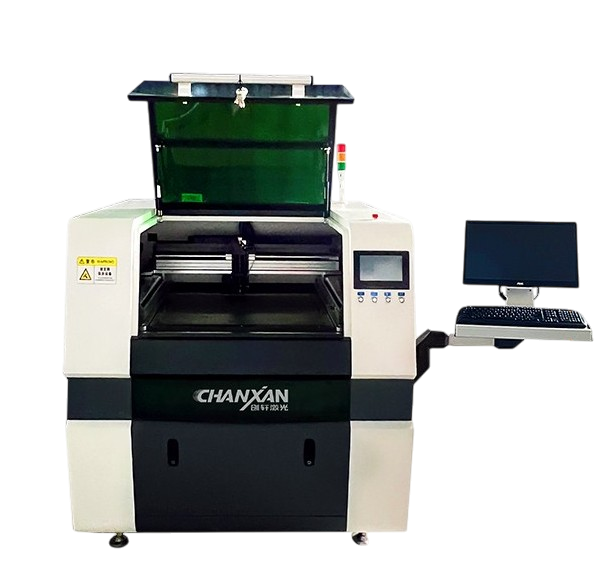
Q: How thin of a polyester film can the Chanxan CO2 platform safely cut?
A: The system effortlessly handles ultra-thin films down to 25μm. Its high-frequency pulse modulation ensures that the power can be dialed down perfectly to match thin foils without blistering the base layer.
Q: Can a CO2 laser cut a PET substrate that has already been printed with conductive silver or carbon ink?
A: Yes. Because conductive metallic inks feature highly different ablation thresholds compared to organic polymer backings, a calibrated CO2 laser can cut straight through the PET carrier without scattering or short-circuiting the adjacent printed traces.
Q: Does digital laser processing slow down mass production throughput compared to a mechanical die?
A: While a physical stamp cuts a whole sheet in a single stroke, it incurs massive setup, maintenance, and tool wear downtime. Chanxan's high-speed galvanometer configuration closes the speed gap, offering a lower total cost per part on medium-to-high-volume runs when accounting for setup and scrap costs.
If edge melting, material warping, or recurring tooling costs are cutting into your flexible circuit profit margins, evaluating an automated laser alternative is the fastest way to stabilize your process window:
Request a Free PET Material Sample Test Cut: Send us your custom CAD vectors and a sample of your specific polyester film substrate, and our applications lab will return high-definition processing data and cut samples for your inspection.
Schedule a Technical Selection Consultation: Speak directly with a Chanxan applications engineer to review your throughput targets and determine the ideal wattage configuration for your production envelope.
Obtain an Equipment ROI Quote: Request a detailed financial breakdown and pricing configuration customized to your specific factory floor layout and material automation requirements.
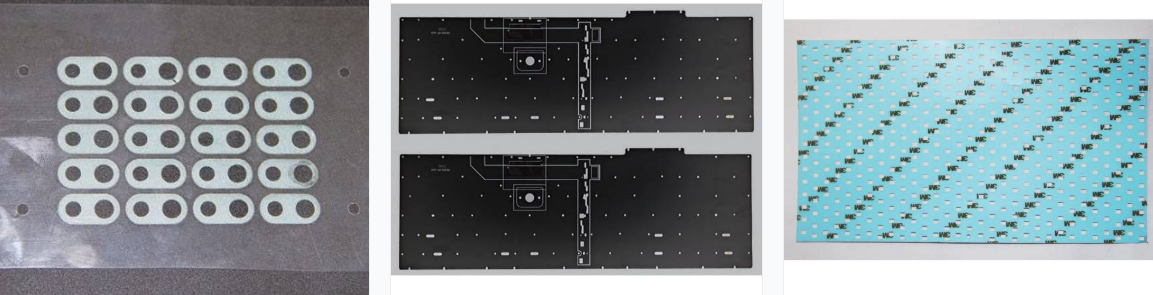
Send your PET film materials and CAD drawings to Chanxan Laser's lab for a free, high-precision trial cut and customized ROI evaluation.
Get a Free Sample Test & QuotationDisclaimer: To protect intellectual property and honor customer Non-Disclosure Agreements (NDAs), specific corporate background details in this industry scenario have been anonymized. However, all technical processing parameters, workflow data matrices, and operational cost-effectiveness metrics remain fully verified by Chanxan Laser's engineering applications laboratory.
| Free solution
Previous: Polypropylene (PP) Laser Cutting | CO2, UV & Ultrafast Laser Processing Solutions
Next: Polyimide (PI) Laser Cutting for Flexible PCB Manufacturing