
Key Words: Silicon Wafer Dicing PCB Depaneling Glass Cutting
Home > News > Industry News
【Description】:
Compare RF CO2 and ultrafast laser ablation vs die cutting for polypropylene PP processing. Achieve burr free micro cutting for battery, medical and packaging applications.
TL;DR (Too Long; Didn't Read)
Polypropylene (PP) is a highly versatile thermoplastic polymer widely utilized across flexible packaging, medical disposables, battery insulation components, automotive interiors, and industrial films due to its exceptional chemical resistance and tough mechanical properties. However, because PP features a relatively low melting point between 160 and 170°C combined with high material flexibility, legacy die cutting and mechanical trimming consistently encounter strict processing limitations. Transitioning to automated digital PP laser cutting completely eliminates these manufacturing bottlenecks. Compared with die cutting and mechanical trimming, laser processing of polypropylene PP eliminates tooling costs, enables rapid design changes, and produces clean, repeatable cuts without mechanical stress. For manufacturers processing thin films, insulation components, and custom geometries, RF CO2 laser systems provide an efficient high-throughput solution, while ultrafast lasers offer superior edge quality for medical and precision applications.
Polypropylene (PP) is inherently soft and elastic, which poses severe challenges for physical contact cutting methods. When a mechanical punch or steel die strikes a PP substrate, the tool stretches and compresses the polymer chains rather than shearing them cleanly. This dynamic mechanical load inevitably results in several fatal production defects:
Surface Indentations: The physical clamping pressure and blade impact leave visible micro-marks on polished sheets.
Tensile Deformation and Stretching: Thin films pull and elongate under the blade path, destroying dimensional tolerances.
Edge Warping and Frilling: The elastic recovery of the material causes the cut boundaries to curl or lip upwards.
Micro-Cracking and Fractures: Stresses induced along the shear perimeter become propagation points for early component failure during dynamic bending.
Furthermore, mechanical tooling introduces substantial ongoing cost. PP causes rapid blade dulling and tool passivation, resulting in a continuous downward curve in edge quality. To maintain consistency, manufacturers are forced into expensive tool sharpening schedules and frequent line shutdowns. Laser processing operates on a non-contact principle, meaning it applies zero physical force to the substrate, making it uniquely suited for thin PP films, multi-layer laminated webs, and intricate, delicate geometries.
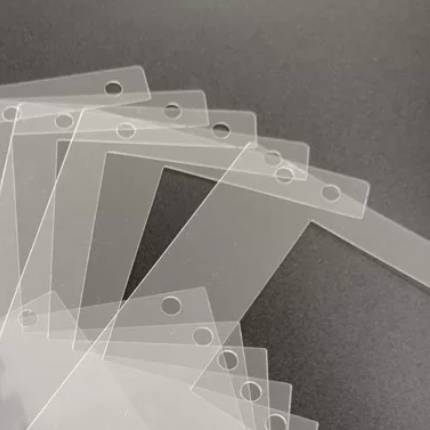
By migrating from hard-tooling molds to software-driven laser micro-machining, manufacturers unlock extensive operational flexibility and bottom-line cost efficiencies:
Infinite Geometric Freedom Without Tooling Costs: Fabricating dense micro-hole arrays, complex sweeping curves, micro-window cutouts, or highly customized patterns requires thousands of dollars in mechanical die fabrication. Laser platforms parse digital CAD geometries directly, allowing engineering teams to implement immediate design revisions and modify profiles on the fly without tooling delays or mold obsolescence. This creates an ideal setup for high-mix, small-to-medium volume contract manufacturing.
Ultra-High Precision and Minimum Thermal Impact: Advanced optical focus systems achieve exceptionally narrow kerf widths and precise repeatability tracking. This allows for high-density nested layouts where adjacent parts can share vector cutlines, reducing raw material scrap rates on expensive multi-layer packaging or battery webs.
Zero Performance Degradation Over Time: Because a laser beam never grows dull, the edge profile executed on the ten-thousandth component matches the first panel perfectly, securing predictable shift-to-shift quality metrics and protecting against customer defect claims.
Seamless Automation Integration: Digital laser centers interface natively with industrial coaxial CCD smart vision cameras, automated conveyor handling, and continuous roll-to-roll web feeders, enabling continuous, unattended production workflows for label and film converters.
While the advantages are extensive, polypropylene is not the easiest material to laser process. Due to its low thermal melting threshold, sharp thermoplastic behavior, and specific infrared absorption spectra, improper laser parameter tuning can cause material localized burning, heavy melted edge beads, yellow discoloration, recast accumulation, and localized shrink-back.
To circumvent these thermal issues, selecting the appropriate laser source type and pairing it with high-velocity beam-steering optics is critical for matching the chemical ablation threshold of the PP polymer chain.
| Laser Technology Tier | Polypropylene Processing Efficiency and Quality Yield | Primary Industrial Application Focus |
|---|---|---|
| RF CO2 Laser (10.6μm) | Excellent high absorption rate, rapid processing speeds, and optimal cost-efficiency for volume production. | PP thin packaging films, protective sheets, battery insulation layers. |
| UV Laser (355nm) | High precision beam focus via photolytic bond breaking, minimizing thermal margins. | Micro-aperture arrays, precision electronics components, trace skiving. |
| Picosecond Ultrafast Laser | Premium cold ablation micro-machining with a near-zero heat affected zone and zero melting artifacts. | Medical grade components, dynamic battery separators, microfluidics. |
| Femtosecond Ultrafast Laser | Extreme sub-micron processing accuracy, eliminating edge carbonization and slag completely. | Ultra-critical implantable medical membranes and extreme tolerance parts. |
| Standard Fiber Laser (1.06μm) | Extremely low organic absorption rate; causes severe material scorching and charring rather than cutting. | Not recommended for non-marked organic polymer profiling. |
Chanxan Laser workstations deploy tuned energy delivery to capitalize on the highest value growth sectors inside modern manufacturing facilities:
Advanced Battery and EV Assembly Lines: Precision singulation of PP insulation gaskets, wrap barriers, and flame-retardant separator sheets. The laser preserves the critical structural integrity and uniform thickness across battery pack modules without imparting deformation.
Medical and Biomedical Device Fabrication: Burr-free cutting of disposable medical consumable components, microfluidic layout tracks, and precision diagnostic filter membranes where particulate debris or melted fibers would trigger clinical rejects.
High-Speed Flexible Packaging: Micro-perforation for controlled-atmosphere storage bags, easy-tear pouch scoring, and custom window profiling on co-extruded films without rupturing structural outer layers.
Automotive Weight Reduction Trim: Precision edge trimming and custom feature hole cutting on polypropylene composite sheets, acoustic soundproofing dampeners, and interior support structures.
To match your specific factory throughput targets and edge quality tolerances, Chanxan Laser delivers modular, industrial-grade platforms configured for organic polymers:
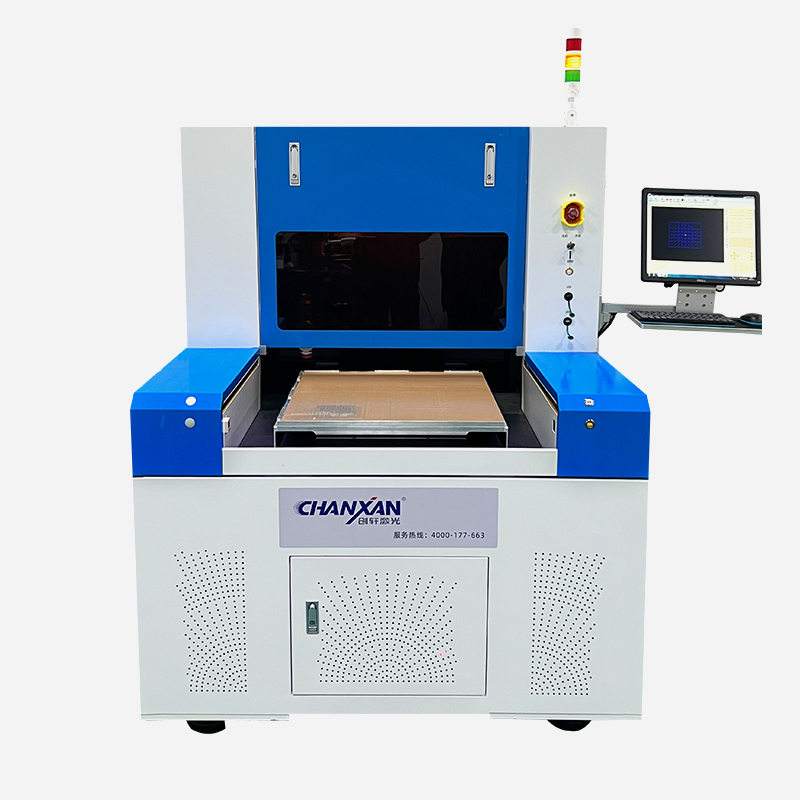
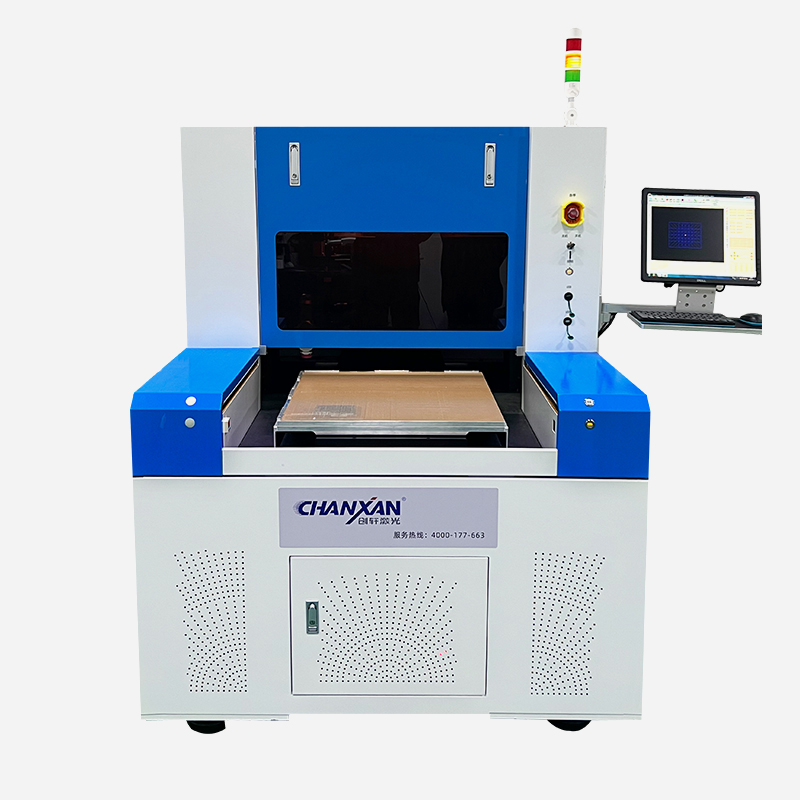
Chanxan High-Speed RF CO2 Laser Micro-Processing Workstation: Tuned for maximum throughput, this system leverages premium RF excited gas tubes to deliver ultra-consistent power outputs. Combined with high-dynamic galvanometer scanners, it drives linear cutting speeds to their limits, offering the most competitive return on investment for volume film and sheet processing.
Chanxan Ultrafast Picosecond/Femtosecond Precision Platform: Engineered specifically for high-spec medical and micro-electronics programs where heat input is strictly capped. Its ultra-short pulse durations vaporize the PP film instantly, maintaining absolute structural fidelity right up to the cut boundary line.
Q: Can a CO2 laser cleanly process multi-layer films containing both PP and other polymers?
A: Yes. CO2 infrared wavelengths are highly absorbed across a wide variety of standard organic packing polymers, enabling uniform, simultaneous ablation across laminated or co-extruded structures.
Q: Does cutting polypropylene generate toxic fumes or dark soot?
A: Clean polypropylene primarily sublimates into simpler volatile hydrocarbons, carbon dioxide, and water vapor, leaving a translucent, soot-free edge profile. Utilizing standard industrial carbon and HEPA fume extraction keeps the air space fully compliant with workplace safety rules.
Q: Is it possible to perforate or score a PP film without cutting all the way through the material sheet?
A: Absolutely. Our advanced digital pulse control software allows operators to throttle power inputs and pulse frequencies with microsecond precision, enabling high-speed surface scoring, kiss-cutting, or blind micro-vent drilling down to defined depth limits.
If edge melting, high scrap rates, or expensive mechanical tooling revisions are limiting your polypropylene product lines, a digital laser solution can stabilize your operational process window. The most reliable way to verify performance is with physical material analysis rather than a specifications sheet:
Request a Free Material Sample Cut: Submit your custom CAD drawing vector files and a sample roll or sheet of your specific polypropylene substrate. Our applications team will complete a precision optimization run, returning high-definition microscopic edge photos and processing cycle logs for your evaluation.
Schedule an Engineering Application Consultation: Speak directly with a Chanxan system configuration specialist to assess your floor throughput needs and determine the ideal wattage or ultrafast pulse parameters.
Obtain a Customized Equipment ROI Proposal: Receive a comprehensive financial and hardware specification quotation custom configured for your facility footprint and automated handling workflow.
Send your polypropylene sample materials and CAD drawings to Chanxan Laser's technical lab for a free, high-precision trial cut and customized ROI evaluation.
Get a Free Sample Test & QuotationDisclaimer: To protect intellectual property and honor customer Non-Disclosure Agreements, specific corporate background details in this industry scenario have been anonymized. However, all technical processing parameters, workflow data matrices, and operational cost-effectiveness metrics remain fully verified by Chanxan Laser's engineering applications laboratory.
| Free solution
Previous: LCP Laser Processing & Microvia Drilling for 5G mmWave
Next: PET Film Laser Cutting for Flexible Electronics | CO2 Laser Cutting PET & Mylar