
Key Words: Silicon Wafer Dicing PCB Depaneling Glass Cutting
Home > News > Industry News
【Description】:
Discover how Chanxan picosecond laser systems optimize Laser-Induced Graphene (LIG) fabrication on polyimide film with high conductivity and low thermal damage.
Laser-induced graphene (LIG) — a porous, conductive carbon structure converted directly from a polymer surface by laser irradiation — has emerged as one of the most promising solutions for producing flexible electrodes, sensors, and interconnects at low cost and high throughput.
When LIG is generated on polyimide (PI) film, a substrate already prized for its thermal stability, chemical resistance, and mechanical flexibility, the result is a one-step, mask-free electrode fabrication route that eliminates etching chemicals, conductive inks, and vacuum deposition entirely. The remaining engineering challenge is process control: how to convert PI into graphene with high conductivity, fine resolution, and minimal thermal damage to the surrounding substrate. This is where picosecond laser direct writing distinguishes itself from nanosecond and CO2 laser approaches.
A 2023 comparative study in Polymers tested a solid-state picosecond laser (tunable across 355 nm, 532 nm, and 1064 nm) directly against a CO2 laser on the same PI substrate. Raman spectroscopy confirmed high-quality, few-layer graphene formation from the picosecond source, and the 1064 nm picosecond process — carried out under a nitrogen atmosphere to suppress oxidation — produced a conductive LIG layer with sheet resistance as low as 5 Ω/sq, a strong result by any LIG benchmark. The same research also clarified why wavelength matters: infrared wavelengths (both CO2's 10.6 µm and near-infrared 1064 nm) drive graphitization mainly through a photothermal mechanism — rapid, localized pyrolysis that breaks and recombines chemical bonds with gas release — while shorter, ultraviolet wavelengths lean more toward a photochemical mechanism.
The practical takeaway: the choice of laser source doesn't determine whether LIG can be formed — both CO2 and picosecond sources can convert PI into graphene. What differs is the underlying mechanism (photothermal vs. photochemical), the resulting heat-affected zone, and how tightly the process parameters can be controlled and repeated — which is exactly where picosecond systems offer an edge for production-grade electrode fabrication.
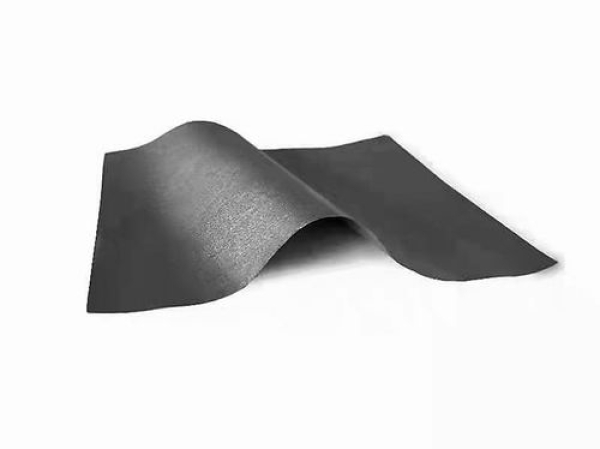
LIG is formed when a focused laser beam locally heats or photochemically breaks the aromatic imide structure of polyimide, triggering carbonization and graphitization within microseconds to nanoseconds. The result is a three-dimensional, porous graphene network embedded directly into the film surface — no catalyst, no chemical vapor deposition furnace, and no transfer step required.
Key advantages of LIG electrodes on PI film include:
Direct patterning — electrodes, traces, and sensor arrays are written straight from a digital design file
High surface area — the porous graphene morphology benefits electrochemical sensors, supercapacitors, and EMI shielding layers
Excellent flexibility — LIG traces on PI can withstand thousands of bending cycles without significant resistance drift
Scalable, additive-free processing — no photoresist, developer, or etchant chemicals are consumed
Not all laser sources produce LIG of equal quality. The pulse duration directly determines how heat diffuses into the PI film during graphitization, which in turn governs conductivity, line resolution, and mechanical integrity of the surrounding substrate.
Picosecond pulses deliver energy on a timescale shorter than the thermal diffusion time of polyimide. This confines carbonization to a narrow, well-defined region, minimizing the heat-affected zone that typically causes warping, discoloration, or micro-cracking with longer nanosecond or CO2 laser pulses.
Because thermal spreading is suppressed, picosecond laser direct writing achieves finer line widths and tighter pitch between electrode traces — critical for high-density flexible sensor arrays, RFID antennas, and wearable biosensor electrodes where feature size directly limits device density.
Controlled, repeatable pulse energy delivery produces more uniform graphitization across the scanned area, resulting in LIG electrodes with lower sheet resistance and stronger adhesion to the underlying PI film — both essential for long-term electrode reliability under repeated flexing. Published comparative work has shown picosecond-processed LIG (1064 nm, under nitrogen atmosphere) reaching sheet resistance as low as 5 Ω/sq, illustrating the ceiling this process class can reach when parameters and atmosphere are properly controlled.
Picosecond systems offer stable pulse-to-pulse energy and high repetition rates, allowing manufacturers to move from lab-scale demonstration to roll-to-roll or panel-level production without sacrificing pattern fidelity.
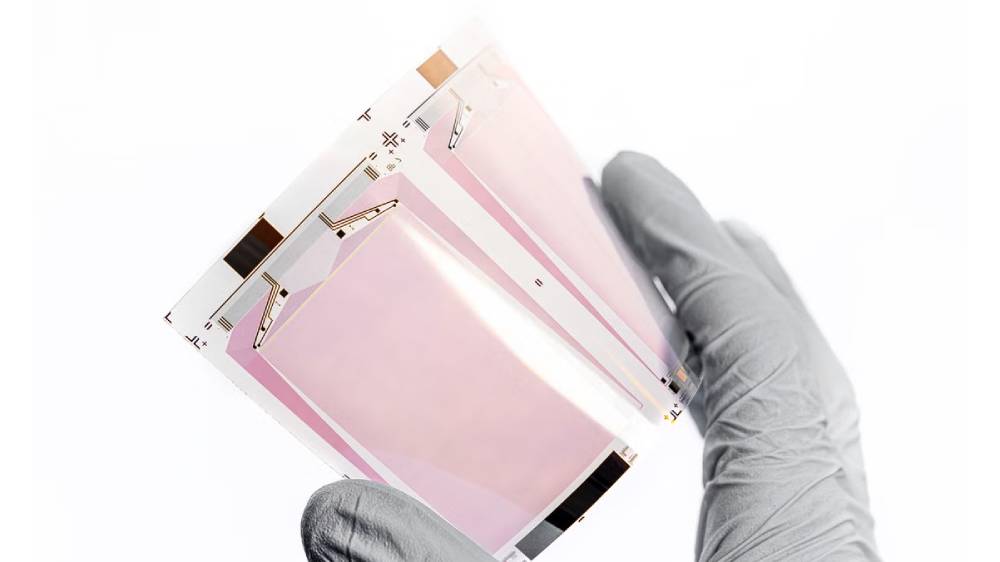
Recent academic research on LIG fabrication has shown that laser power and scanning speed do not simply trade off linearly against sheet resistance — instead, the relationship follows a distinct optimum window. Push the power or speed too far in either direction and the film either fails to graphitize or suffers from over-oxidation and delamination. Finding and holding that narrow process window consistently is one of the hardest parts of translating LIG-on-PI from a lab demonstration into a repeatable production process.
A particularly useful refinement reported in recent studies is multi-pass (double-lasing) irradiation: after an initial laser scan converts the PI surface into graphene, a carefully tuned second pass at lower power further increases the degree of graphitization — without any added chemical dopants or metal precursors. The result is measurably lower sheet resistance, tighter electrochemical peak separation, and higher sensing sensitivity compared to a single-pass scan alone. In other words, the sequencing and parameter control of the laser process itself is a lever for electrode performance, not just the choice of laser source.
This is exactly the kind of process refinement that benefits from a picosecond platform with fine-grained, repeatable control over pulse energy, repetition rate, and multi-layer scan programming. On a Chanxan ultrafast laser system, engineers can program multi-pass scan sequences directly in the control software — defining a first pass for initial graphitization and a second, lower-energy pass for graphitization enhancement — and lock in those parameters as a reusable process recipe. This turns what would otherwise be manual trial-and-error parameter hunting into a repeatable, documented workflow that can be handed off from R&D to production.
Substrate preparation — commercial PI film is cleaned and mounted on a flat or roll-fed stage
CAD-to-laser pattern transfer — electrode geometry (interdigitated sensors, antenna traces, interconnects) is imported directly into the laser control software
Picosecond laser direct writing — the beam scans the PI surface, converting the imide layer into porous graphene along the programmed path
In-line inspection — resistance mapping or optical inspection confirms conductivity and pattern accuracy
Optional post-processing — encapsulation, lamination, or additional metallization for hybrid electrode stacks
This single-step conversion process is a major reason LIG-on-PI is gaining traction for prototyping and pilot production of flexible sensors, strain gauges, gas sensors, EMI shielding films, and printed antenna structures.
Wearable health monitoring — flexible ECG, EMG, and sweat-sensing electrodes that conform to skin
Electrochemical sensors — porous LIG electrodes patterned on PI film have been demonstrated as sensitive amperometric sensors, including hydrogen peroxide (H2O2) detection with a clear linear response across a range of concentrations, illustrating how graphitization quality directly translates into sensing performance
Flexible printed circuits (FPC) — fine-pitch interconnects replacing traditional copper etching for lightweight designs
Supercapacitors and micro-batteries — high-surface-area LIG electrodes for on-film energy storage
RF and antenna structures — laser-written conductive traces for flexible RFID and IoT antennas; a picosecond-written LIG pattern on Kapton PI film has been built and tested as a working 2.45 GHz patch antenna, demonstrating real-world viability for high-frequency flexible electronics
EMI shielding films — porous graphene layers offering lightweight electromagnetic shielding on flexible substrates
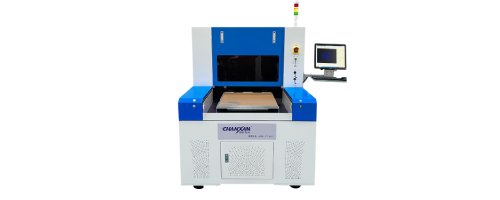
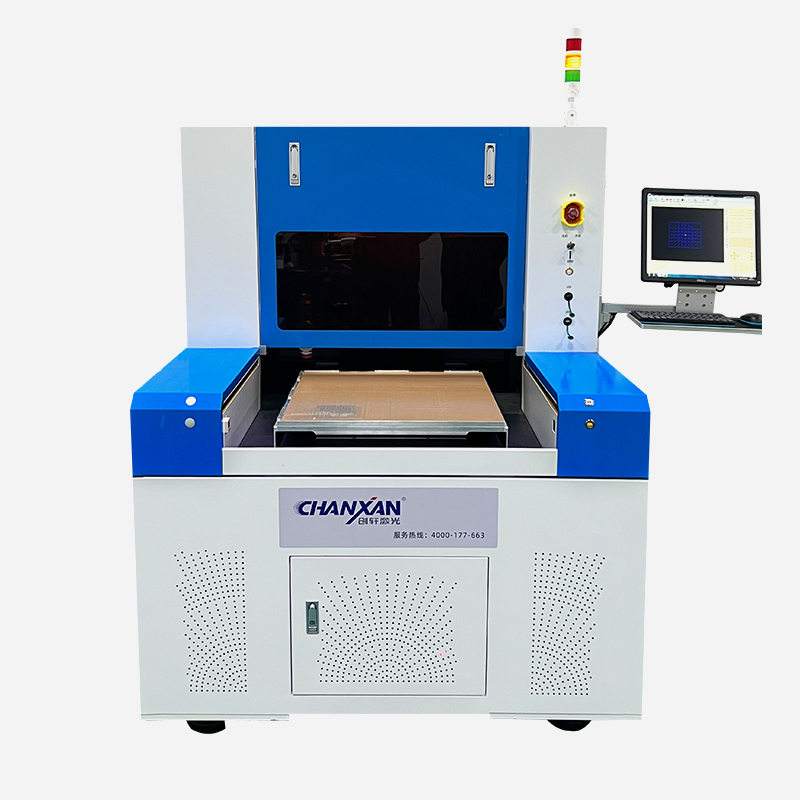
For R&D teams and manufacturers evaluating picosecond laser direct writing for LIG-on-PI applications, Chanxan ultrafast laser systems are engineered specifically for the precision and stability this process demands.
Chanxan's picosecond laser platforms combine:
Stable, high-repetition-rate picosecond pulses tuned for polyimide graphitization without excessive thermal spread
High-precision scanning heads for fine electrode line widths and complex sensor geometries
Flexible integration options, from flatbed sample stages for R&D prototyping to roll-to-roll compatible configurations for scale-up
Process parameter control software allowing engineers to fine-tune pulse energy, scan speed, and hatch spacing to optimize sheet resistance and adhesion for a given PI film grade
Whether the goal is developing a new flexible biosensor design, prototyping a printed antenna, or scaling LIG electrode production for wearable devices, a Chanxan ultrafast laser system provides the pulse stability and beam-positioning accuracy needed to move LIG-on-PI fabrication from lab bench experimentation to repeatable, production-grade output.
The combination of laser-induced graphene chemistry and polyimide film's mechanical resilience has opened a genuinely additive, mask-free pathway to flexible conductive electrodes. Picosecond laser direct writing is the process refinement that makes this pathway commercially viable — delivering finer resolution, lower thermal damage, and more consistent conductivity than legacy laser sources. As flexible electronics, wearable sensors, and printed energy storage devices continue to scale, picosecond laser platforms such as Chanxan's ultrafast laser systems are positioned to support this transition from research demonstration to industrial-grade manufacturing.
Interested in evaluating picosecond laser direct writing for your own LIG-on-PI electrode application?
Contact Chanxan Expert Team| Free solution
Previous: What Is the Most Precise Laser Method for PCB Coating Removal Without Damaging Underlying Copper?
Next: Precision Laser Patterning for ITO Films in Touch Screen Manufacturing