
Key Words: Silicon Wafer Dicing PCB Depaneling Glass Cutting
Home > News > Industry News
【Description】:
Production-ready solution for quartz glass cutting, engineered specifically for hard, transparent, and brittle materials that are difficult to process by any other method.
Quartz glass—whether fused silica (amorphous SiO₂) or synthetic fused quartz—stands apart from ordinary glass in almost every measurable property. It offers:
Extremely high thermal resistance: softening point above 1600°C; can withstand rapid temperature changes without cracking.
Excellent optical transmission: transparent from deep UV (185 nm) to near‑IR (2.5 µm), with minimal absorption.
Exceptional chemical stability: resistant to most acids, water, and organic solvents; only HF attacks it significantly.
Low thermal expansion: CTE of ~0.5×10⁻⁶/K, nearly an order of magnitude lower than borosilicate glass.
These properties make quartz glass the material of choice for some of the most demanding applications in modern industry: semiconductor manufacturing, high‑power optics, UV lithography, and precision laboratory instrumentation. However, these same properties—especially its extreme hardness, brittleness, and transparency—also make quartz glass one of the most difficult materials to machine.
Laser cutting of quartz glass requires a fundamentally different approach from processing soda‑lime or borosilicate glass. Conventional CO₂ lasers, which work adequately for thicker soda‑lime glass, often fail on quartz due to its low thermal expansion and high thermal shock resistance. Mechanical cutting methods produce edge chipping, micro‑cracks, and subsurface damage that are unacceptable for precision applications.
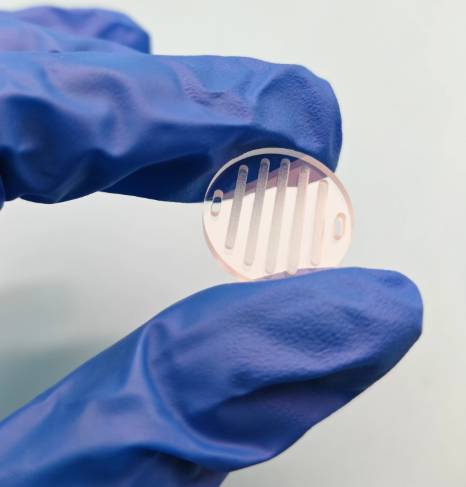
Ultrafast laser technology – specifically UV picosecond (ps) and femtosecond (fs) lasers – has emerged as the only viable method for high‑quality cutting of quartz glass. By removing material through cold ablation, these lasers produce crack‑free, smooth edges without introducing thermal stress or mechanical damage.
| Type | Composition | Key Characteristics | Typical Use |
|---|---|---|---|
| Fused silica | SiO₂ (99.9+%) manufactured from high‑purity silica sand | Excellent UV transmission; low OH content | Semiconductor optics, UV lithography |
| Synthetic fused silica | SiO₂ manufactured from chemical precursors (SiCl₄ + flame hydrolysis) | Highest purity (>99.999%); lowest inclusions; superior UV transmission | Excimer laser optics, aerospace |
| Natural quartz glass | SiO₂ from natural quartz crystals | Lower cost; contains trace impurities; limited UV transmission | General laboratory glassware, heating elements |
Quartz glass is indispensable in semiconductor manufacturing due to its high‑temperature stability, chemical resistance, and UV transparency.
| Application | Typical Components | Why Quartz | Cutting Requirement |
|---|---|---|---|
| Wafer processing chambers | Quartz windows, tubes, and furnace liners | Withstands temperatures >1000°C; chemically inert in aggressive plasmas | Precision cutting of large panels; crack‑free edges to withstand thermal cycling. |
| UV lithography optics | Lenses, masks, and reticles for deep‑UV and extreme‑UV systems | High UV transparency; low thermal expansion; minimal absorption | Ultra‑smooth edges; no subsurface damage; ±10 µm precision. |
| Quartz boats and carriers | Wafer handling carriers for furnace processing | High‑temperature resistance; low contamination | Precise cutting and shaping; edges must not generate particles. |
| Sputtering targets | Quartz substrates for thin‑film deposition | Purity; durability | Smooth edges for vacuum sealing and handling. |
Quartz glass is used in optical systems where performance cannot be compromised.
| Application | Typical Products | Why Quartz | Cutting Requirement |
|---|---|---|---|
| Lenses for high‑power lasers | Excimer laser optics; CO₂ laser optics | High UV/IR transmission; low thermal expansion | Precision curved cuts; no subsurface damage that could scatter high‑power beams. |
| Optical filters | Bandpass filters; dichroic mirrors | UV transmission; stability | Smooth edges; no chips that could affect optical mounting and alignment. |
| Spectrophotometer cells | Cuvettes for UV‑Vis spectroscopy | UV transparency; chemical resistance | Clean, straight edges; no distortion that could affect optical measurement. |
| Fiber optic components | Ferrules, collimators, windows | Precision; durability | Small‑diameter cutting; tight tolerances. |
| Astronomical optics | Lenses and windows for telescopes | Thermal stability; low autofluorescence | Large‑diameter cutting; exceptional edge quality. |
Quality standard: For optical components, any edge defect—even microscopic—can scatter light, reduce transmission, or create unwanted diffraction. The cutting process must produce edges that are as smooth as the original polished surfaces.
Quartz glass is standard in high‑end laboratory equipment where performance and reliability are critical.
| Application | Typical Products | Why Quartz | Cutting Requirement |
|---|---|---|---|
| High‑temperature crucibles | Crucibles for chemical analysis | Thermal resistance; chemical inertness | Precise shapes; no edge cracks that could fail under heat. |
| Sample cells | Micro‑titer plates; flow cells | UV transparency; biocompatibility | Clean edges for fluid sealing; optical clarity. |
| Reaction vessels | High‑pressure glass reactors | Pressure resistance; chemical resistance | Precision cutting; crack‑free edges to withstand pressure. |
| Custom glassware | Specialised micro‑fluidic chips | UV transparency; inertness | Micro‑channel formation; precision hole drilling. |
| Analytical instrument components | Sample holders for spectrometers; optical windows | UV‑Vis transmission; dimensional stability | High precision; no edge defects. |
Beyond semiconductors, optics, and laboratories, quartz glass is used in industrial equipment where extreme conditions exist.
| Application | Typical Products | Why Quartz | Cutting Requirement |
|---|---|---|---|
| Industrial viewports | Observation windows for furnaces, reactors, combustion chambers | Withstands temperatures >1000°C; thermal shock resistance | Large circular cuts; smooth edges for sealing. |
| Lighting | UV lamps; arc tubes | UV transmission; thermal resistance | Precision cutting; no cracks that could fail under high pressure. |
| Pressure vessels | High‑pressure glass reactors | Mechanical strength; chemical resistance | Precision cutting; crack‑free edges to maintain structural integrity. |
| Aerospace components | Window assemblies for spacecraft; optical sensors | Thermal stability; low outgassing | High precision; no contamination; reliability under extreme conditions. |
Some manufacturers consider wet etching as an alternative to laser cutting for quartz glass.
| Factor | Laser Cutting | Wet Etching (HF) | Winner |
|---|---|---|---|
| Edge quality | Excellent—smooth, crack‑free | Excellent—chemically polished | Comparable |
| Aspect ratio | High—deep, straight cuts | Limited—isotropic undercut | Laser |
| Shape flexibility | Any shape—software‑defined | Mask‑dependent—limited | Laser |
| Process speed | Fast—seconds per part | Slow—minutes to hours | Laser |
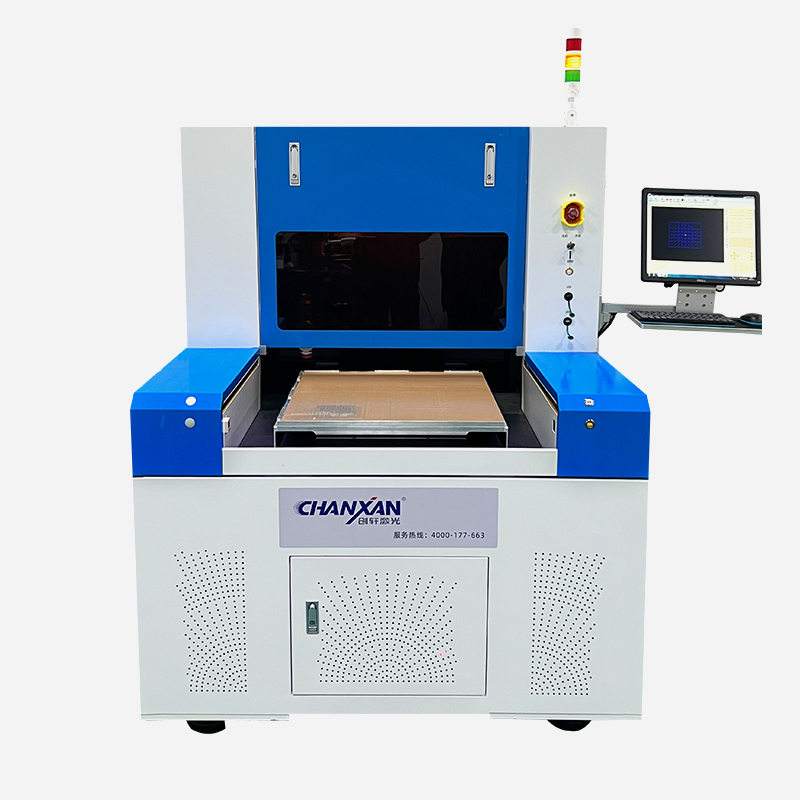
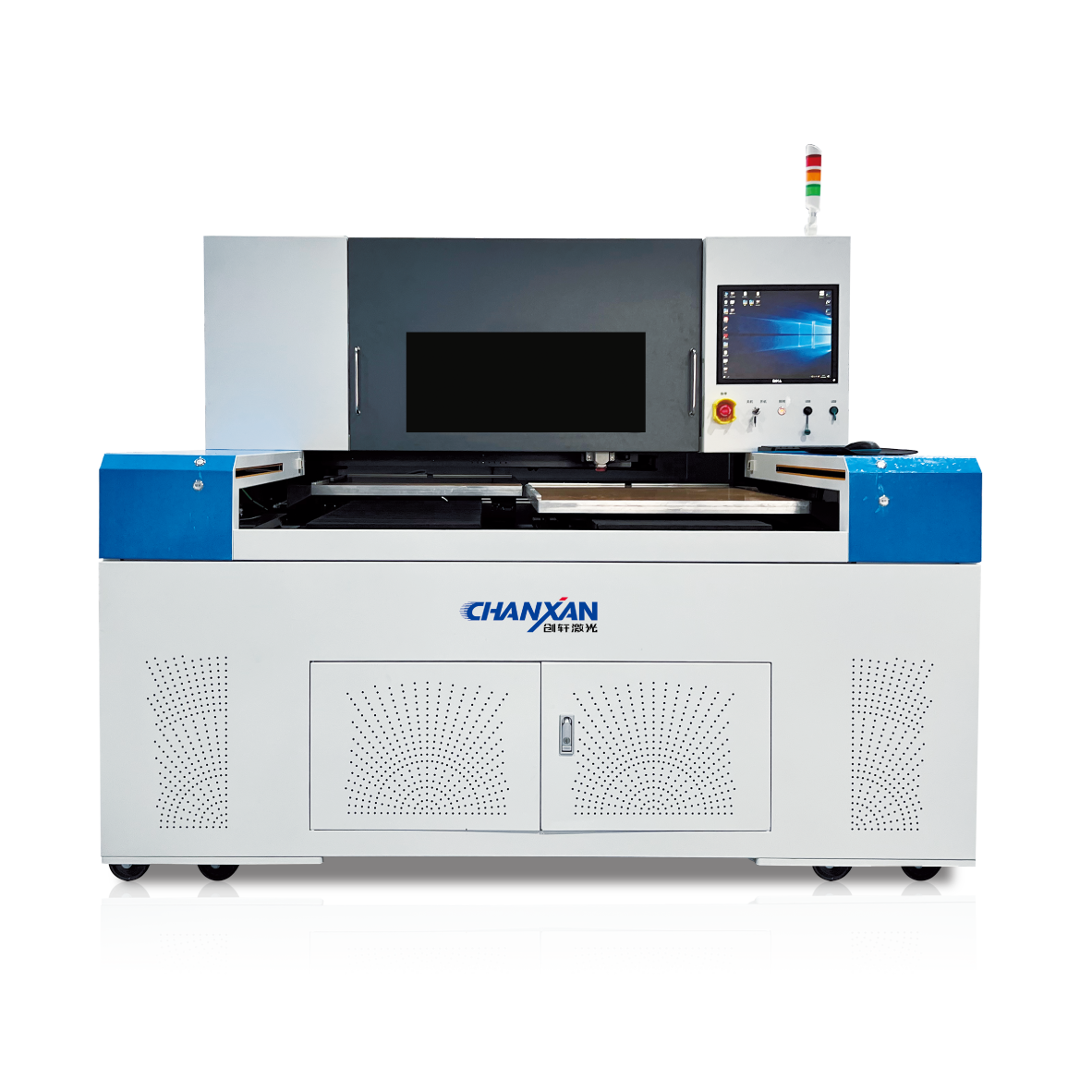
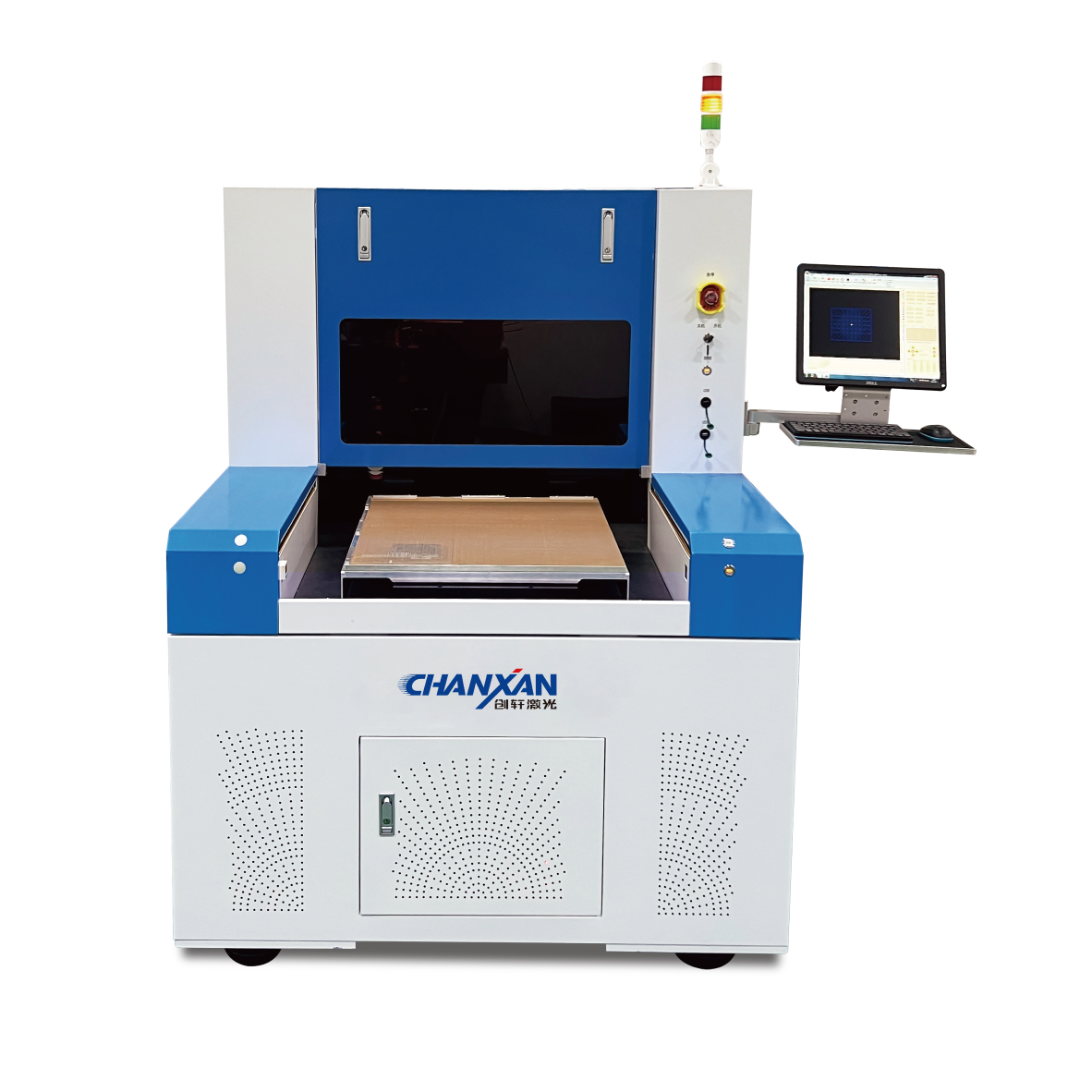
Chanxan Laser provides a production‑ready solution for quartz glass cutting: the UV Picosecond Laser Micro‑Machining System.
This system is engineered specifically for hard, transparent, and brittle materials that are difficult to process by any other method.
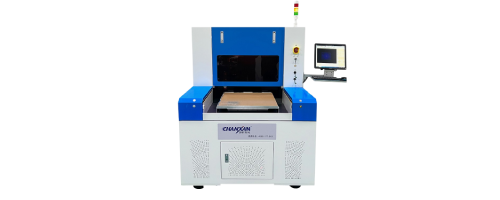
| Parameter | Specification | Why It Matters for Quartz |
|---|---|---|
| Laser type | UV Picosecond (355 nm) | Strong absorption at quartz surface; enables cold ablation. |
| Pulse width | <10 ps | Cold ablation—no micro‑cracks; preserves quartz integrity. |
| Average power | 30W | Sufficient energy for quartz's higher ablation threshold. |
| Repetition rate | 400–2000 kHz | Flexible tuning for different quartz thicknesses and grades. |
| Beam quality | M² <1.2 (TEM00) | Tight focus; precise kerf control. |
| Spot size | 20 µm | Fine‑detail cutting; sharp corners and curves. |
| Processing accuracy | ≤20 µm | Meets semiconductor and optical tolerances. |
| X/Y repeatability | ±2 µm | Consistent part‑to‑part quality. |
| Working area | 600 mm × 500 mm | Large panels; efficient material utilisation. |
| Platform | Granite base + linear motors | Vibration‑free; long‑term precision. |
| CCD alignment | Auto‑recognition | Accurate cut placement; compensates for panel position. |
| Focus tracking | Dynamic Z‑axis | Compensates for quartz warpage; maintains focus. |
| Software | Self‑developed; DXF/DWG import | Rapid job changeover; process database. |
| Free solution
Previous: Optical Glass Laser Cutting – High‑Precision Processing for Optical Components
Next: Borosilicate Glass Laser Cutting – How to Cut Borosilicate Glass Guide