
Key Words: Silicon Wafer Dicing PCB Depaneling Glass Cutting
Home > News > Industry News
【Description】:
High-speed laser cutting & drilling solutions for silicon nitride (Si₃N₄) power modules. Discover Chanxan's picosecond laser machines for AMB substrates with minimal thermal stress.
Silicon nitride (Si₃N₄) has become the enabling ceramic for next-generation power electronics and high-temperature mechanical components. Its unique combination of properties—high fracture toughness (~6–8 MPa·m¹/₂), excellent thermal shock resistance (ΔT > 800 °C), low density (3.2 g/cm³), and moderate thermal conductivity (20–30 W/m·K)—makes it ideal for:
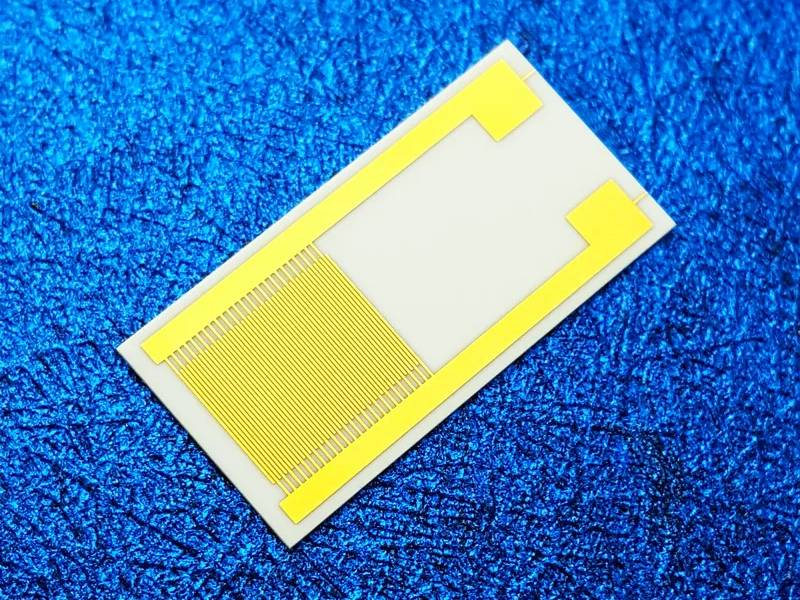
Silicon nitride is one of the hardest engineering ceramics (HV 1,400–1,700) and is highly covalent—making it extremely resistant to both mechanical and thermal removal. Conventional blade dicing suffers from several critical bottlenecks:
Extremely slow cutting: Typical feed rates of only 0.5–2 mm/s for standard 0.5 mm thick substrates.
Severe diamond blade wear: Blades may last only 20–30 cuts, creating massive consumable overheads.
Edge delamination: High cutting forces cause layer-by-layer micro-fracturing (especially in thin AMB copper metallisation).
Zero design flexibility: Complex curves or internal contours are impossible without costly EDM or secondary steps.
Thermal laser processing (CO₂ or long-pulse Nd:YAG) is also highly problematic. Because Si₃N₄ has low thermal conductivity, heat accumulates rapidly at the cut front, generating severe tensile stresses that cause micro-cracking.
To overcome these obstacles, utilising an advanced ceramics laser processing system with short‑pulse UV or picosecond sources is the only viable path for high‑throughput, low‑defect Si₃N₄ machining. The "cold-ablation" mechanism removes material via direct chemical bond breaking, preventing thermal build-up.
Si₃N₄ has a bandgap of ~5.0 eV, making it transparent to standard IR but highly absorbing in the deep-UV spectra. For industrial-grade production, Chanxan employs picosecond 355 nm (UV) or femtosecond 1030 nm (via non-linear multi-photon absorption) platforms:
At 355 nm, high intensity picosecond pulses (>10¹² W/cm²) drive avalanche ionisation, creating a localized plasma that cleanly expels material without melt zones.
The sub-picosecond pulse duration is faster than thermal lattice vibrations, confining the Heat Affected Zone (HAZ) to < 5 µm—maintaining the raw structural integrity of the ceramics.
For substrates >1.0 mm, Chanxan integrates a dynamic multiple-pass focal shifting strategy, maintaining a perfectly straight, taper-free kerf wall.
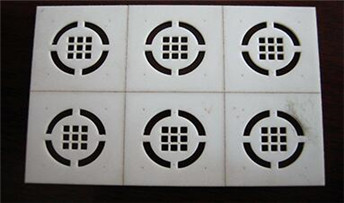
High-precision Si₃N₄ micro-processing serves critical industrial fields governed by rigorous reliability standards:
AMB-Si₃N₄ dicing for EV traction inverters (die shear > 25 MPa).
Sensor packaging for exhaust gas and battery monitoring.
Cooling hole drilling in ceramic stator guide vanes.
Ultra-precise cutting of curved RF radome panels.
Slicing high-grade hybrid bearing rings (fine surface finish).
Complex profile dicing for wear liners in mining equipment.
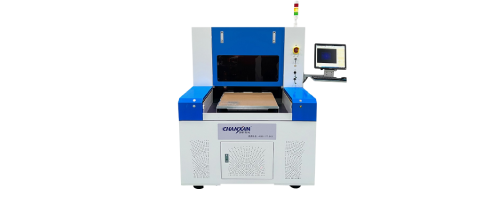
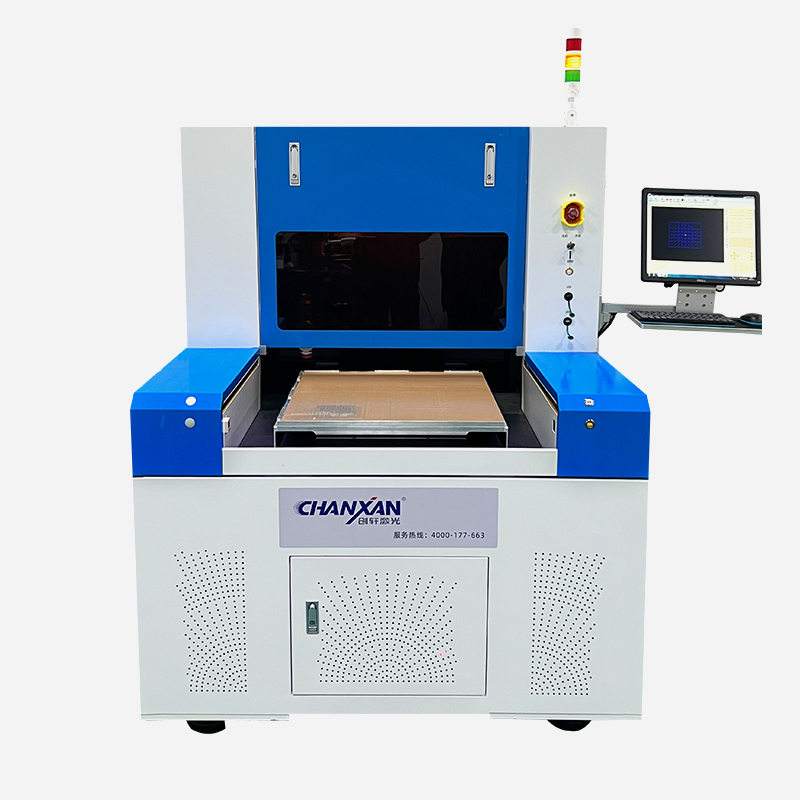
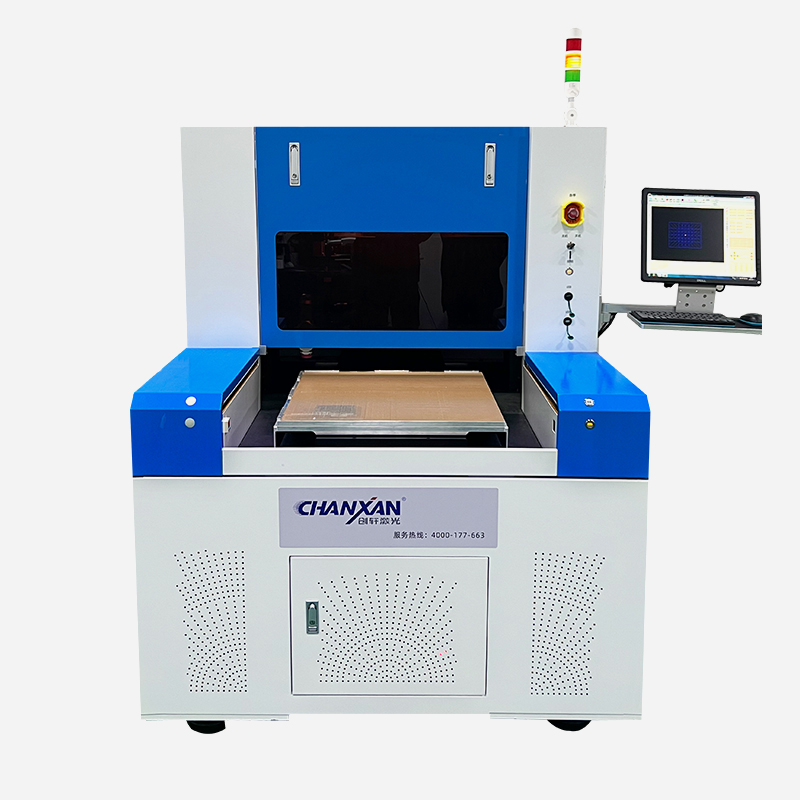
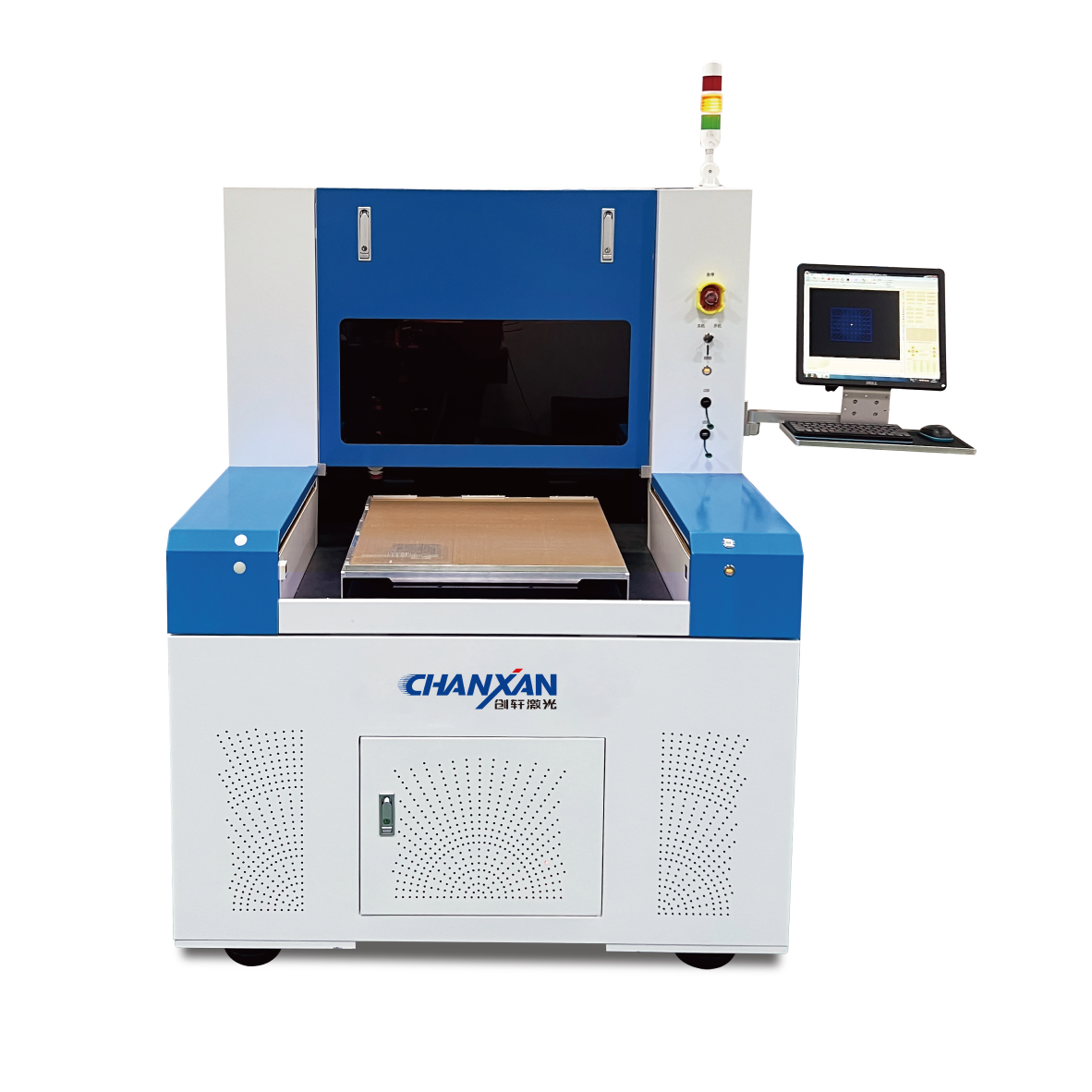
The Chanxan Picosecond Laser System is engineered for high-precision processing of advanced ceramic substrates, including AMB (Active Metal Brazed) substrates and thick Si₃N₄ ceramic materials. By utilizing ultrashort pulse laser technology, the system achieves precise material removal with minimized thermal impact, protecting substrate integrity and metallized structures.
| System Feature | Key Process Benefit |
|---|---|
| Sub-400 fs Ultrafast Source | Enables cold laser processing with zero thermal residue, eliminating micro-cracks and delamination in metallization layers. |
| High-Precision Micro Platform | Delivers high-yield dicing, micron-level slotting, and precision alignment for high-density electronic modules. |
| High-Speed Linear Motion | Maintains absolute positioning repeatability, ensuring consistent batch-to-batch processing quality. |
| Advanced Vision Alignment | Integrates CCD optical systems for automated alignment on fiducials, complex layouts, and warped wafers. |
| Automatic Focus Tracking | Real-time surface distance sensing ensures uniform focal depth on uneven substrates and multi-layered boards. |
| Fume & Debris Extraction | Co-axial and side-vacuum ports clean redeposited nanoparticles to prevent optical degradation and surface contamination. |
Chanxan Laser offers highly specialized Picosecond Laser Cutting Machines optimized for AMB Ceramic Substrates & Si₃N₄ Power Modules. Submit your stack-up specifications or CAD drawings today for a Free Process Feasibility Test—receive a comprehensive testing report within 48 hours.
| Free solution