
Key Words: Silicon Wafer Dicing PCB Depaneling Glass Cutting
Home > News > Industry News
【Description】:
Boost ZrO₂ processing yield to 97%+. Chanxan's picosecond laser system delivers micro-crack-free, phase-stable cutting for dental, medical & RF components.
Zirconia (ZrO₂) is unique among engineering ceramics because of its transformation-toughening behaviour. The metastable tetragonal phase can transform to monoclinic under stress, absorbing fracture energy and imparting a fracture toughness of 10–12 MPa·m¹/₂—two to three times higher than alumina or silicon nitride. This combination of high strength (>1,000 MPa), wear resistance, and biocompatibility has made zirconia the material of choice for:
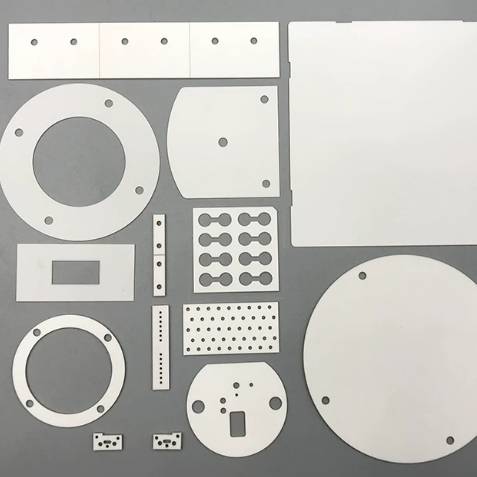
Despite its toughness, zirconia is extremely sensitive to chipping due to phase transformation during mechanical cutting. The localized stress from a diamond blade or conventional CNC drill can trigger the tetragonal-to-monoclinic (t→m) transformation.
Micro-crack Propagation: Volume expansion (~4%) generates tensile stresses that create micro-cracks and edge spalling extending 100–200 µm into the component.
Severe Tool Attrition: Extreme hardness (HV 1,200–1,400) causes rapid wear of expensive diamond-coated tools.
Local Heat Build-up: Low thermal conductivity (~2.5 W/m·K) traps mechanical heat, further inducing uncontrolled phase instability and thermal stress.
To bypass these mechanical and thermal limitations, utilising an advanced ceramic laser processing system has become the established method for zirconia micro-machining. Non-contact, highly localised energy ablation avoids stress-induced phase transformation, preserving raw material strength.
Zirconia has a wide bandgap (~5.0 eV) and is transparent in the near-IR spectra, but absorbs strongly at UV (355 nm) wavelengths. Chanxan integrates picosecond UV (355 nm) or ultrafast femtosecond pulsed lasers to achieve cold laser ablation:
Deposits energy faster than thermal lattice vibrations, keeping the local temperature well below the t→m phase transformation threshold.
Confines energy in a sub-micrometre processing volume, producing vertical sidewalls and eliminating thermal recast layers.
XRD (X-ray diffraction) analysis of cut edges confirms zero monoclinic peak shifts, proving the stabilized tetragonal structure remains completely intact.
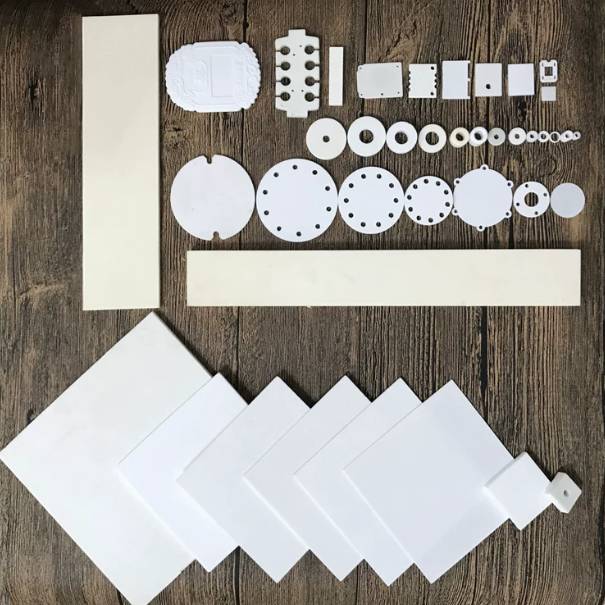
Zirconia laser micro-machining is highly valued across sectors where mechanical reliability and traceability are non-negotiable:
CAD/CAM-machined frameworks: Chip-free dicing for zirconia crowns.
Orthopaedic trial components: Rapid, stress-free prosthetic prototyping.
Surgical guides: High-precision holes compatible with medical sterilization.
Fibre-optic ferrules: Zero-damage drilling of 125 µm micro-vias.
High-wear valve seats: Intricate contour cutting for energy sectors.
Measurement probes: Slicing of miniature pins, rings and balls.
Thermal barriers: Precision micro-drilling on zirconia-coated assemblies.
Gyroscope housings: Manufacturing of ultra-stable inertial systems.
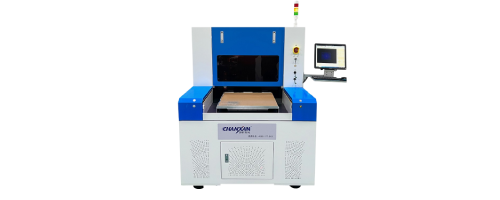
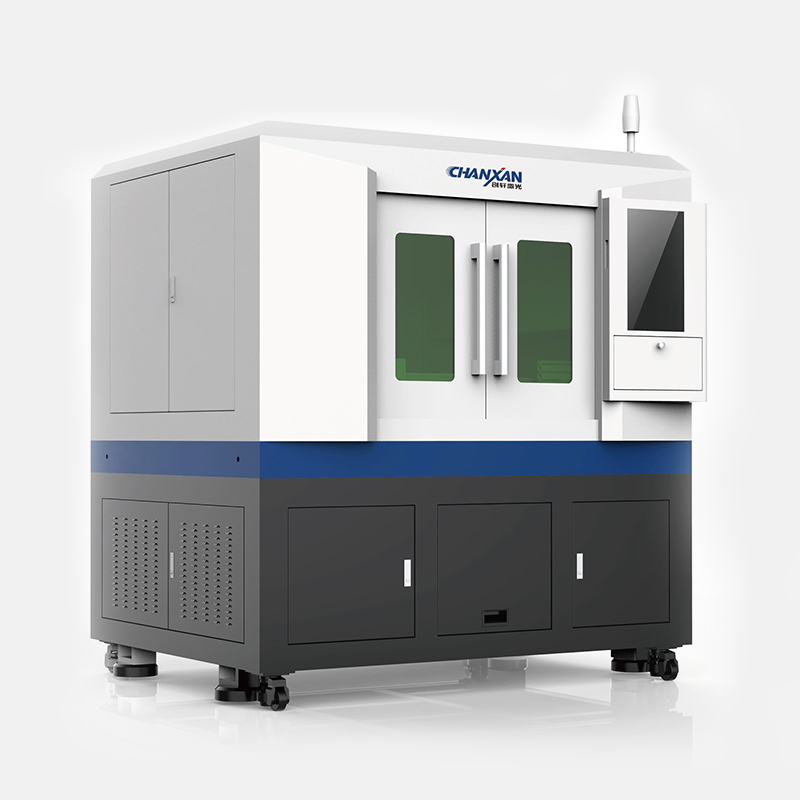
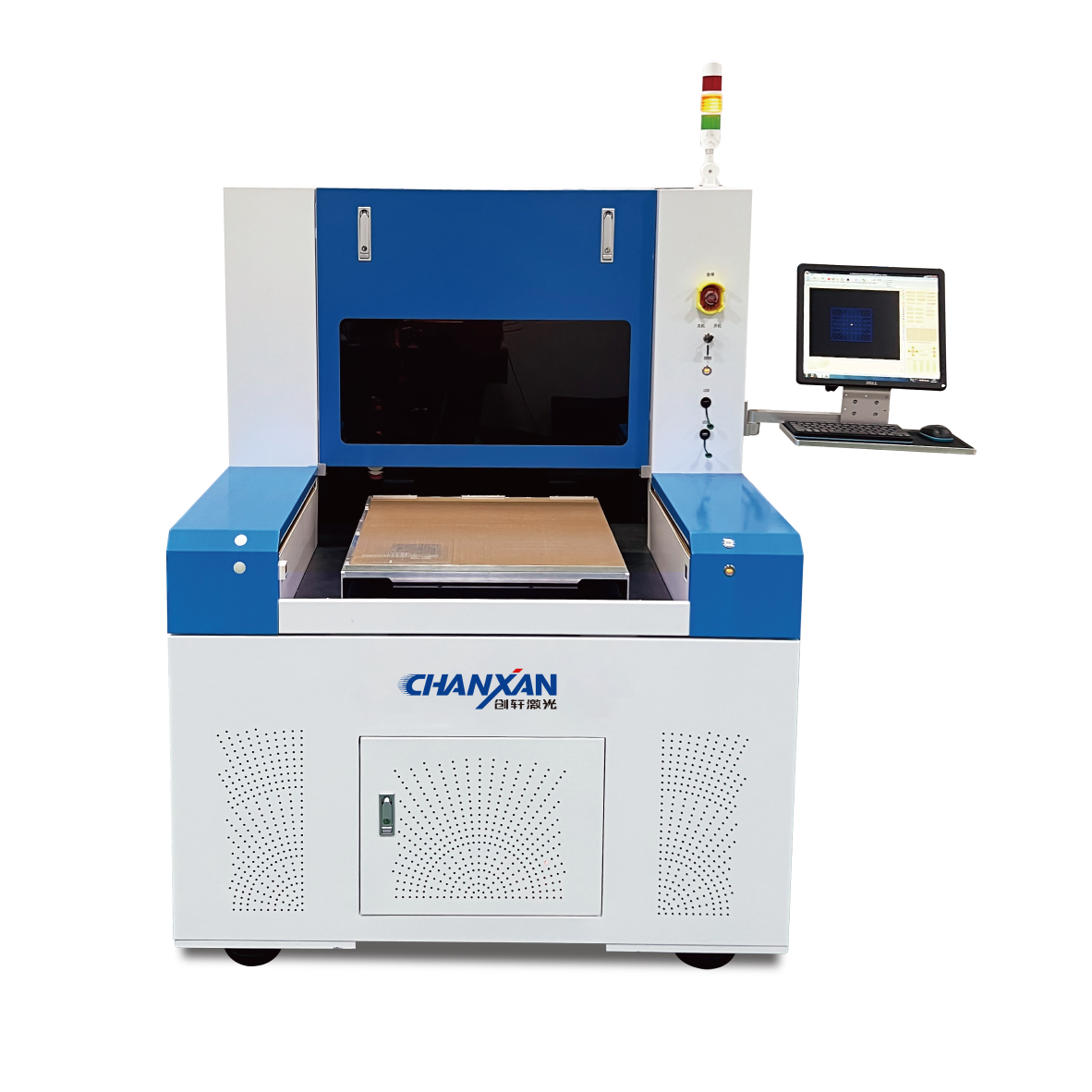
Our Picosecond UV Ceramic Micro-Machining Workstation is purpose-built for zirconia, alumina, and other advanced technical ceramics. Differentiating technical highlights include:
| System Feature | Key Process Benefit |
|---|---|
| 355 nm ps Laser (8–12 ps) | Delivers pure cold laser ablation; zero phase transformation; no micro-cracking at cut interfaces. |
| On-Axis CCD Alignment | Automatic camera-based recognition of fiducial markers on post-sintered ceramic parts. |
| Dynamic Trepanning Optical Head | Enables dicing of vertical, zero-taper vias and holes with an aspect ratio of up to 12:1. |
| Closed-Loop Power Correction | Maintains pulse-to-pulse energy stability under 0.8% for extreme thickness and finish consistency. |
Commercial Benefits:
Eliminate Expensive Mechanical Tooling: Ideal for rapid patient-specific dental crowns and orthopaedic small-batch production.
Maximized Production Yields: Reduces micro-fracture scrap rate; typical yield increases from 70% to >98%.
Accelerated Time-to-Market: Directly imports CAD geometric files (DXF, DWG, STP/STEP) with zero physical tooling setups.
Chanxan Laser provides application-specific engineering support and validated laser workstations for advanced ZrO₂ processing. Upload your geometric CAD layouts or send material samples today for a Free Feasibility Study & Sample Cutting Test. You will receive a detailed report within 48 hours.
| Free solution
Previous: Laser Machining of Silicon Nitride (Si₃N₄): High‑Speed Cutting and Drilling Solutions
Next: Laser Scribing & Dicing Systems for High-Thermal Conductive Aluminum Nitride (AlN)