
Key Words: Silicon Wafer Dicing PCB Depaneling Glass Cutting
Home > News > Industry News
【Description】:
Learn how picosecond lasers optimize BK7 optical glass laser processing. Eliminate edge chipping, stress fractures, and post-polishing in lenses, mirrors, and prisms manufacturing.
In precision optical manufacturing, producing high-performance components requires substrates that offer both exceptional clarity and mechanical stability. Among these materials, N-BK7 (or standard BK7) borosilicate crown glass is universally recognized as the bedrock of modern optics. However, shaping this highly sensitive glass into complex geometries for next-generation systems poses massive fabrication hurdles.
To overcome the yield-limiting defects of traditional grinding, high-precision BK7 glass laser cutting and advanced BK7 glass micromachining have emerged as the premier manufacturing standards. By deploying ultra-short pulse laser systems, manufacturers can now achieve flawless micro-features, intricate custom profiles, and perfectly structured glass substrates without introducing mechanical degradation.
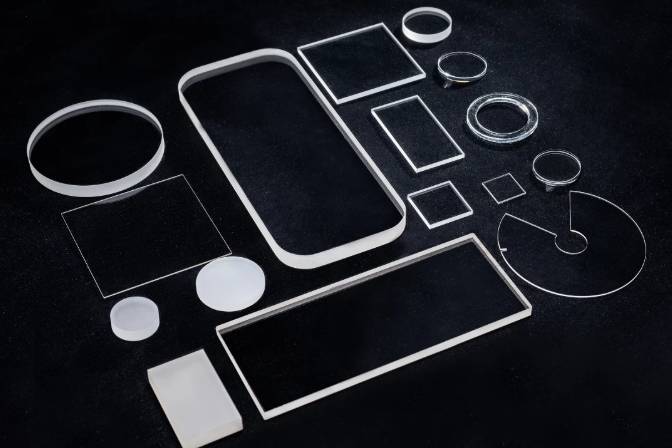
BK7 is a high-quality optical glass formulated with silicon dioxide, boron trioxide, sodium oxide, and potassium oxide. It is highly valued across the BK7 optics manufacturing sector due to its remarkable purity and uniform physical characteristics:
Superb Optical Properties: BK7 glass features a highly consistent refractive index (nd ≈ 1.5168) and a high Abbe number (Vd ≈ 64.17), resulting in exceptionally low chromatic dispersion across the visible and near-infrared (NIR) spectrums.
Excellent Transmittance: It delivers near-zero absorption and ultra-high transmission from roughly 350 nm up to 2.0 µm, making it ideal for standard light transmission applications.
Homogeneity and Purity: Its uniform structure ensures light passes through without scattering or wave-front distortion, a vital requirement for high-precision optical systems.
For decades, the production of precision glass optics relied heavily on diamond sawing and mechanical CNC milling. However, when applied to standard optical glass cutting, these contact-based processes introduce strict limitations that severely impact throughput and part consistency.
Severe Edge Chipping: Mechanical stress forces uncontrolled stress fractures along the cut line, degrading the part boundaries.
Heavy Polishing Requirements: Fractured and rough machined edges demand hours of post-process lapping, slowing down the cycle.
Stress Fractures: Subsurface damage (SSD) propagates micro-cracks inside the substrate, risking complete failure under thermal loads.
High Edge Quality: Direct multi-photon ionization allows for cold ablation, vaporizing the material with sub-micron kerf widths.
Complex Contours & Geometries: Non-contact galvo steering enables complex internal slots and non-linear shapes.
Minimal Post-Polishing: Achieves a clean, smooth, melt-free boundary that typically eliminates post-process mechanical polishing.
By shifting from long-pulsed nanosecond lasers to an ultra-short-pulse picosecond laser BK7 glass system, the fundamental physics of the interaction changes. Because the laser energy is deposited faster than the material's thermal diffusion time, the glass is vaporized instantaneously via ablation rather than melting. This blocks heat accumulation, keeping the heat-affected zone (HAZ) virtually non-existent and avoiding the micro-cracking common to thermal cutting methods.
Industrial-grade laser cutting BK7 glass workstations combine exceptional versatility with precision motion systems, executing several essential geometries on a single setup:
Precision Cutting & Dicing: Singulating rectangular, circular, or multi-faceted profiles from raw glass blanks without edge chipping.
Laser Drilling BK7: Machining high-aspect-ratio holes, micro-vias, and specialized mounting ports with diameters under 100 µm.
Permanent Scribing & Marking: Etching high-resolution alphanumeric codes, tracking serials, and matrix markers directly onto the lens perimeter.
Edge Shaping & Chamfering: Executing clean 45-degree chamfers and customized beveling to remove sharp corners and prevent corner fracturing during handling.
Advanced BK7 glass laser machining has become an invaluable tool for manufacturing critical components across various scientific, industrial, and consumer imaging sectors:
Camera Lenses: Rapidly dicing precise custom shapes and creating micro-grooves for high-end optical zoom housings.
Mirrors & Reflectors: Preparing flawless structural substrates for subsequent dielectric or metallic reflective coatings.
Optical Prisms: Machining high-accuracy angular geometries for beam deflection, dispersion, and image inversion prisms.
Optical Filters: Cleanly singulating colored glass or coated bandpass filters to exact dimensional tolerances.
Microscopes & Telescopes: Producing micro-apertures, mounts, and lenses used in astronomical observation and biomedical imaging systems.
Achieving ultra-clean, chip-free edge profiles on borosilicate crown glass requires perfect coordination between laser pulse dynamics and heavy-duty, vibration-free motion hardware.
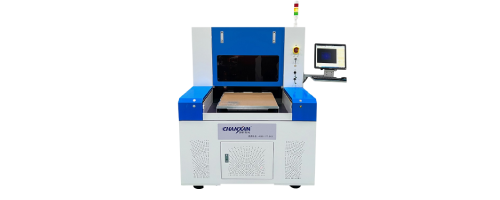
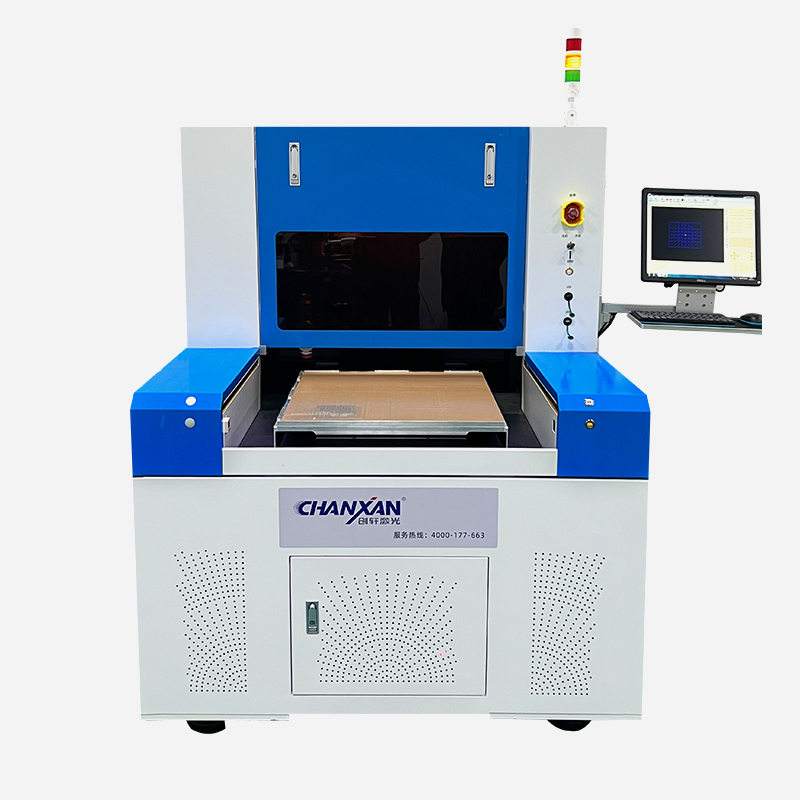
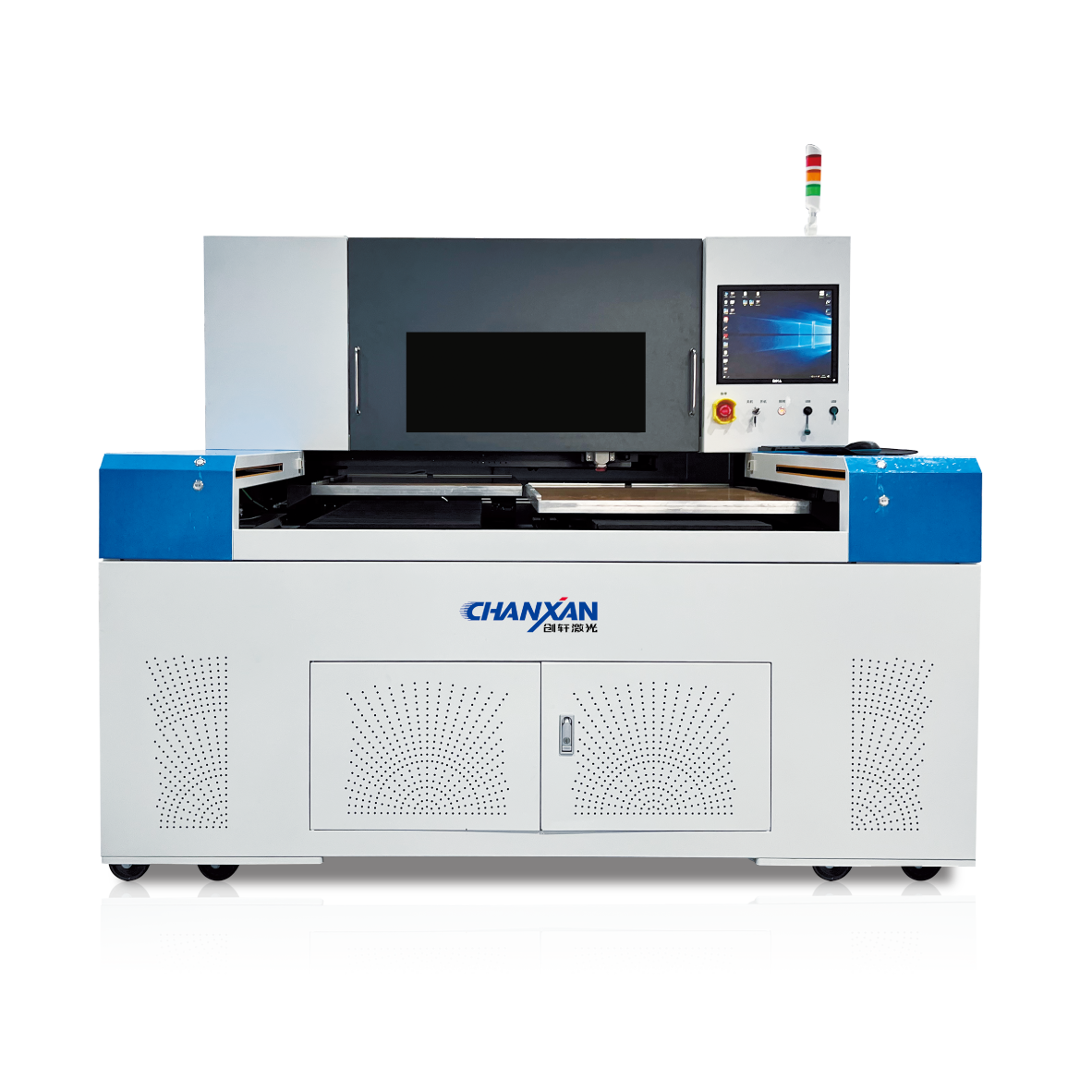
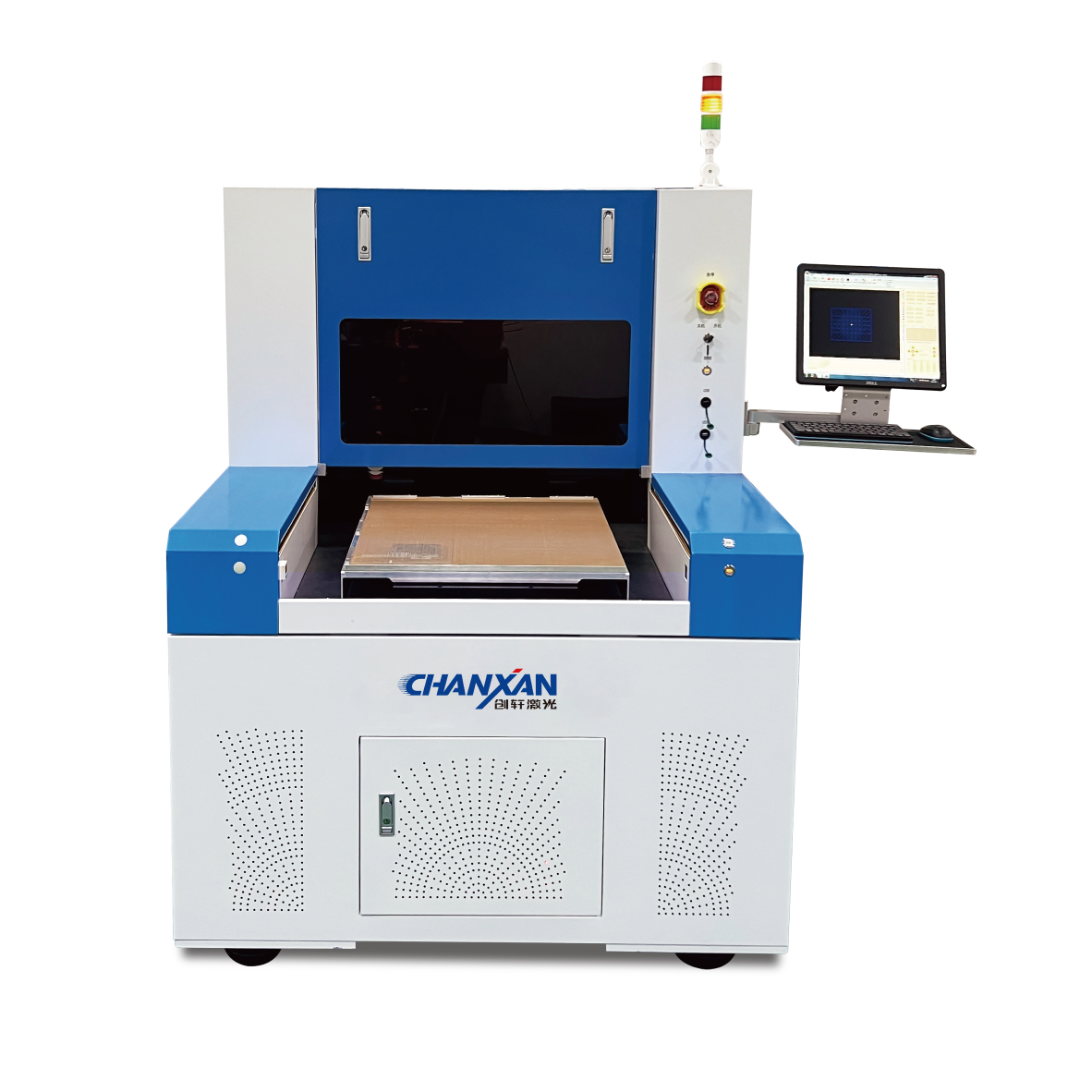
The Chanxan Glass Laser Micro-Processing System is uniquely configured for high-throughput, industrial-grade BK7 glass laser cutting and micro-drilling. Built upon a highly stable, solid natural granite base and driven by core linear motor dynamics, our machine provides sub-micron volumetric tracking accuracy.
Whether your assembly line requires clean edge chamfering for custom prisms or high-speed wafer dicing for imaging sensors, Chanxan delivers the repeatability and clean ablation necessary to scale up production.
Get an Application Quote & Technical Consultation| Free solution
Previous: Lithium Niobate Wafer Laser Dicing for Photonic Integrated Circuits
Next: Fused Silica Laser Cutting: Precision Micromachining for Optical Components