
Key Words: Silicon Wafer Dicing PCB Depaneling Glass Cutting
Home > News > Industry News
【Description】:
Can femtosecond lasers achieve 100% carbonization-free FPC cutting? Explore the true physics of cold processing & HAZ control with Chanxan Laser.
As the global electronics industry migrates toward finer trace pitches, thinner substrates, and multi-layered geometries, the physical limitations of mechanical die-cutting and standard laser routing have become glaringly obvious. In the world of high-precision Flexible Printed Circuit (FPC) manufacturing, engineering teams are constantly searching for the holy grail of processing: a perfectly clean cut without a microscopic trace of thermal damage.
This quest has propelled ultra-short pulse technology to the forefront of the industry. The ultimate question asked on factory floors and technical forums worldwide is simple: Can a femtosecond laser achieve 100% carbonization-free FPC cutting? To separate marketing hyperbole from engineering reality, we must dissect the quantum mechanics of ultrafast laser ablation and analyze how it handles complex composite materials.
1. The Physics of True "Cold Processing"
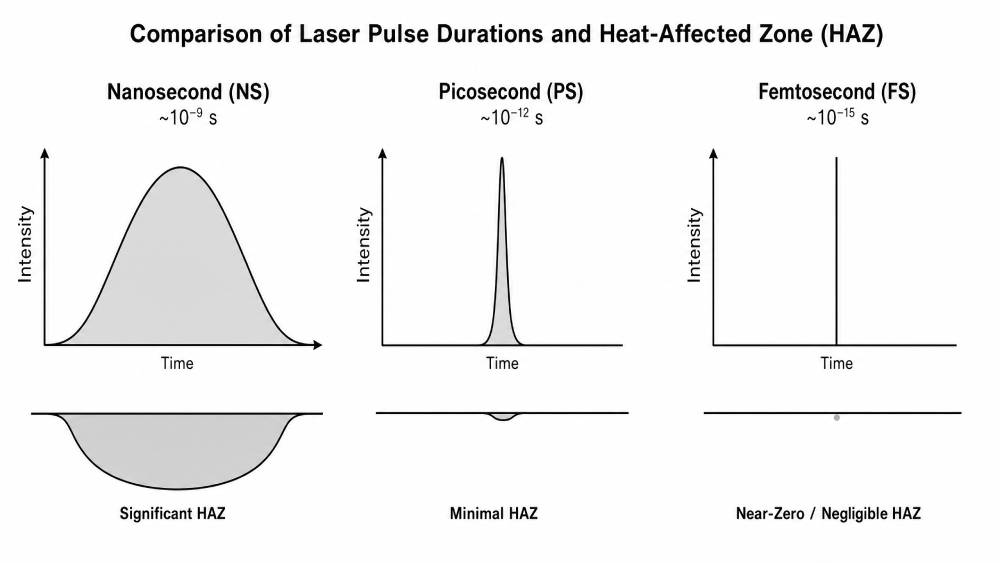
To understand why a femtosecond laser is considered the absolute apex of cutting technology, we have to look at how conventional lasers interact with matter. Standard infrared or even ultraviolet nanosecond lasers rely on photothermal degradation. They dump energy into the material over a relatively long window of time, causing the atomic structure to vibrate intensely, generate heat, liquefy, and vaporize.
When cutting a flexible copper clad laminate (FCCL), this heat bleeds sideways. The polyimide film (PI film) base layer and the sensitive adhesive layer (usually an acrylic or epoxy resin matrix) have low thermal thresholds. This thermal migration results in cut carbonization—the visual blackening, charring, and chemical degradation of the polymer edge.
A femtosecond laser shifts the paradigm completely by operating in the $10^{-15}$ second domain. The laser pulse is so unimaginably fast that it is faster than the time it takes for electrons to transfer energy to the atomic lattice (electron-phonon coupling time). This unlocks the phenomenon of "cold processing" driven by photoablation and multi-photon absorption. Instead of burning through the material, the intense peak power density of the laser pulse instantly rips electrons away from their parent atoms, shattering the molecular bonds of the PI film and copper foil simultaneously. The material transitions directly from a solid state into a plasma plume, leaving no thermal diffusion / zero thermal effect in the surrounding material matrix.
2. The Microscopic Analysis: Expectation vs. Reality
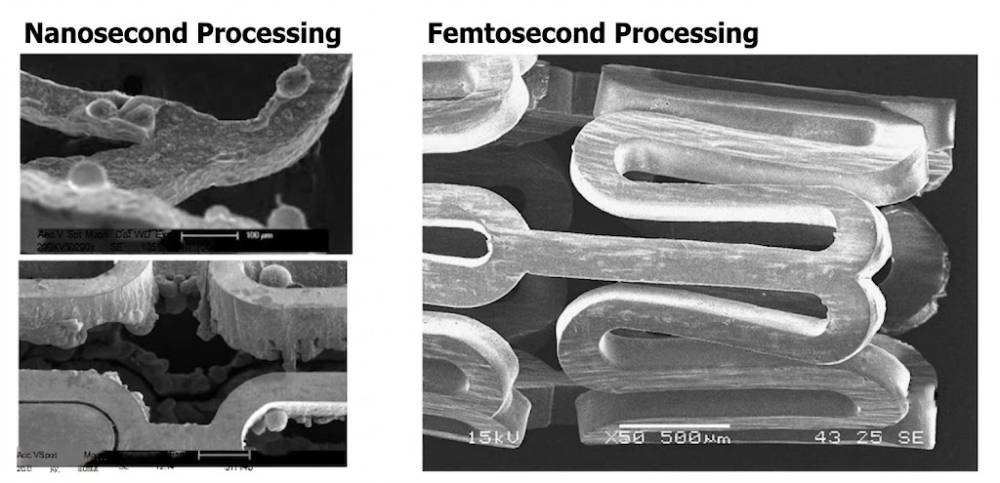
If we inspect a flex circuit processed by a femtosecond laser under a high-magnification metallurgical microscope or a scanning electron microscope (SEM), the results are astonishing compared to nanosecond or even picosecond alternatives:
■Heat Affected Zone (HAZ): While a standard UV laser might leave a HAZ of 30 μm to 50 μm, a well-optimized femtosecond system compresses the heat affected zone (HAZ) to $\le 3\mu m$, or effectively zero on standard optics.
■Adhesive Squeeze and Melt: On multi-layer circuits, heat causes the adhesive bonding layers to melt and squeeze out of the cut edge. A femtosecond laser achieves impeccable adhesive squeeze control, keeping the bonding layers perfectly flush with the copper and PI sheets.
■Carbon-Free Cut Quality: There is no visible residue, no slag accumulation, and the cut edge maintains its original chemical composition without converting into conductive carbon tracks.
The Industrial Reality Check: Given these parameters, can we declare it 100% absolutely carbonization-free? In a laboratory environment cutting a single piece of FPC at ultra-slow speeds, yes. However, in a 24/7 industrial manufacturing facility, a critical trade-off occurs: Throughput vs. Aesthetics.
To make a femtosecond laser commercially viable, system integrators must crank up the laser power and galvo scan speeds to hit competitive cycle times. When a high-frequency laser fires millions of pulses per second into a confined geometry, a minute amount of residual heat accumulation is physically inevitable. Therefore, while a femtosecond laser delivers what the industry accepts as a commercially perfect, completely carbonization-free edge to the naked eye and strict QA testing, achieving it requires a masterclass in parameter balancing from the engineering team.
3. High-Value Application Scenarios
Because of the premium capital investment required to purchase and maintain a femtosecond laser system, it is rarely deployed for low-cost, disposable consumer electronics. Instead, femtosecond laser cutting PI film technologies are reserved for fields where failure is not an option:
■Implantable Medical Devices: Flex circuits used in pacemakers, neurostimulators, and hearing aids cannot tolerate any carbonized edge particles, which could flake off and cause bio-compatibility failures or electrical shorts inside the human body.
■Aerospace and Defense Electronics: High-density, multi-layer rigid-flex boards exposed to extreme vibrations and thermal cycling require pristine high-precision FPC profile laser processing to prevent micro-fractures from propagating along the cut border.
■Next-Gen Semiconductor Packaging: As FPCs are integrated into advanced system-in-package (SiP) modules alongside silicon dies, edge cleanliness directly correlates with the final yield of $1,000+ packages.
Conclusion
While pure physics dictates that a microscopic trace of thermal energy will always exist at high production speeds, the femtosecond laser is the only technology in existence that practically eliminates edge charring. For cutting ultra-dense, highly sensitive flexible PCBs, it stands alone as the definitive tool for achieving a true, high-yield, carbonization-free cut profile that satisfies the world's most stringent quality standards.
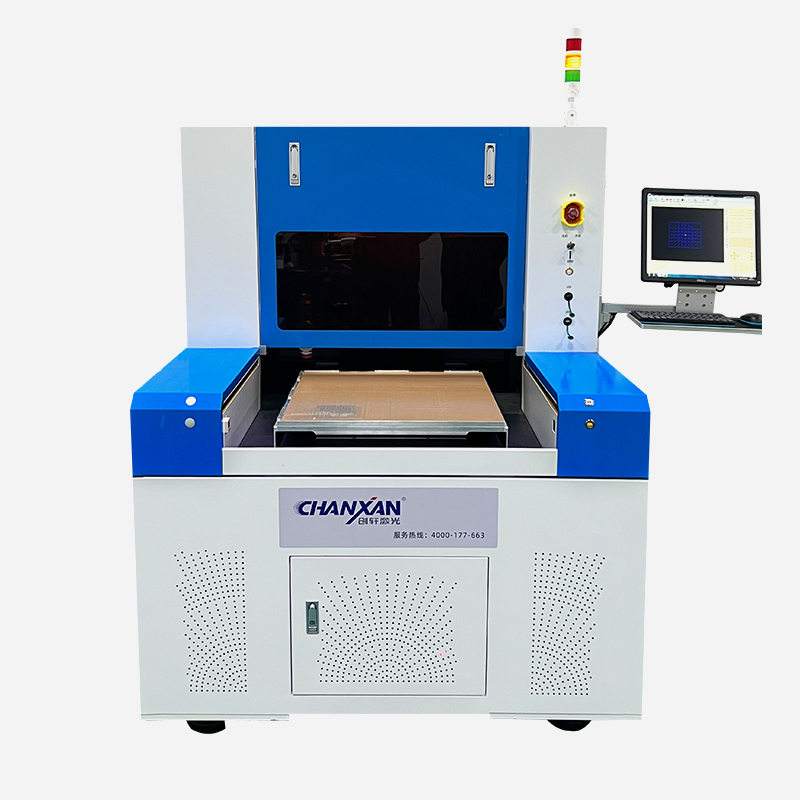
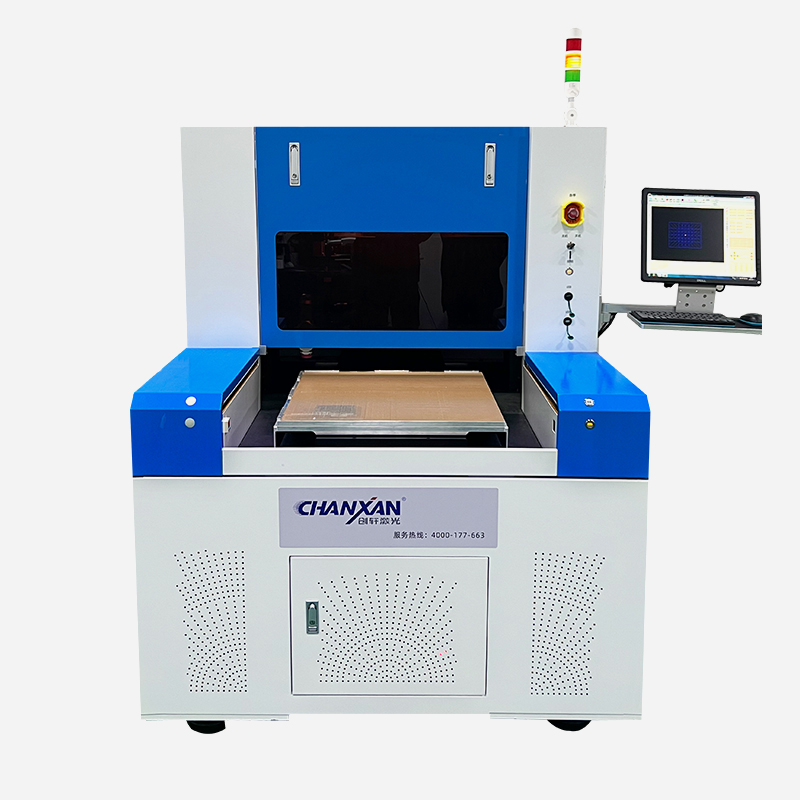
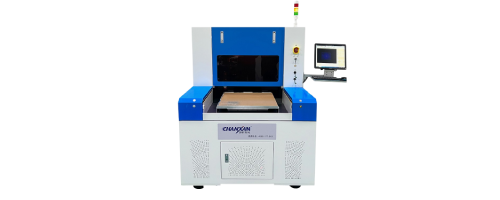
To bridge the gap between this quantum ideal and commercial reality, the Chanxan Precision Femtosecond Laser Cutting System delivers an uncompromised solution for elite manufacturers. Engineered with advanced pulse-shaping controls and ultra-stable optical paths, Chanxan's femtosecond technology achieves a consistent microscopic heat-affected zone (HAZ < 3 μm) and pristine, carbon-free sidewalls. Modular equipment integrates automation to meet 24/7 production demands.
| Free solution
Previous: Flexible PCB Manufacturing Process: Structure, Materials and Laser Processing
Next: UV Laser vs CO2 Laser for Film Laser Cutting: Precision, HAZ, and Process Comparison