



TL;DR: Flexible PCB (FPC) laser processing has replaced mechanical die cutting and routing as the industry standard for high-density manufacturing. By eliminating burrs, delamination, and tool wear while delivering micron-level precision, lasers provide a non-contact solution for complex geometries. However, selecting the right laser — CO2, UV, or Ultrafast laser — depends entirely on the substrate. Polyimide (PI), PET, PEN, LCP, and PTFE each exhibit distinct optical absorption behaviors and thermal thresholds. This comprehensive guide details substrate characteristics, mechanical failure modes, laser ablation mechanics, a material compatibility matrix, and industry-specific applications across 5G, medical, and automotive electronics.
Flexible PCB Materials Overview: Choosing the Right Substrate
Before selecting a process, it helps to understand what you're cutting. Every substrate used in flexible circuit laser processing has its own thermal behavior, optical absorption profile, and mechanical limits — and that profile determines which laser, if any, will produce a clean result.
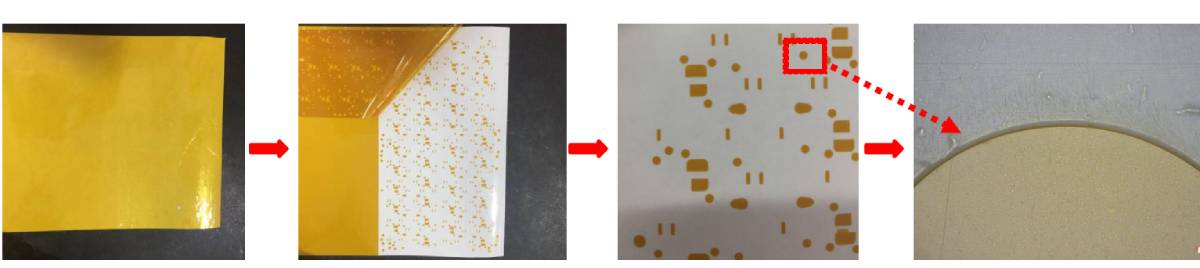
Polyimide (PI)
Temperature Resistance: Exceptional thermal stability up to 300°C
Applications: Coverlay openings, outline cutting, via formation
Laser Processing: PI is the workhorse material. It tolerates high operating temperatures and resists chemical exposure, making it the baseline use case that most laser systems are benchmarked against.
Also Known As: Kapton (commercial brand)
PET (Polyester)
Cost Level: Budget-friendly option
Melting Point: ~260°C (requires careful thermal management)
Applications: Membrane switches, sensor circuits, disposable medical patches
Laser Processing: PET requires low-power settings to prevent deformation and melting during ablation.
PEN (Polyethylene Naphthalate)
Cost Level: Mid-tier option
Thermal Stability: Better than PET, lower cost than PI
Applications: Mid-tier flexible circuits requiring durability
Laser Processing: A step up from PET with improved dimensional stability during processing.
LCP (Liquid Crystal Polymer)
Key Property: Extremely low moisture absorption
Frequency Performance: Stable dielectric properties at 5G/mmWave frequencies
Applications: 5G antennas, mmWave antenna modules
Laser Processing: Demands tight thermal control since LCP is thin and highly sensitive to heat accumulation.
PTFE (Teflon)
Difficulty Level: Most challenging to process
Absorption Behavior: Poor absorption of standard laser wavelengths
Applications: RF/microwave substrates, high-frequency communication hardware
Laser Processing: Requires specialized laser types (UV or ultrafast) rather than standard equipment.
Why Traditional Cutting Methods Fail on Flexible Circuits
Mechanical processes were never really designed for materials this thin, this layered, and this heat-sensitive. As volumes scale up or tolerances tighten, the limitations become obvious.
The Problem with Mechanical Cutting
1. Differential Shearing & Delamination
An FPC is a composite laminate with ductile copper foils, viscoelastic adhesives, and structural polymers. A mechanical die must shear through these fundamentally different layers simultaneously, inducing peel stress at interfaces and creating latent defects that escape visual inspection but fail under thermal cycling.
2. Burr Formation and Trace Shorting
As a mechanical blade dulls, it ceases to shear cleanly. Instead of cutting, it drags ductile copper across polymer boundaries, resulting in microscopic copper burrs that can bridge gaps between fine-pitch traces and cause catastrophic electrical shorts.
3. Micro-Cracking and Structural Stress
Mechanical contact transfers high-frequency kinetic shock directly into substrates as thin as 12.5–50 microns. This localized stress propagates through fragile copper traces and via structures as micro-cracking, damaging active circuitry in high-density designs.
4. Tool Wear and Tooling Inertia
Physical tools degrade progressively. A die at cycle 100,000 does not produce the same edge quality as cycle 1. Design modifications require new dies to be machined, introducing substantial lead times and costs.
Laser Advantages for Flexible PCB Processing: CO2, UV, and Ultrafast Systems
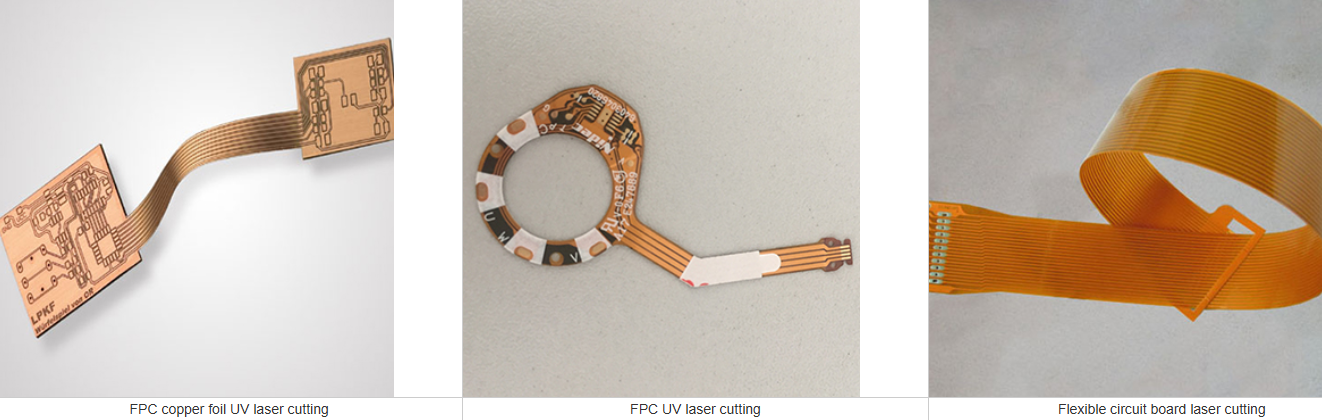
Lasers remove material through laser ablation rather than mechanical force. There's no blade to dull, no die to wear, and — depending on the laser type — minimal physical stress transferred into the substrate.
CO2 Laser (10.6 μm)
Wavelength: Infrared (10.6 micrometers)
Cost: Most cost-effective option
Best For: High-volume, lower-precision work; bulk material removal; outline cutting on PI covers; separation of low-cost PET films
Advantage: Highly efficient for bulk removal with minimal equipment cost.
UV Laser (355 nm)
Wavelength: Ultraviolet (355 nanometers)
Precision: Fine resolution, cooler cuts
Best For: Drilling blind and through-vias; fine-pitch coverlay cutting; profiling high-density polyimide circuits
Advantage: Industry standard for precision features where trace clearances are under 50 microns.
Ultrafast Laser (1030–515 nm)
Pulse Duration: Picosecond (10⁻¹² seconds) or Femtosecond (10⁻¹⁵ seconds)
Ablation Mode: Multi-photon ionization and plasma ablation
Best For: Most demanding substrates (LCP, PTFE); ultra-thin or multi-layer stacks
Advantage: Material removal before heat can conduct through the lattice structure, providing true "cold processing."
Across All Laser Types: Key Quality Improvements
No blade means no dragged material at the edge. Clean ablation produces edges free of copper whiskers or material smearing.
No mechanical force pulls at the copper-substrate bond. Ablation occurs without shear stress at laminate interfaces.
Particularly with UV and ultrafast sources, pulse duration limits thermal diffusion into surrounding material.
Heat-sensitive materials like PTFE and thin LCP can be processed without warping, discoloration, or dielectric degradation.
Application Industries for Flexible PCB Laser Cutting
5G and Communication
Challenge: Extremely tight tolerances combined with difficult materials (LCP, PTFE) that are sensitive to thermal changes
Requirement: Micron-level feature accuracy on thin, RF-sensitive substrates with minimal heat-affected zones
Impact: Even small thermal changes can shift substrate dielectric performance and detune antenna or filter circuits
Solution: UV and ultrafast laser systems that maintain thermal precision while achieving sub-micron feature definition
Medical Devices
Challenge: Biocompatibility requirements rule out contamination risk of mechanical tooling
Requirement: Contamination-free, repeatable process for implantable electronics
Application: Pacemaker leads, neurostimulation arrays, diagnostic sensor patches
Solution: Laser processing preserves material integrity at cut edges, avoiding failure points in biocompatible circuits
Automotive Electronics
Challenge: High reliability under vibration and thermal cycling
Requirement: Clean, stress-free edges that survive field conditions
Application: ADAS sensors, infotainment wiring, battery management circuits
Solution: Laser-processed edges eliminate pre-existing micro-cracks that would cause reliability failures in thermal cycling
Material Compatibility Matrix: Matching Laser Type to Flex PCB Substrate
This is the part of the decision that determines whether a process actually works in production. PCB material laser compatibility comes down to how well a given substrate absorbs a given wavelength — and that varies more than most buyers expect.
| Material | Laser Absorption Behavior | Recommended Laser Type | Risk if Mismatched | Common Applications |
|---|---|---|---|---|
| PI (Polyimide / Kapton) | Absorbs well across UV and CO2 wavelengths | UV laser (precision); CO2 (high-volume outline) | Carbonized edges, localized HAZ if pulse energy too high | Coverlay opening, outline cutting, vias |
| PET | Low melting point, moderate absorption | Low-power CO2 or UV Laser | Edge melting, thermal deformation | Membrane switches, low-cost sensors |
| PEN | Similar to PET, better thermal stability | UV laser | Minor thermal distortion if power not tuned down from PI settings | Mid-tier flexible circuits |
| LCP | Thin, low moisture absorption, sensitive to heat buildup | UV or ultrafast laser | HAZ-driven dielectric shift, micro-warping | 5G antennas, mmWave modules |
| PTFE (Teflon) | Poor absorption of standard wavelengths | UV or ultrafast laser | Melting/smearing instead of clean ablation with standard lasers | RF/microwave substrates |
The pattern across this table reveals that laser absorption is not uniform. The same laser settings that produce a clean cut on PI can produce a melted, smeared edge on PTFE. A useful way to frame it is a PI vs PET vs LCP laser processing comparison:
PI tolerates a wide process window
PET and PEN require careful thermal management at lower cost tiers
LCP needs both precision and heat control simultaneously
PTFE often requires specialized ultrafast or specialized UV configurations
Choosing the Right Flexible PCB Laser Processing Equipment
Once the material and laser type are matched, the remaining variable is the equipment itself. A precision laser cutting system needs to combine the right laser source with motion control accurate enough to hold tolerance across an entire panel, not just a single test cut.
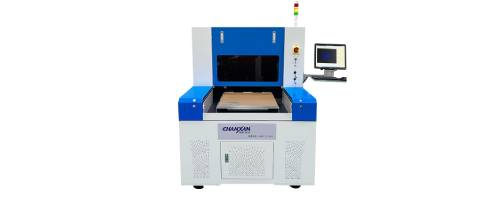
Equipment Selection Strategy
For Mainstream Materials (PI, PET)
RF-excited CO₂ laser platforms remain one of the most cost-effective production solutions. They deliver stable power output, high scanning speeds, and excellent edge quality for large-volume FPC production. Ideal for coverlay cutting, profile cutting, window opening, and insulating film processing. Compared with mechanical punching, RF CO₂ laser processing eliminates tool wear while providing greater design flexibility and faster product changeovers.
For Advanced Materials (LCP, PTFE)
Ultrafast laser platforms utilize picosecond or femtosecond pulse durations to achieve highly controlled cold ablation with minimal heat affected zones. This capability is particularly valuable for 5G antenna structures, RF circuit fabrication, and precision micro-features where conventional thermal processing can compromise electrical performance.
For Production Scale
A high-speed PCB laser processing equipment platform should maintain cut quality at production speed, not just during slow demonstration runs. For manufacturers scaling FPC production, a flexible circuit laser cutting machine with consistent repeatability — and ideally an automated PCB laser processing system with integrated vision alignment and process monitoring — is what transforms a successful process into a dependable manufacturing operation.
Frequently Asked Questions
Can laser cut flexible PCB without damage?
Yes, when the laser type and parameters are matched to the substrate. UV and ultrafast lasers in particular are widely used because their shorter pulse durations limit heat diffusion, which is what causes most visible damage like charring or warping.
What is the best laser for FPC cutting?
There isn't one universal answer — it depends on the material. UV lasers are the common choice for PI and PEN precision work, while ultrafast/femtosecond lasers are typically required for PTFE and thin LCP where heat-sensitive or low-absorption behavior rules out standard sources.
Why does flexible PCB burn during laser cutting?
Burning usually happens when too much energy is delivered to the material relative to its absorption rate, causing localized overheating instead of clean ablation. This is most common when CO2 or standard UV settings are applied to materials like PTFE that don't absorb those wavelengths efficiently.
CO2 vs UV laser for PCB cutting — which is better?
CO2 lasers are generally more cost-effective for higher-volume, less precision-critical cutting, particularly on PET and PI outlines. UV lasers offer finer resolution and lower heat input, making them the better fit for fine-pitch features and heat-sensitive applications.
How to avoid delamination in PI laser cutting?
Delamination in laser-cut PI is rare compared to mechanical cutting since there's no shear force on the copper-substrate bond, but it can still occur if pulse energy is too high and heat builds up at the interface. Proper parameter tuning and pulse control keep the process well within the material's thermal limits.
Is PTFE difficult to laser machine?
Yes — PTFE's low absorption of common laser wavelengths makes it one of the more difficult flexible PCB materials to process cleanly. It generally requires UV or ultrafast/femtosecond laser systems rather than standard CO2 setups to achieve a clean, non-melted edge.
Ready to Implement Flexible PCB Laser Processing?
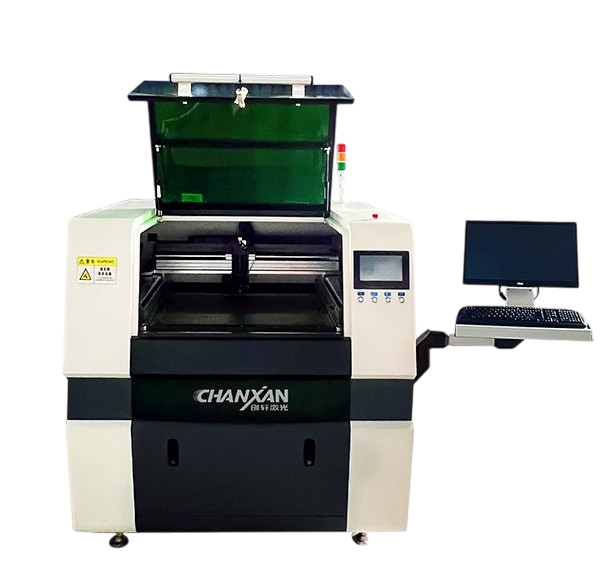
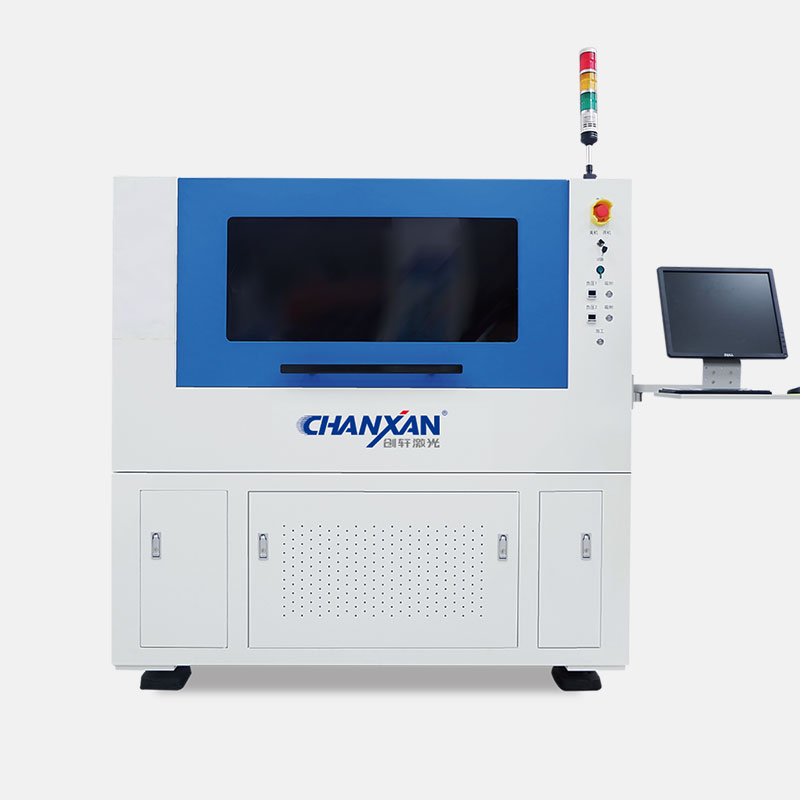
Chanxan Laser designs UV and ultrafast laser systems built around flexible PCB material challenges, supporting manufacturers moving from prototype validation to full-volume FPC laser cutting solutions.
Get a Free ConsultationConclusion
Flexible PCB laser processing has moved from a specialized option to the default expectation across most FPC manufacturing programs, simply because mechanical cutting can't keep pace with the precision, material diversity, and reliability standards now required in 5G, medical, and automotive applications.
The right PCB laser cutting solutions depend on matching laser type to substrate:
CO2 and UV laser systems for cost-effective volume work on PI and PET
Ultrafast and femtosecond systems for the harder cases like PTFE and LCP
Combined with equipment that can hold that performance at production scale, these tools transform a successful process into a dependable manufacturing operation. Chanxan Laser designs UV and ultrafast laser systems built around exactly these material challenges, supporting manufacturers moving from prototype validation to full-volume FPC laser cutting solutions across PI, PET, PEN, LCP, and PTFE substrates.