
Key Words: Silicon Wafer Dicing PCB Depaneling Glass Cutting
Home > News > Industry News
【Description】:
Learn how UV, ultrafast, and CO₂ lasers enable precise, non-contact cutting, drilling, and scoring of multilayer photovoltaic backsheet polymer films.
If you’ve ever looked at a solar panel, you probably focused on the shiny front—the glass, the cells, the frame. The back often gets ignored. But that thin, often white or black sheet is doing serious work. It’s the module’s raincoat, sunscreen, and electrical barrier all in one.
That sheet is the Solar Backsheet Membrane. It’s usually a multilayer sandwich of polymers: a weather-resistant outer layer, a strong PET core, adhesive layers, and an inner layer that bonds to the encapsulant. It keeps moisture out, holds up under decades of sun and temperature swings, and helps prevent electrical shocks. So how do you cut, drill, or mark something like that without ruining it? Increasingly, manufacturers use lasers.
Traditional mechanical cutting works a bit like a cookie cutter. They're fast and cheap at high volume, but they press on the material. That can cause microcracks, burrs, delamination, or edge stress. Changing shapes means changing tools.
Lasers are different. They’re non-contact. A focused beam of light does the cutting, drilling, or marking. There’s no blade to wear out, no physical pressure on the film, and no need for a new die every time the design changes. That flexibility matters as solar modules get larger, thinner, and more varied. But lasers aren’t magic. They’re a controlled burn—or, in some cases, a controlled chemical break. The goal is to remove material cleanly without cooking the layers around it.
Laser processing generally falls into two families:
Thermal Processing (Hot Lasers): CO₂ lasers are the classic example. They heat the polymer until it melts or vaporizes. They’re fast, robust, and relatively inexpensive. For rough cutting or simple hole drilling, they can be a practical choice. The trade-off is heat—the edge may char, discolor, or develop a heat-affected zone (HAZ).
Cold Processing (Ultrafast & UV Lasers): UV lasers and ultrafast lasers—picosecond and femtosecond systems—deliver energy in such short bursts that the material doesn’t have time to conduct heat to its neighbors. The result is a cleaner edge, less charring, and less risk of delamination. They are ideal for fine holes, precise scoring, and selective layer removal.
A backsheet isn’t one material—it’s a complex stack where each layer has its own melting point, thermal expansion, and light absorption. The adhesive layers are often heat-sensitive, outer fluoropolymers can release fumes, and PET absorbs wavelengths differently. Matching process parameters is essential to prevent edge carbonization or delamination.
| Evaluation Aspect | High-Quality Laser Processing Standards |
|---|---|
| Visual & Physical Quality | Clean, consistent edges; round and accurate holes; zero visible charring, melting, or delamination. |
| Functional Reliability | Maintains strict electrical insulation resistance, mechanical strength, and moisture barrier integrity for 25+ years. |
Lasers offer precision, flexibility, and a non-contact process that mechanical tools can’t match. But they also demand a deep understanding of materials, heat, and safety. Used well, a beam of light helps make solar modules more reliable and longer-lasting.
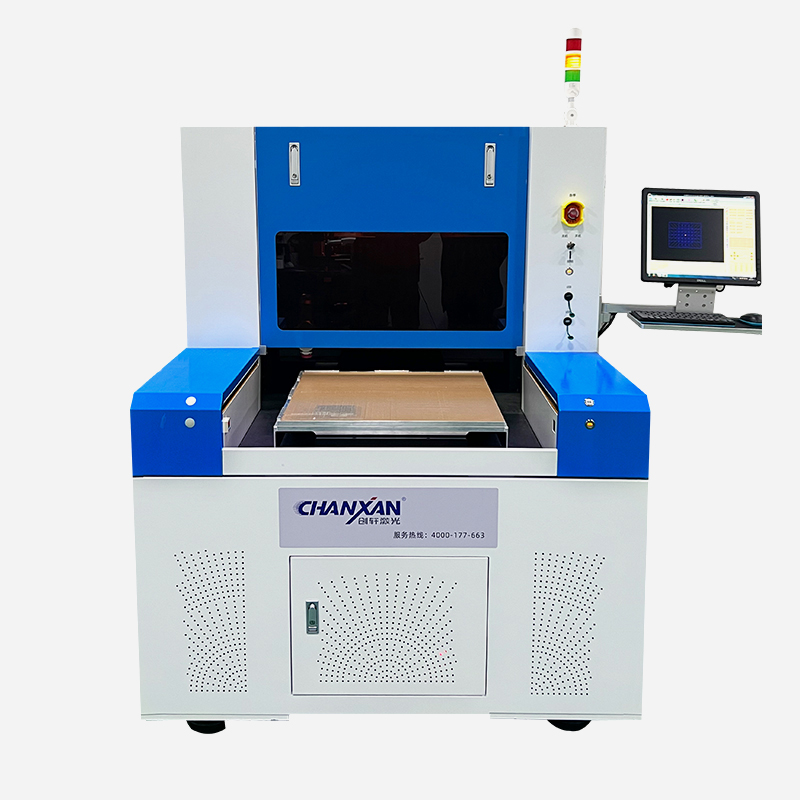
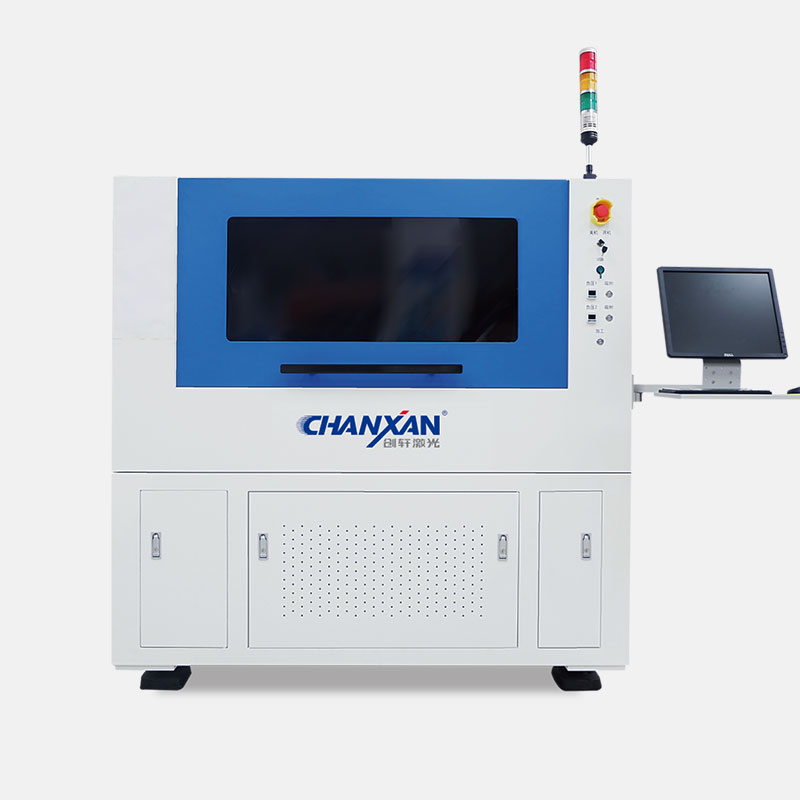
Chanxan Laser is a laser equipment manufacturer focused on precision laser processing solutions for advanced materials, including polymer films, composites, and multilayer stacks used in photovoltaics, electronics, and flexible packaging.
The company develops UV, ultrafast, and CO₂ laser systems designed to address the specific challenges of heat-sensitive, multilayer materials like solar backsheets. Its platforms emphasize controllable pulse energy, stable beam quality, and integrated process monitoring—key factors for achieving clean cuts, minimal heat-affected zones, and reliable insulation performance.
For solar manufacturers navigating the shift toward thinner, larger, and more diverse module designs, partners like Chanxan Laser represent the specialized expertise that turns a promising technology into a dependable process.
| Free solution
Previous: Photovoltaic Backsheet Processing: From Roll to Reliable Module Protection
Next: What is a Photovoltaic Backsheet? Material Types & Functions