
Key Words: Silicon Wafer Dicing PCB Depaneling Glass Cutting
Home > News > Industry News
【Description】:
Traditional stamping and nanosecond laser cutting easily cause delamination and burrs on carbon fiber gaskets. Chanxan picosecond cold laser achieves clean, high-yield singulation for CFRP composite gaskets, suitable for automotive fuel cells, aerospace and battery sealing applications.
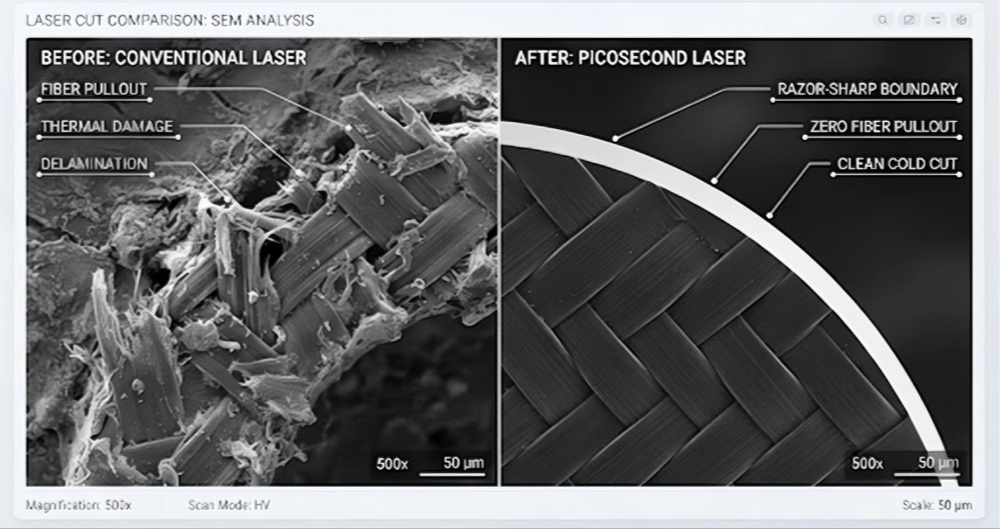
Carbon‑fiber‑rein‑polymer (CFRP) gaskets are critical sealing components widely deployed across automotive fuel‑cell systems, aerospace assemblies, new‑energy battery packs and high‑reliability electronic hardware. Traditional stamping, milling and nanosecond thermal laser cutting frequently trigger typical composite defects including inter‑layer delamination, fiber pull‑out, heavy burrs and large heat‑affected zones (HAZ). These edge failures degrade sealing performance, increase post‑de‑burring workload and lower mass‑production yield for component fabricators.
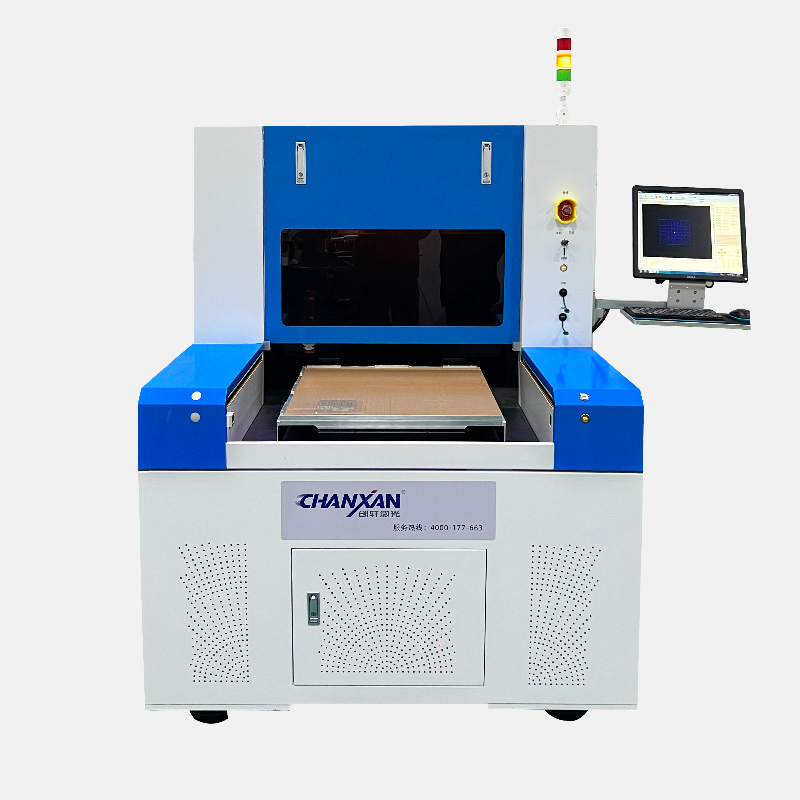
Chanxan picosecond cold laser cutting machine delivers optimized CFRP gasket singulation for multi‑axial prepreg, glass‑aramid hybrid, graphite‑metal‑matrix composite and polyimide‑ceramic insulation materials. Sub‑10‑picosecond ultra‑short pulse realizes photonic vaporization instead of thermal melting conduction. It suppresses resin carbonization and fiber delamination, supporting both prototype sample development and continuous 24‑hour industrial batch manufacturing.
This ultrafast laser system addresses composite‑material manufacturing pain‑points with industrial‑grade mechanical and optical hardware:
‑ True cold‑photonic vaporization processing; verified HAZ below 2 μm, eliminates CFRP delamination and resin burning.
‑ Coaxial telecentric CCD vision fiducial alignment; ±1 μm positioning accuracy for complex custom gasket contours without hard stamping dies.
‑ Class‑00 natural granite vibration‑isolation base paired with iron‑less linear‑motor drive; maintains micron‑level repeat cutting precision.
‑ Zero mandatory post‑de‑burring operation, helps production lines reach up to 99.8 % finished‑part yield.
Core technical parameters:
‑ Laser Source: Industrial picosecond ultrafast Nd:YVO4 cold laser
‑ Fiducial Positioning Accuracy: ±1 μm
‑ Maximum processable thickness: up to 3 mm CFRP structural sheet
‑ Working travel area: 500 × 610 mm custom vacuum platen
‑ Max scanning speed: 3000 mm/s iron‑less linear servo motion
The machine supports validated cutting for CFRP gaskets, FRP sealing sheets, thermal‑interface shims and composite insulation pads. For complete parameter datasheet and configurable options, please visit our carbon‑fiber gasket laser cutting product detail page.
Our picosecond cold‑ablation equipment serves automotive Tier‑1 suppliers, aerospace component workshops, semiconductor packaging plants and new‑energy power‑system manufacturers. Typical finished‑parts include engine sealing gaskets, fuel‑cell flange seals, instrument‑panel composite gaskets, clean‑room thermal spreaders and battery‑pack insulation barriers.
No. Ultra‑short picosecond pulse deposits energy faster than thermal‑relaxation time of composite material. Material is directly sublimated via cold ablation; heat conduction into carbon fiber and epoxy matrix is largely suppressed, preventing inter‑layer separation and fiber pull‑out defects.
No physical stamping mould required. Only CAD drawing files are needed for arbitrary‑contour gasket cutting, greatly shortening prototype iteration and sample‑development cycles.
Up to 3 mm for carbon‑fiber structural sheets. Multi‑pass focal‑shifting cutting strategy keeps side‑wall kerf‑taper below 0.5 degree for thick composite laminates.
Submit your composite‑material samples and CAD drawings for feasibility assessment, get technical proposal and formal quotation.
Contact Us| Free solution
Previous: None
Next: Picosecond Cold‑Ablation Cutting Improves Solder Preform Yield for Semiconductor Packaging