
Key Words: Silicon Wafer Dicing PCB Depaneling Glass Cutting
Home > News > Industry News
【Description】:
Overcome hardness and thermal stress in AlN processing. Discover how Chanxan's UV picosecond lasers achieve micro-crack-free, zero-carbonization cuts.
Aluminum nitride (AlN) has emerged as the premier substrate material for high-power and high-frequency electronic devices, driven by its exceptional thermal conductivity of 140–180 W/m·K—nearly 7× that of alumina and comparable to some metals.
This superior heat dissipation makes AlN indispensable for:
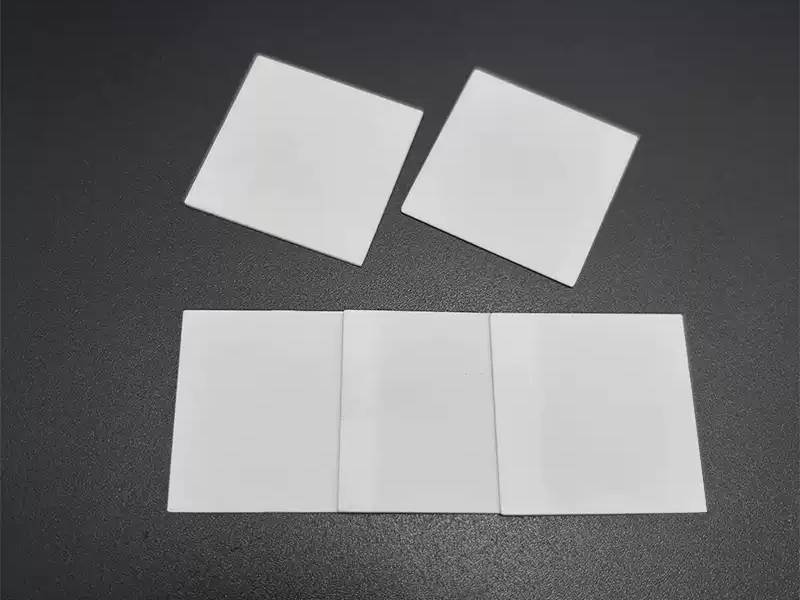
AlN's outstanding thermal properties are matched by its extreme processing difficulty under traditional physical mechanical stress:
Extreme Material Hardness: A Mohs hardness of 8–9 makes mechanical diamond dicing exceptionally slow (1–2 mm/s). Diamond blades often wear out after just 50–100 cuts compared to over 500 cuts on alumina.
High Fracture Toughness (~3.5 MPa·m¹/₂): While offering excellent field reliability, the sheer mechanical force required to cut AlN increases the immediate risk of catastrophic part fractures.
Thermal Stress Sensitivity: Localized temperature peaks from traditional continuous laser systems create aggressive thermal gradients, inducing cracks near precision corners.
Dielectric Carbonization Risk: Under excessive accumulated thermal energy, AlN decomposes into free aluminum, generating conducting paths and carbonization that degrade vital dielectric properties.
The combination of high hardness and thermal sensitivity makes AlN one of the most challenging ceramic materials to process. Traditional mechanical methods are slow, costly, and yield-limited, while thermal laser methods risk material degradation.
Chanxan's AlN processing solutions leverage UV (355 nm) and picosecond laser configurations optimized for this demanding material. Zirconia and alumina can be processed similarly, but AlN exhibits strong UV absorption (bandgap ~6.0 eV), making 355 nm wavelength ideal for:
Deposition of pulse energy occurs completely within the first optical absorption micron layer, preventing deep substrate heat propagation.
The high photon energy directly breaks material atomic bonds, turning AlN into nitrogen gas and microscopic ablation particles with virtually zero physical recast.
Ultrashort picosecond-class pulses restrict thermal accumulation below the chemical carbonization threshold, maintaining the raw material's optical appearance and insulation properties.
For scribing applications, our systems employ multiple-pass scribing with micro-precision depth control. This technique enables clean die separation through a subsequent scribe-and-break stage, securing zero kerf material loss and no border chipping.
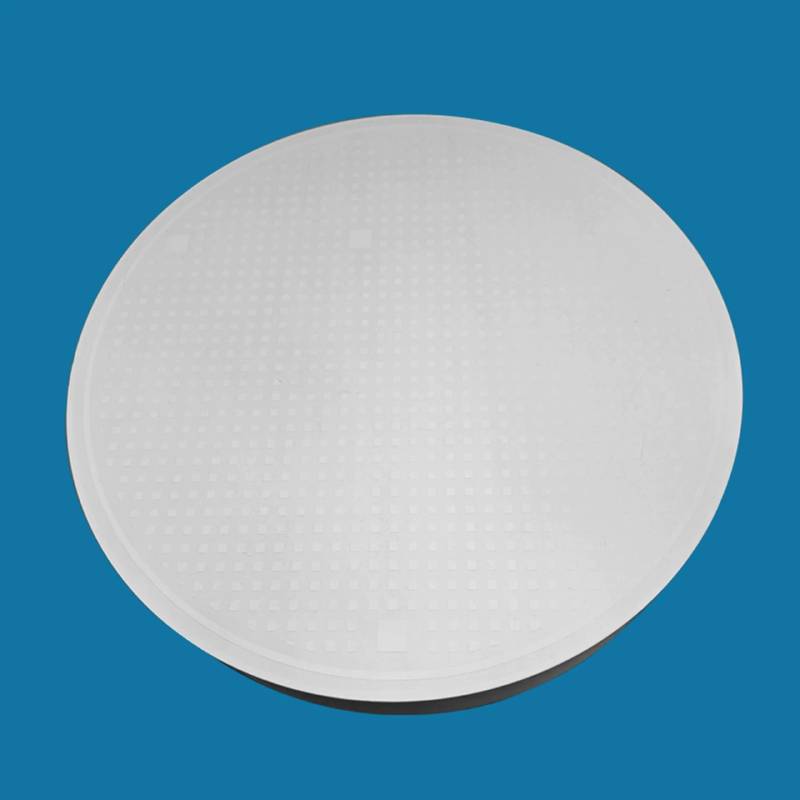
AlN laser micro-processing serves critical high-end sectors requiring robust thermal management:
SiC & GaN substrates: Perfect dicing for EV traction inverters.
IGBT modules: Ideal dicing for industrial drives and clean-energy units.
Telecom grid systems: Micro-machining of heat sinks in data center arrays.
LED submounts: Rapid drilling of multi-vias for solid heat pathways.
Laser diode packaging: Precision-sized boundaries for micro-diodes.
UV LED substrates: Processing AlN where alumina thermal ceilings fail.
5G/6G RF power amplifiers: Low-loss, high-conduction AlN substrate dicing.
Military Radar: Clean scribing of components in critical radar hardware.
Satellite transceivers: Structuring space-grade thermal isolators.
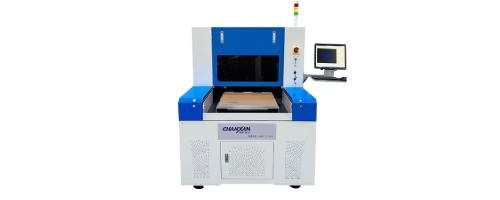
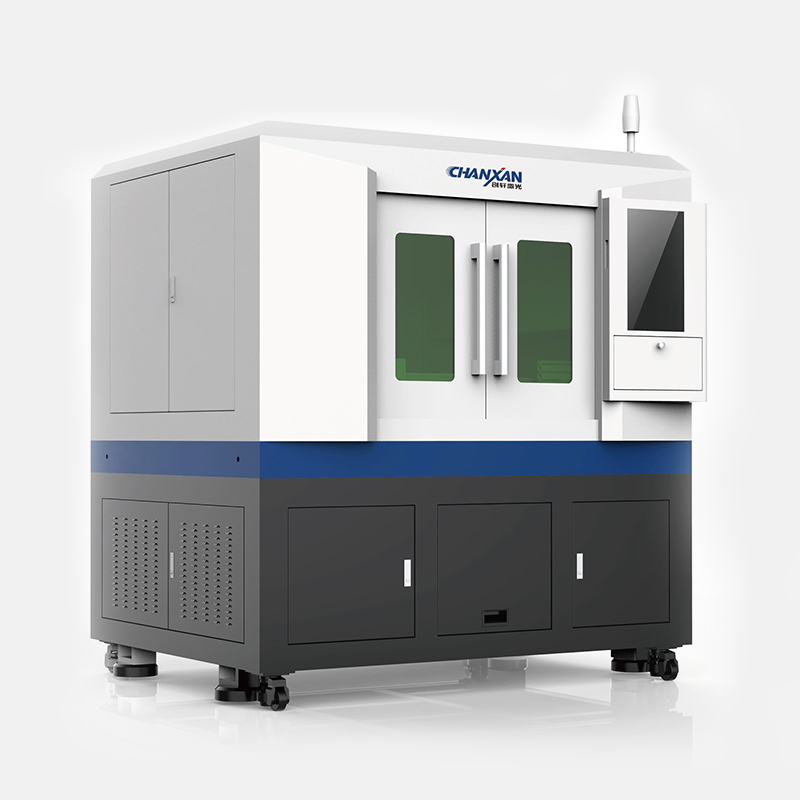
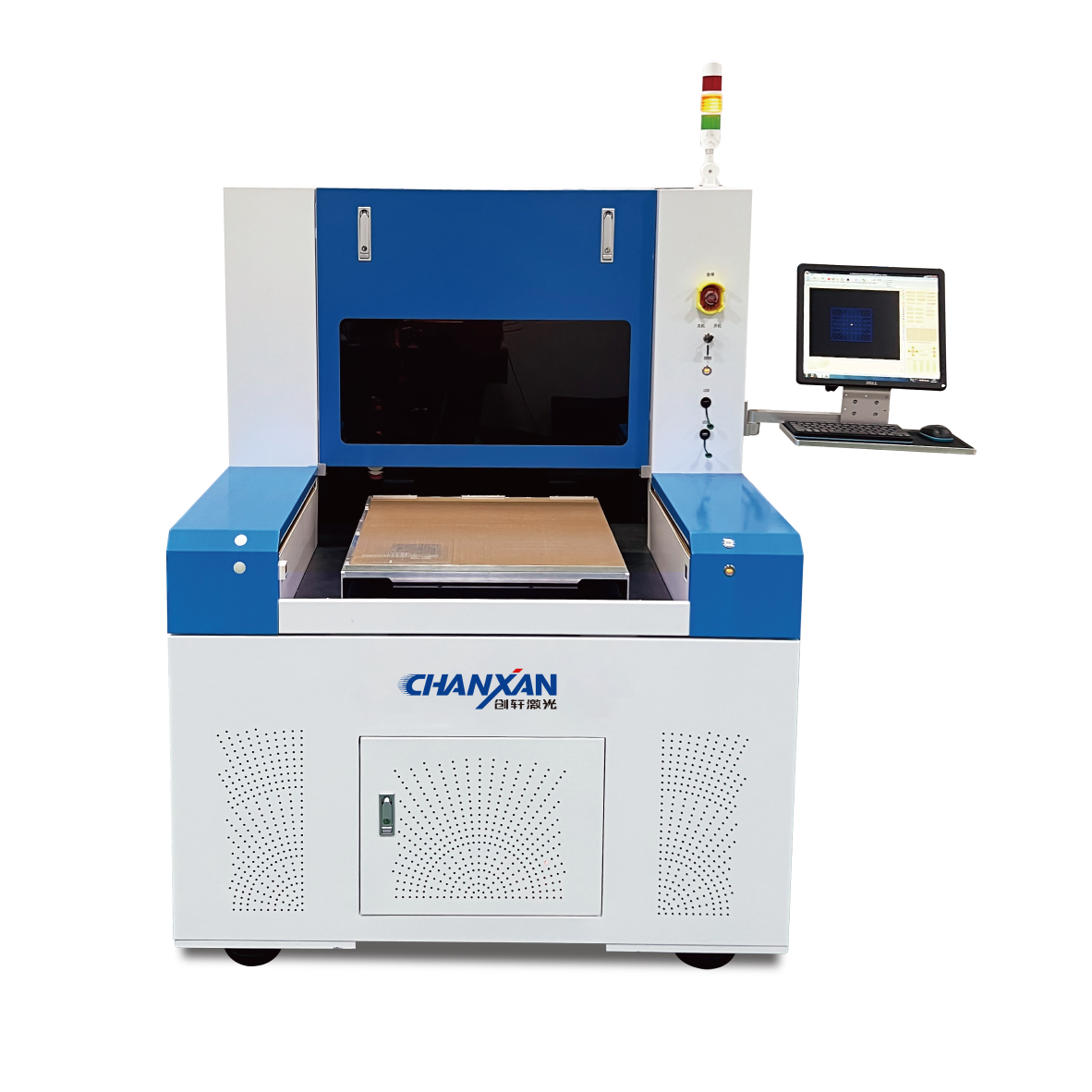
Chanxan's Ceramic Laser Scribing and Dicing System is specifically engineered for high-yield, micro-crack-free AlN processing. Key architectural features include:
| System Hardware Feature | Critical Process Benefit for AlN |
|---|---|
| UV 355 nm / Picosecond Laser | Eliminates AlN carbonization; restricts HAZ < 5 μm; preserves pristine dielectric properties. |
| Precision Depth Closed-Loop | Ensures ±3 μm scribing depth control to guarantee clean, tensionless manual cleavage lines. |
| High-Speed Linear Motor Stages | Supports up to 500 mm/s continuous scanning paths under high ±2 μm physical positioning accuracy. |
| Pattern Recognition Auto-Alignment | Coaxial CCD dynamically calibrates laser path with a registration precision under < 1 μm. |
| Multi-Pass Scribing Slicing | Divides raw pulse energy into high-speed sweeps to eliminate micro-cracking and chipping. |
| Automated Cassette-to-Cassette | Optional industrial substrate automation loader designed for fast-paced commercial production. |
Looking to upgrade your power semiconductor or RF component lines with micro-crack-free laser scribing? Upload your CAD layout geometries or send material samples to Chanxan's lab. Our engineering team will return a Complimentary Process Feasibility Study & Sample Cutting Report within 48 hours.
| Free solution