
Key Words: Silicon Wafer Dicing PCB Depaneling Glass Cutting
Home > News > Industry News
【Description】:
Discover why laser marking is the preferred traceability solution for photovoltaic backsheet films—and how it compares to ink printing for durability, safety, and long-term reliability.
Every photovoltaic backsheet carries information. A batch number. A QR code. A certification mark. A manufacturer logo. This information is not decoration. It is traceability—the ability to identify where a material came from, when it was made, and how it performed.
The Significance: In an industry where modules are expected to last 25 years or more, traceability is essential. Backsheet laser marking is the technology that makes permanent, durable identification possible without ink, solvents, or labels.
Photovoltaic backsheets typically carry several types of critical information:
Batch numbers: Identify production runs to trace materials and determine affected modules if a defect arises.
QR codes and data matrix codes: Encode detailed data in a small space, linking automatically to production and material databases.
Certification marks: IEC, UL, or TÜV logos that must remain legible for the entire life of the module.
Manufacturer identification & Date codes: Brand names, logos, and production dates crucial for warranty claims, quality assurance, and aging correlation.
Traditional ink printing (inkjet, pad printing, and screen printing) has significant limitations for photovoltaic backsheets:
Adhesion and durability: Ink flakes, fades, or rubs off under UV exposure, moisture, and temperature cycling, resulting in lost traceability.
Contamination risk: Solvents and additives can interact with adhesives or fluoropolymer layers, causing discoloration or delamination.
Abrasion and chemical sensitivity: Printed marks scratch easily during handling/slitting and may react adversely with encapsulants.
Environmental concerns: Solvent-based inks release VOCs, adding cost and complexity to manufacturing compliance.
Laser marking uses a focused beam of light to alter the material itself via controlled ablation, color change, or surface modification. Key advantages include:
Non-contact & Permanent: Eliminates physical deformation risks; marks are part of the material and do not wash away or fade.
No consumables: No inks to buy, store, or dispose of, and no print heads to clean, reducing operational costs.
High precision & Automation-friendly: Delivers high-contrast QR codes and seamlessly integrates with high-speed roll-to-roll production lines.
Clean & Eco-friendly: A dry, VOC-free process meeting modern environmental manufacturing standards.
The critical balance in laser marking is achieving permanence without damaging the material. Excessive power can cut through outer layers, expose the PET core, or create paths for moisture ingress, reducing electrical insulation.
UV lasers and ultrafast lasers are frequently preferred for photovoltaic backsheets due to strong polymer absorption and minimal heat input, ensuring marked areas never become reliability weak points.
Laser marking of photovoltaic backsheets is a vital traceability solution. By pairing the right technology with strict process control, manufacturers can achieve permanent identification that survives decades in the field without compromising backsheet integrity.
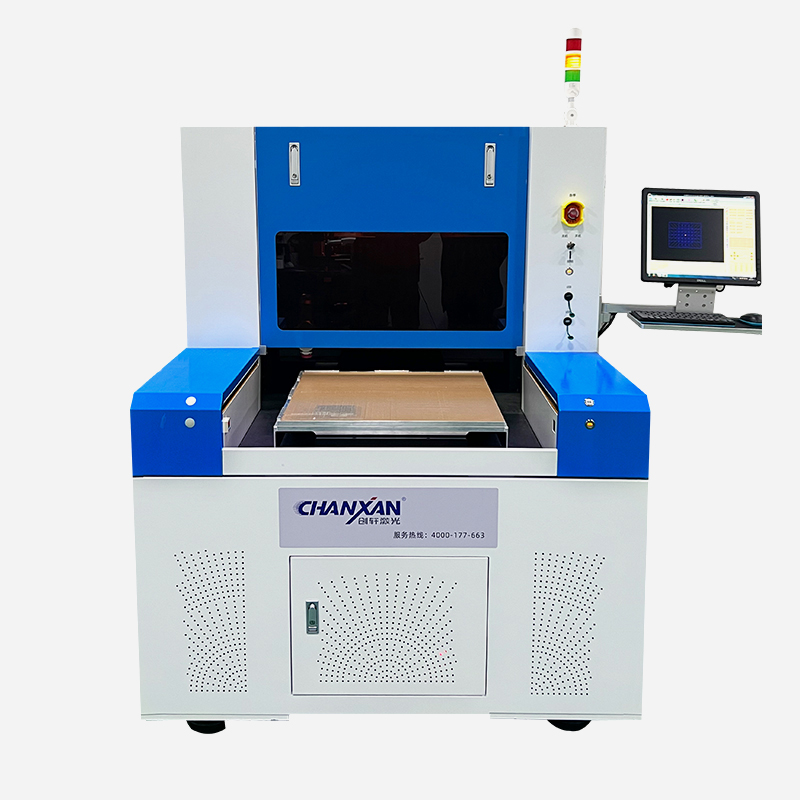
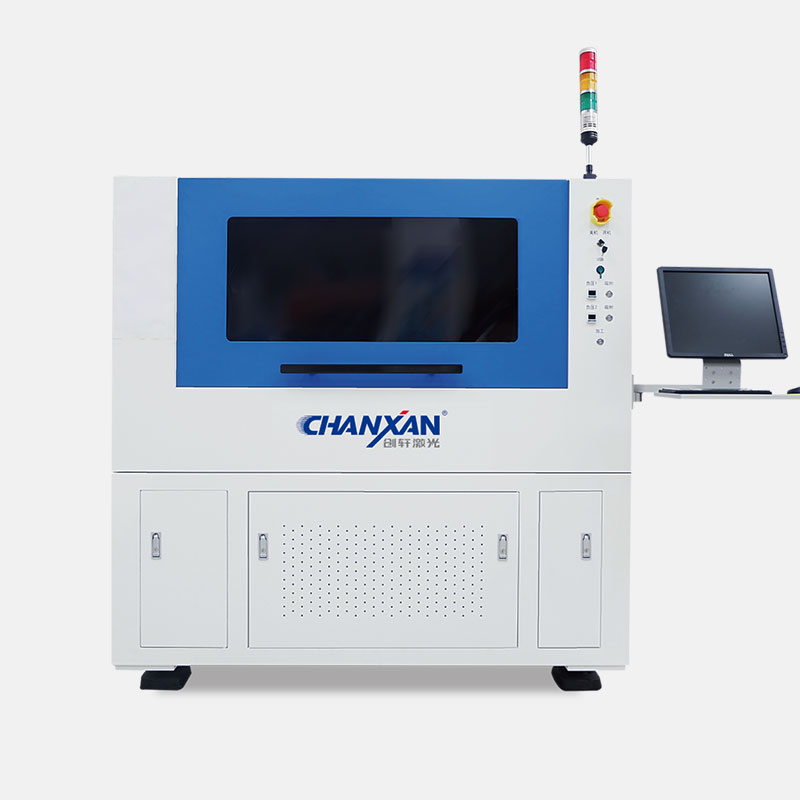
Chanxan Laser provides precision laser processing solutions for photovoltaic backsheets and other advanced materials. Its UV, ultrafast, and CO₂ laser systems are designed for heat-sensitive multilayer photovoltaic backsheet films, enabling clean cutting, drilling, scoring, and marking with minimal thermal damage. For manufacturers looking to improve traceability and marking durability, Chanxan Laser offers both equipment and process development support.
| Free solution
Previous: Surface Treatment and Pre-Assembly of Photovoltaic Backsheet Films: The Invisible Steps That Matter
Next: Laser Scoring and Grooving for Photovoltaic Backsheets: Depth Control Is Everything