
Key Words: Silicon Wafer Dicing PCB Depaneling Glass Cutting
Home > News > Industry News
【Description】:
Learn how laser scoring, grooving, and selective removal of photovoltaic backsheet films work—and why depth control is critical for insulation, barrier performance, and long-term reliability.
A photovoltaic backsheet is a protective barrier. But sometimes, that barrier needs to be interrupted—deliberately, precisely, and only where intended. That is where backsheet scoring and backsheet grooving come in. Unlike cutting, which goes through the entire material, scoring and grooving remove only part of the photovoltaic backsheet. Selective removal takes it a step further: one or more layers are removed while the remaining layers stay intact. These processes are used to create insulation channels, functional windows, and exposed inner surfaces for bonding or electrical contact.
The Core Challenge: Depth control. Cut too shallow, and the feature does not work. Cut too deep, and the support layer or electrical insulation is damaged. In multilayer photovoltaic backsheet films, finding that window is not easy.
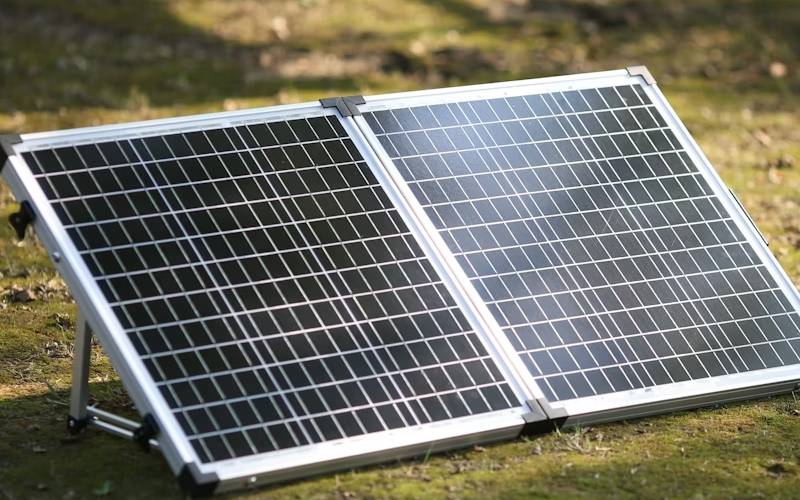
Scoring creates a shallow line or channel on the surface of the photovoltaic backsheet. It may be used to define a fold line, create a controlled weak point, or prepare a surface for subsequent processing.
Grooving removes material to a greater depth, forming a channel or trench. Grooves may be used for insulation separation, wire routing, or creating space for other components.
Selective removal is the most demanding. It removes one or more specific layers of the photovoltaic backsheet while leaving the remaining layers undamaged. For example, the weather-resistant outer layer and adhesive may be removed to expose the PET core for bonding, while the inner layers remain intact to preserve electrical insulation.
Scoring, grooving, and selective removal enable several important functions in photovoltaic backsheets:
Insulation channels: In some module designs, a groove is cut into the backsheet to create a physical separation between conductive areas, helping prevent creepage currents and improving electrical safety.
Functional windows: A window may be opened in the backsheet to allow access to inner layers for electrical connections, sensor integration, or bonding areas with clean edges.
Exposed inner layers: Selectively removing the outer weather-resistant layer exposes the PET core or inner bonding layer, allowing adhesives or sealants to bond directly.
These applications are common in advanced module designs, including shingled cells, bifacial modules, and building-integrated photovoltaics. As module architectures become more complex, the demand for precise, selective material removal grows.
Depth control is the single most important factor in scoring and grooving photovoltaic backsheet films. It is also the hardest to achieve.
If the score or groove is too shallow, it may not serve its purpose. An insulation channel that does not fully interrupt the conductive path is useless. A functional window that does not expose the inner layer cannot support bonding.
If the score or groove is too deep, it can damage the support layer. The PET core provides mechanical strength and electrical insulation. If it is cut or weakened, the backsheet may fail during handling, lamination, or long-term operation.
The ideal depth depends on the layer structure and the application. In a typical photovoltaic backsheet, the outer weather-resistant layer may be only 20–30 μm thick, the adhesive layer 5–15 μm, and the PET core 200–300 μm. Removing the outer layer without touching the PET requires depth control measured in micrometers.
Multilayer photovoltaic backsheet films are not uniform. Each layer has a different composition, thickness, and response to laser energy, introducing unique challenges:
Different absorption: A wavelength strongly absorbed by one layer may pass through another.
Different thermal properties: Adhesives may soften or degrade at a much lower temperature than the PET core, leading to delamination or carbonization under excessive heat.
Interface effects and thickness variation: Heat and stress can accumulate at boundaries, causing layer separation, while web thickness variations can impact cut consistency.
Laser processing offers several distinct advantages for scoring and grooving photovoltaic backsheet films:
Non-contact: Eliminates mechanical blade stress, burrs, or delamination.
Precise depth control: Adjusting power, pulse duration, and scan speed allows selective removal of specific layers.
Fine feature size & flexibility: Creates narrow grooves (<100 μm) with software adjustments rather than new tooling.
Selective absorption: UV and ultrafast lasers deliver short pulses with minimal heat transfer, making them ideal for heat-sensitive multilayer films.
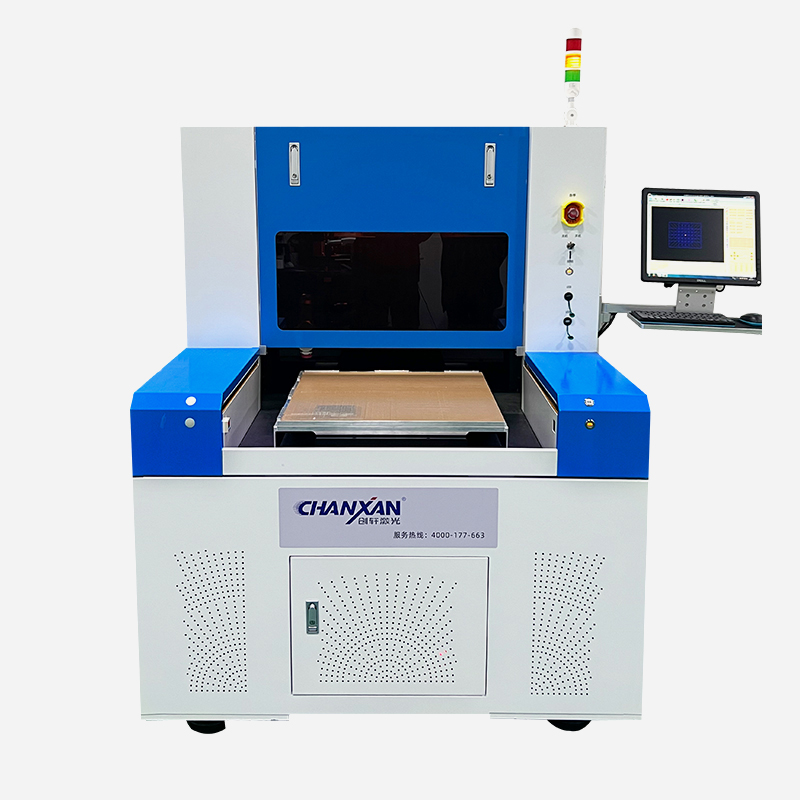
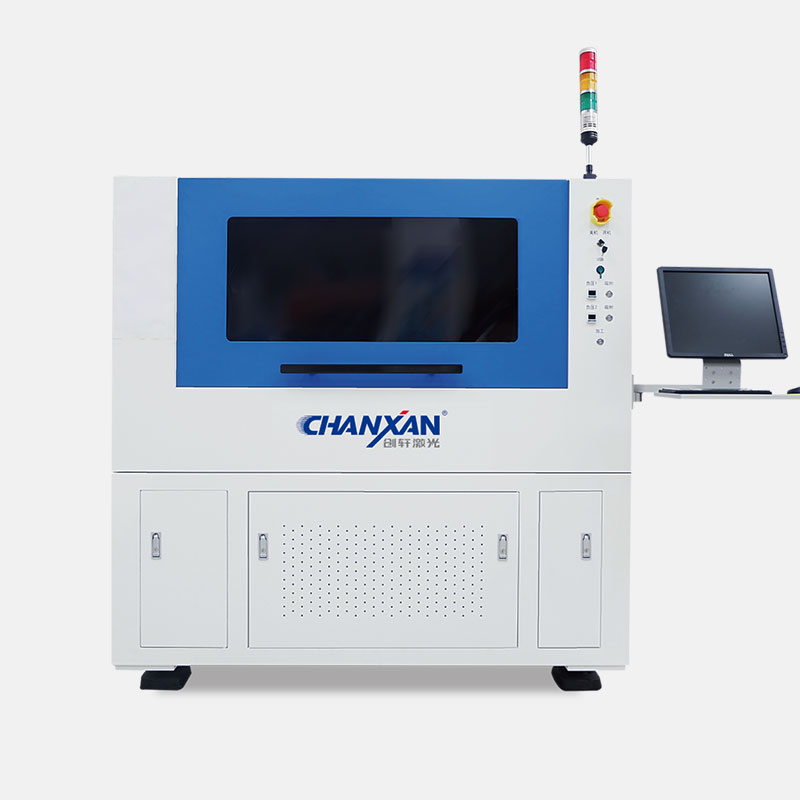
Chanxan Laser provides precision laser processing solutions for photovoltaic backsheets and other advanced materials. Its UV, ultrafast, and CO₂ laser systems are designed for heat-sensitive multilayer photovoltaic backsheet films, enabling clean scoring, grooving, and selective removal with minimal thermal damage. For manufacturers looking to improve depth control and process reliability, Chanxan Laser offers both equipment and process development support.
| Free solution
Previous: Laser Marking of Photovoltaic Backsheets: Traceability That Survives the Field
Next: Hole Drilling in Photovoltaic Backsheets: Precision, Sealing, and Reliability