
Key Words: Silicon Wafer Dicing PCB Depaneling Glass Cutting
Home > News > Industry News
【Description】:
Explore ultrafast laser micro-perforation for solid-state battery separators. Lower impedance, boost ion transport, and scale R2R production with Chanxan.
As solid-state battery (SSB) technology transitions from pilot-line development to commercial scaling, managing interfacial impedance and lithium-ion transport kinetics remains a foundational challenge. Solid-state electrolytes (SSEs) offer exceptional thermal stability and safety, yet the solid-solid contact between active electrodes and electrolyte membranes inherently increases charge-transfer resistance.
To overcome these kinetic bottlenecks without compromising mechanical safety, industrial ultrafast laser micro-perforation has emerged as a key structural engineering technique. By creating deterministic, micro-engineered channel arrays across solid-state and composite separators, laser processing bridges the gap between high ionic conductivity and long-term mechanical reliability.
Conventional wet or dry stretching methods used in liquid lithium-ion battery manufacturing yield randomized, highly tortuous pore networks. In solid-state systems, this irregular structure causes non-uniform ion flux, resulting in localized current concentration and accelerated capacity fade.
Ultra-short pulse (USP) lasers allow battery design engineers to introduce uniform, deterministic micro-channel arrays:
Lowering Tortuosity: Creating straight-through micro-vias perpendicular to the electrode surface minimizes the effective ion migration path length, directly boosting effective ionic conductivity.
Controlled Aspect Ratios and Apertures: Precise optical control enables micro-hole diameters ranging from sub-micron levels with tailored entry/exit tapers, accommodating various polymer-ceramic composite matrices or localized gel-electrolyte formulations.
Customizable Spatial Density: Laser drilling algorithms dynamically modify hole pitch and pattern density to match specific current density profiles across patterned or thick-electrode designs.
Implementing laser-patterned micro-structures directly alters the physical and electrochemical interactions at the electrolyte-electrode boundary:
Un-patterned solid-state separators often exhibit surface roughness that causes localized electric field spikes. These hotspots drive preferential lithium-ion nucleation, encouraging dendrite formation that can puncture ceramic (e.g., LLZO, LATP) or polymer (e.g., PEO-based) separators. Uniform micro-perforation arrays equalize electric field intensity across the active area, promoting planar lithium deposition and delaying dendrite initiation.
For semi-solid or hybrid battery architectures requiring minimal trace liquid or gel electrolytes, dense ceramic/polymer membranes resist quick infiltration. Laser-drilled micro-cavities act as capillary networks, using capillary pressure to drive rapid, homogeneous wetting, reducing formation times and preventing dry zones.
High-capacity anodes—such as silicon-graphite composites or pure lithium metal—undergo significant volumetric changes during cycling. Micro-perforation arrays serve as internal expansion reservoirs within the separator plane, absorbing localized mechanical stress and reducing the risk of membrane delamination or micro-fracturing.
Processing delicate, heat-sensitive polymer membranes or brittle solid ceramic films requires strict control over heat input. Traditional nanosecond pulse lasers introduce photothermal melting, micro-cracks, and elevated edge lips (burrs) that degrade dielectric insulation strength.
Ultrafast picosecond and femtosecond lasers operate via cold ablation (multiphoton ionization and photochemical material removal), eliminating thermal damage within the Heat-Affected Zone (HAZ):
| Processing Parameter | Thermal Processing (Nanosecond) | Ultrafast Processing (Picosecond / Femtosecond) |
|---|---|---|
| Ablation Mechanism | Photothermal (Thermal Melting & Vaporization) | Photochemical / Multiphoton Cold Ablation |
| Edge Morphology | Elevated melt lips, charring, micro-cracking | Clean micro-apertures, zero melt beads |
| Mechanical Integrity | High residual stress, localized membrane distortion | Preserved tensile strength and dielectric breakdown voltage |
To meet high-volume manufacturing requirements in industrial gigafactories, laser micro-perforation systems are integrated directly into continuous Roll-to-Roll (R2R) web-handling platforms:
High-Speed Polygon Scanners: Rotating polygon mirrors achieve beam scanning speeds delivering millions of micro-vias per second across moving web substrates.
Real-Time Focus Tracking: Dynamic optical distance sensors continuously measure web displacement, maintaining focal spot precision within the Rayleigh range during high-speed web transport.
In-Line Quality Assurance: High-resolution coaxial vision systems combined with automated inspection algorithms monitor hole morphology, pitch uniformity, and perimeter integrity in real time.
Precision laser micro-perforation represents a critical advancement in solid-state battery manufacturing. By replacing unstructured porosity with micro-engineered channel networks, ultrafast laser technology addresses interfacial impedance, stabilizes ion flux, and mitigates dendrite propagation—providing a scalable path forward for next-generation energy storage systems.
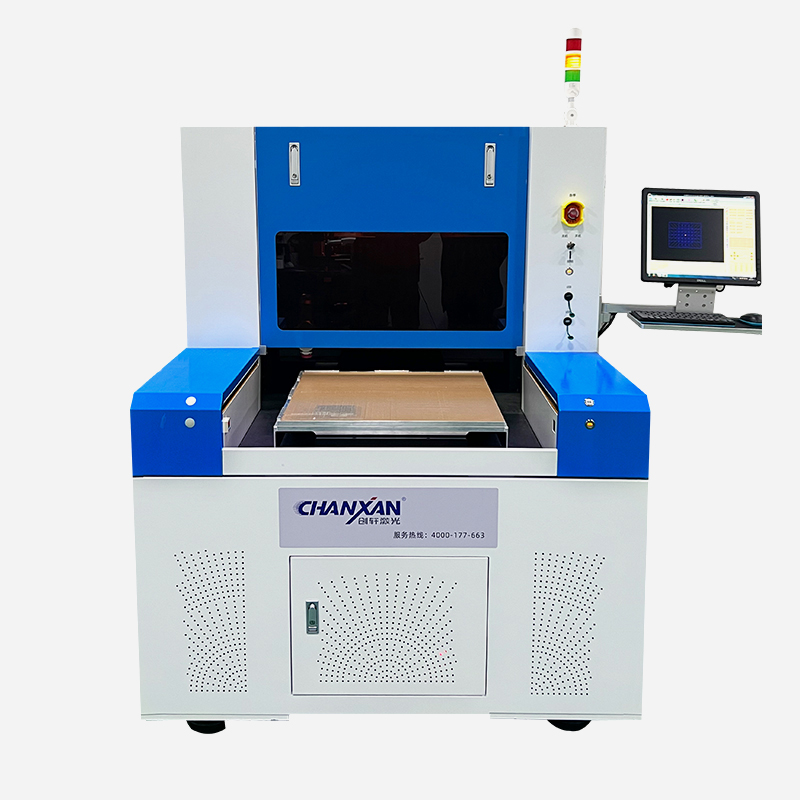
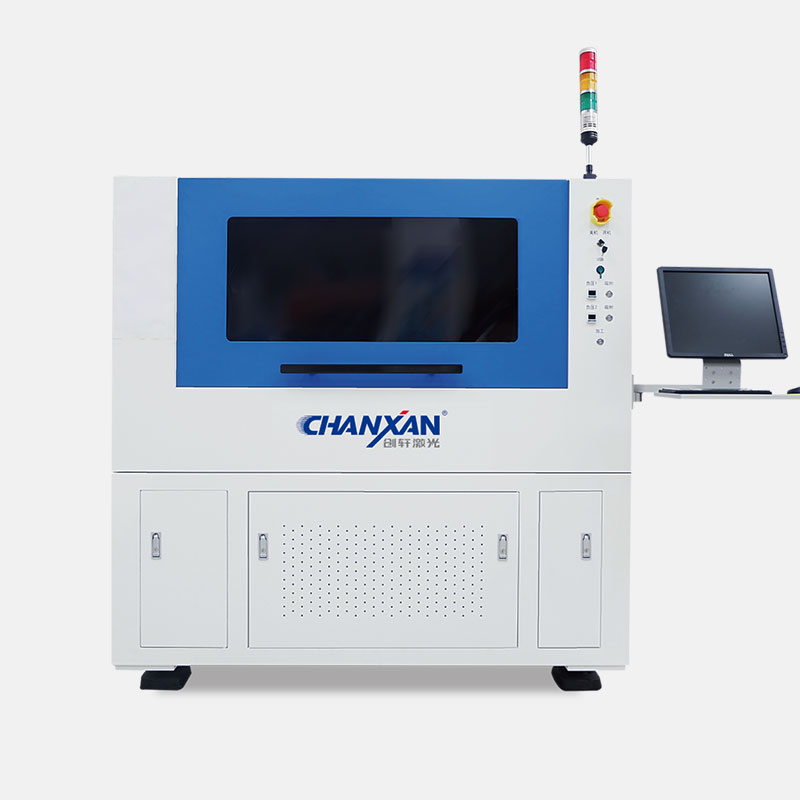
As an industry leader in industrial micro-processing, Chanxan Laser provides state-of-the-art ultrafast laser solutions tailored specifically for solid-state battery separators. Utilizing high-precision picosecond and femtosecond lasers operating across UV (355 nm) and Green (532 nm) wavelengths, Chanxan's ultrafast laser processing systems achieve ultra-clean cold ablation on sensitive ceramic (LLZO, LATP) and polymer composite membranes without thermal damage. Engineered with dynamic focus tracking, high-speed Roll-to-Roll (R2R) web-handling, and coaxial vision inspection, Chanxan Laser empowers gigafactories to scale high-yield separator micro-perforation with maximum process reliability and superior electrochemical performance.
| Free solution
Previous: Micro-Perforated Solid-State Separators for EV Fast Charging
Next: How Laser Precision Transforms Solid Battery Separators via Micro-Perforation