
Key Words: Silicon Wafer Dicing PCB Depaneling Glass Cutting
Home > News > Industry News
【Description】:
Learn how backsheet hole drilling affects photovoltaic module assembly, sealing, and insulation—and why laser drilling is replacing mechanical punching for photovoltaic backsheet films.
A photovoltaic backsheet does more than cover the back of a solar module. It insulates, seals, and protects. But it also has to let things through. Cables, busbars, alignment pins, and venting paths all require holes. That makes backsheet hole drilling one of the most quality-critical steps in photovoltaic backsheet processing. A hole may look simple. In reality, every hole is a potential weak point. If it is misaligned, assembly becomes difficult. If its edge is damaged, moisture can enter. If the wrong drilling method is used, the insulation performance of the photovoltaic backsheet can be compromised.
Different module designs require different holes, but most photovoltaic backsheets include one or more of the following:
Junction box holes – These allow cables and connectors to pass through the backsheet to the junction box. They must be positioned accurately so the junction box seals properly against the backsheet surface.
Busbar holes – In some designs, busbars or ribbon connections pass through the backsheet. These holes must be clean and correctly sized to avoid short circuits or stress on the conductive elements.
Alignment holes – These are used by automated assembly equipment to position the backsheet accurately during lamination or framing. Even a small offset can cause handling errors or misalignment.
Vent holes – Some module designs include small venting holes to allow air or moisture to escape during lamination or operation. These holes must be small enough to maintain barrier performance but large enough to function.
Each hole type has its own tolerance and quality requirements. But all of them share one thing: a poorly drilled hole can become a reliability problem.
In solar module assembly, everything is aligned. The backsheet must line up with the encapsulant, the cells, the frame, and the junction box. If a hole is in the wrong place, the entire assembly sequence can be affected. A misaligned junction box hole may prevent the box from seating properly. That can lead to a weak seal, which may allow moisture to enter over time. A misaligned busbar hole may put stress on the ribbon, creating a risk of cracking or electrical failure. An alignment hole that is off by even a fraction of a millimeter can cause automated equipment to misplace the backsheet. For photovoltaic backsheet films, which are thin and flexible, accurate hole positioning is not automatic. The material can shift, stretch, or distort during handling. That is why the drilling process must be stable, repeatable, and well-controlled.
The quality of the hole edge is just as important as the hole position. A clean hole has a smooth, well-defined edge with no damage to the surrounding material. A poor hole can have several types of defects:
Burrs – rough, raised edges that can interfere with sealing or handling.
Charring – burned or carbonized material, often caused by excessive heat during laser drilling or mechanical friction.
Delamination – separation between the layers of the photovoltaic backsheet, which weakens the material and can create a path for moisture.
Microcracks – tiny cracks that may not be visible initially but can grow during thermal cycling or mechanical stress.
For multilayer photovoltaic backsheets, these defects are especially concerning. The adhesive layers may soften or degrade. The fluoropolymer outer layer may melt or fray. The PET core may crack under stress. Any of these can reduce the electrical insulation and moisture barrier performance of the backsheet.
There are two main ways to create holes in photovoltaic backsheet films: mechanical punching and laser drilling.
Mechanical punching uses a punch and die set to physically cut a hole. It is fast, repeatable, and cost-effective for high-volume production. For simple holes in standard positions, it remains a practical choice. However, punching applies mechanical force to the material. That force can cause stress, burrs, or delamination, especially in thin multilayer backsheets. Tooling also wears out, and changing hole patterns requires new dies.
Laser drilling uses a focused beam of light to remove material. It is non-contact, so there is no mechanical stress on the photovoltaic backsheet. Laser drilling can create very small holes with high accuracy. It is also flexible: changing a hole pattern is a software change, not a tooling change. This makes it ideal for custom designs, prototypes, and production runs where the layout changes frequently.
The trade-off is heat. CO₂ lasers can leave a heat-affected zone, charring, or melting. UV and ultrafast lasers deliver energy in shorter pulses, reducing thermal damage and producing cleaner edges. For heat-sensitive photovoltaic backsheet films, these “cold” laser processes are often preferred.
A photovoltaic backsheet is a barrier. It keeps moisture out and keeps electrical current in. Every hole interrupts that barrier. The way the hole is drilled determines how much the barrier is compromised.
If the hole edge is clean and the surrounding material is undamaged, the backsheet can still perform its protective function. The hole is a controlled opening, and the rest of the barrier remains intact.
If the hole edge is damaged—charred, delaminated, or cracked—the barrier is weakened beyond the hole itself. Moisture can migrate along the damaged edge. Insulation resistance can drop. In the worst case, the hole becomes the starting point for electrical failure.
That is why hole drilling is not just a mechanical step. It is a reliability step. The goal is to create the hole you need without damaging the protection you depend on.
Backsheet hole drilling is a small part of photovoltaic backsheet processing, but it has a big impact on module assembly and long-term performance. Junction box holes, busbar holes, alignment holes, and vent holes all must be positioned accurately and cut cleanly.
Mechanical punching remains useful for high-volume standard holes. Laser drilling offers greater precision, flexibility, and non-contact processing for photovoltaic backsheet films. As modules become more complex and reliability requirements grow, the choice of drilling method will matter more than ever.
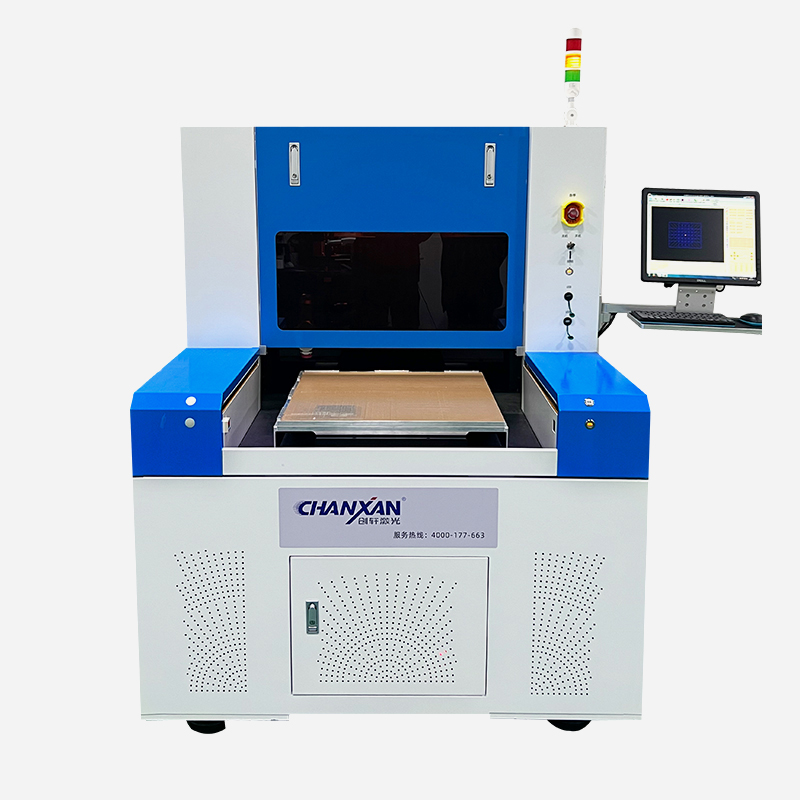
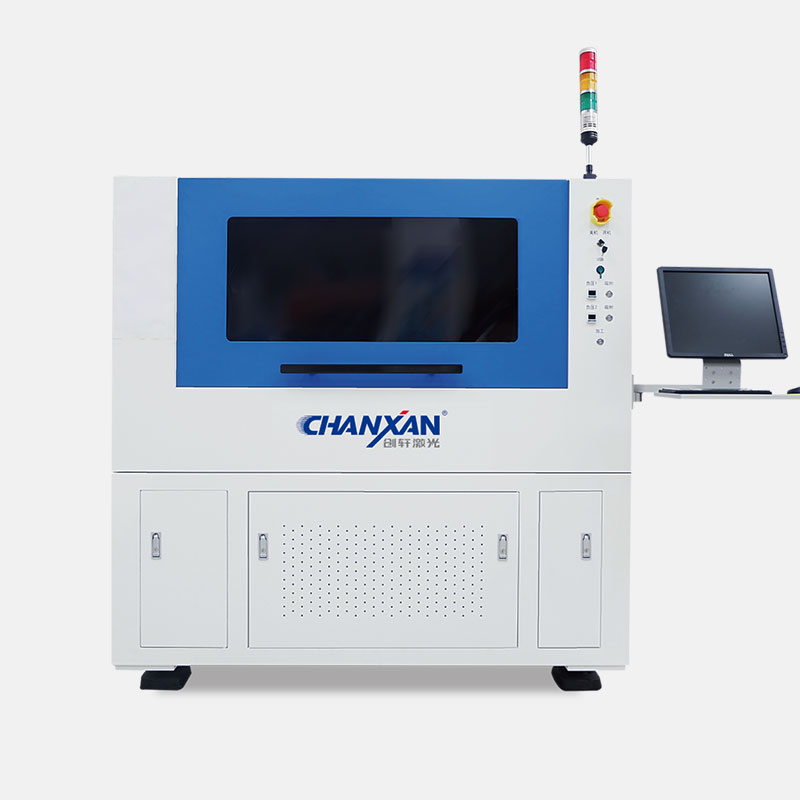
Chanxan Laser provides precision laser processing solutions for photovoltaic backsheets and other advanced materials. Its UV, ultrafast, and CO₂ laser systems are designed for heat-sensitive multilayer photovoltaic backsheet films, enabling clean hole drilling, cutting, scoring, and marking with minimal thermal damage. For manufacturers looking to improve hole quality, position accuracy, and insulation reliability, Chanxan Laser offers both equipment and process development support.
| Free solution
Previous: Laser Scoring and Grooving for Photovoltaic Backsheets: Depth Control Is Everything
Next: Shape Cutting and Profiling of Photovoltaic Backsheets: Why Geometry Matters