
Key Words: Silicon Wafer Dicing PCB Depaneling Glass Cutting
Home > News > Industry News
【Description】:
Learn how photovoltaic backsheet slitting and cutting turn wide roll stock into module-ready components—and why edge quality, tension control, and laser processing matter for long-term reliability.
A photovoltaic backsheet is the protective layer on the rear side of a solar module. It provides electrical insulation, moisture barrier, UV resistance, and mechanical support. But before a photovoltaic backsheet can be laminated into a module, it must be converted from a wide roll of material into precisely sized sheets and strips. That conversion process is called photovoltaic backsheet slitting and cutting. It may sound simple, but it plays a critical role in module assembly, production yield, and decades of outdoor reliability.
Photovoltaic backsheet films are typically manufactured as continuous rolls. There are several reasons for this.
First, roll-to-roll manufacturing is efficient. The backsheet is a multilayer composite—often including a weather-resistant outer layer, a PET core, adhesive layers, and an inner bonding layer. Producing it in a continuous web allows manufacturers to control coating, lamination, and curing in one integrated process. Second, rolls are easier to handle, store, and transport than pre-cut sheets. They also give module manufacturers flexibility. A single wide roll can be slit into different widths and cut to different lengths, depending on the module design. Finally, module sizes and designs vary widely. If backsheets were only produced in finished module dimensions, manufacturers would need a different supply format for every product. Roll stock solves that problem. The final sizing happens closer to the point of use—during backsheet slitting and cutting.
Although the terms are often used together, slitting and cutting refer to different operations. Slitting is the process of cutting a wide roll into narrower rolls. The cut runs along the length of the web. Think of it as dividing a wide ribbon into several thinner ribbons. Slitting is used to create the specific widths needed for different module formats. Cutting—sometimes called cross-cutting or sheeting—is the process of cutting the material to a specific length. The cut runs across the web, turning a continuous roll into individual sheets or panels.
In practice: Photovoltaic backsheet slitting and cutting are often combined in one inline process. A wide roll is first slit into narrower lanes, and then each lane is cut to length. The result is a set of dimensionally accurate photovoltaic backsheet films ready for the next production step.
One of the most important factors in backsheet slitting and cutting is tension control. The photovoltaic backsheet films must be held at a consistent tension as they move through the machine.
If tension is too low, the web may wander, wrinkle, or cut unevenly. If tension is too high, the material can stretch, deform, or even tear. Multilayer backsheets are especially sensitive because different layers may respond differently to stress. A poorly tensioned web can end up with curved edges, inconsistent widths, or internal stress that only shows up later during lamination. Good tension control keeps the web flat, stable, and aligned. It also helps maintain consistent cut quality from the start of the roll to the end.
The edge of a photovoltaic backsheet is not just a cosmetic feature. It is a functional surface. A clean edge helps ensure proper sealing, electrical insulation, and moisture protection. A poor edge can become a starting point for failure.
Common edge defects include:
Burrs: rough, raised edges that can interfere with downstream handling.
Delamination: separation between layers, often caused by mechanical stress or heat.
Microcracks: tiny cracks that may not be visible but can grow over time.
Charring or melting: heat damage from certain cutting methods.
For photovoltaic backsheets, edge quality is especially important because the material is thin and multilayer. Mechanical cutting can press on the film and create stress. Laser cutting avoids physical contact, but it must be carefully controlled to avoid thermal damage.
Mechanical cutting has long been the standard for backsheet processing. Die cutting and punching are fast and cost-effective for high-volume standard shapes. Rotary cutting and guillotine cutting are also used for slitting and sheeting. However, mechanical methods have limitations. Tooling wears out. Changing dimensions requires new dies or blades. And the physical force of cutting can introduce stress, burrs, or delamination—especially in heat-sensitive multilayer photovoltaic backsheet films.
Laser cutting offers an alternative. It is non-contact, so there is no mechanical pressure on the material. It is also highly flexible: changing a cut pattern is a software change, not a tooling change. This makes laser processing attractive for custom shapes, small batches, and frequent design changes.
That said, not all lasers are equal. CO₂ lasers are fast and relatively inexpensive, but they generate more heat and can leave a larger heat-affected zone. UV and ultrafast lasers deliver energy in shorter pulses, reducing thermal damage and producing cleaner edges. For photovoltaic backsheets with temperature-sensitive adhesives or fluoropolymer layers, these “cold” laser processes are often preferred.
The quality of backsheet slitting and cutting has a direct impact on what happens next. During lamination, the photovoltaic backsheet is bonded to the encapsulant and the rest of the module stack. If the backsheet edge is uneven, contaminated, or delaminated, the bond may be weak. That can lead to bubbles, voids, or poor adhesion—defects that may not be visible immediately but can reduce long-term reliability.
After lamination, the backsheet edge becomes part of the module’s protective boundary. A clean, well-cut edge helps maintain electrical insulation and moisture resistance. A damaged edge can allow moisture to creep in, creating a path for corrosion, leakage current, or electrical failure. Solar modules are expected to operate for 25 years or more. A tiny edge defect from slitting or cutting can grow into a major reliability problem over that lifetime. That is why backsheet cutting is not just a sizing step—it is a quality-critical process.
Photovoltaic backsheet slitting and cutting turn wide roll stock into module-ready components. Slitting sets the width. Cutting sets the length. Together, they determine how well photovoltaic backsheet films fit into the module and how reliably they perform in the field.
Tension control, edge quality, and the choice of cutting method all matter. Mechanical cutting remains important for high-volume standard production, while laser cutting is increasingly used for precision, flexibility, and heat-sensitive multilayer materials. As modules get larger, thinner, and more diverse, the demand for accurate, damage-free backsheet processing will only grow. The companies that master this step will be better positioned to deliver reliable photovoltaic backsheets for the next generation of solar.
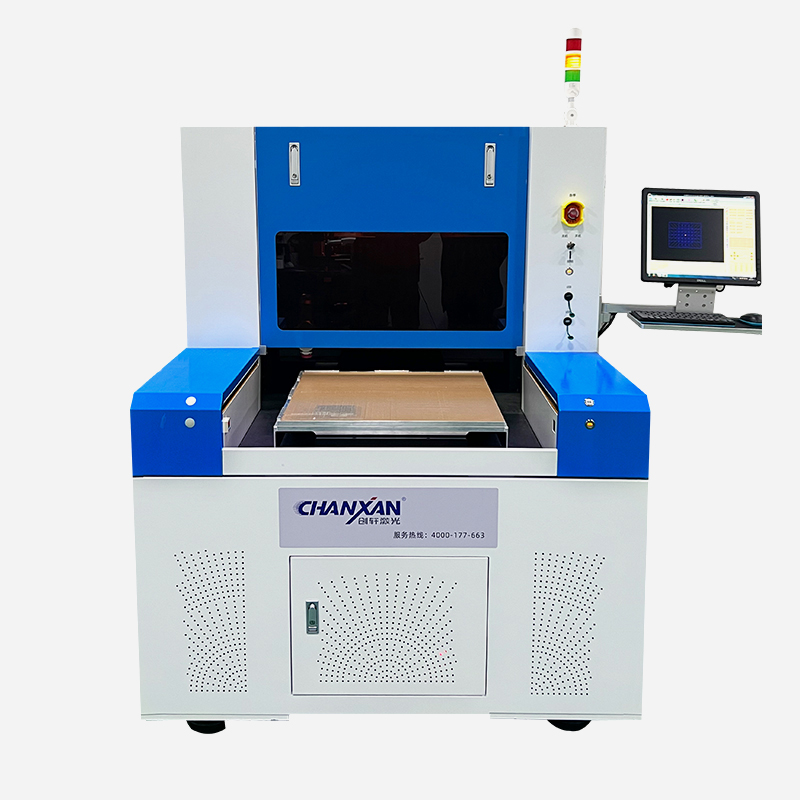
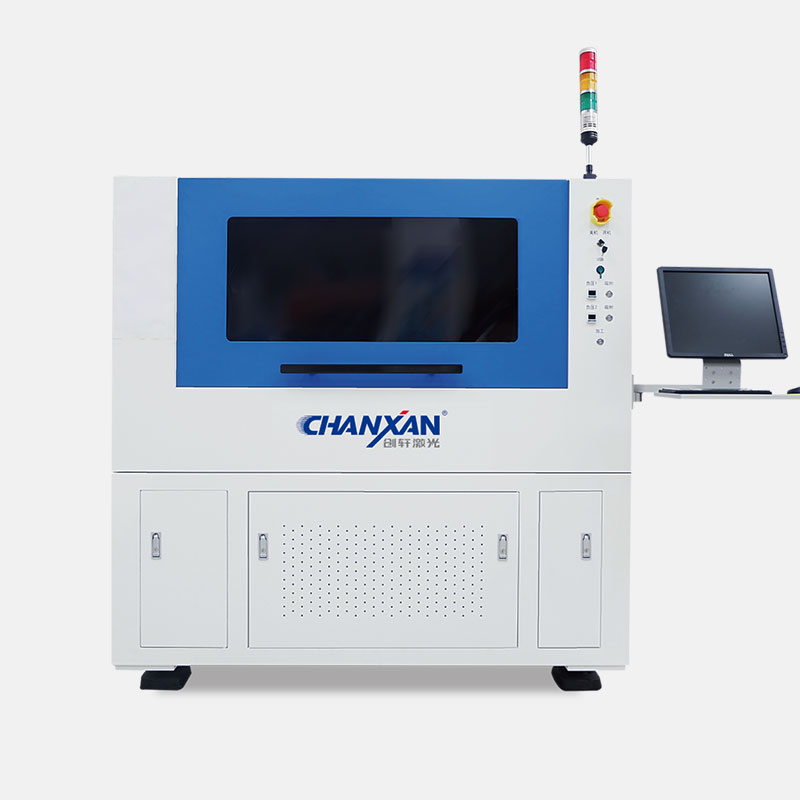
Chanxan Laser provides precision laser processing solutions for photovoltaic backsheet films and other advanced materials. Its UV, ultrafast, and CO₂ laser systems are designed to handle heat-sensitive multilayer backsheets with clean edges and minimal thermal damage. For manufacturers looking to improve backsheet slitting, cutting, and overall processing quality, Chanxan Laser offers both equipment and process development support.
Contact Chanxan Laser today to discuss advanced laser systems and process optimization for your manufacturing needs.
Contact Us to Get a Consultation| Free solution
Previous: Shape Cutting and Profiling of Photovoltaic Backsheets: Why Geometry Matters
Next: Photovoltaic Backsheet Processing: From Roll to Reliable Module Protection