
Key Words: Silicon Wafer Dicing PCB Depaneling Glass Cutting
Home > News > Industry News
【Description】:
Discover why photovoltaic backsheets require custom shape cutting and profiling—and how die cutting, punching, and laser processing compare for precision, edge quality, and design flexibility.
A photovoltaic backsheet is often pictured as a simple rectangle. In reality, modern solar modules rarely use a plain rectangular sheet without any cutouts, notches, or rounded corners. As module designs evolve, the geometry of the photovoltaic backsheet becomes more complex. That is where shape cutting and profiling come in. Backsheet shape cutting and backsheet profiling are the processes that turn a standard sheet of photovoltaic backsheet films into a custom-shaped component that fits a specific module design. It is not just about making things look right. Geometry affects assembly, sealing, insulation, and long-term reliability.
Early solar modules were fairly uniform. A rectangular backsheet with a few holes was often enough. Today, module designs are far more varied. Larger formats, bifacial modules, shingled cells, and building-integrated photovoltaics all place different demands on the backsheet.
There are several reasons why custom shapes are needed:
Rounded corners – Sharp corners can create stress concentrations and are more difficult to seal properly. Rounded corners reduce the risk of tearing and improve lamination quality.
Notches and cutouts – These provide space for junction boxes, busbars, edge connectors, or mounting hardware. They also help avoid interference with frame components.
Clearance zones – Some module designs require specific areas where the backsheet must be removed or shaped to accommodate other materials, such as insulation strips or conductive elements.
Alignment features – Small tabs, slots, or profiled edges can help automated assembly equipment position the backsheet accurately.
There are three main ways to create custom shapes in photovoltaic backsheet films: die cutting, punching, and laser cutting. Each has its place.
Die cutting uses a sharpened steel rule or hardened die to press through the material. It is fast, repeatable, and cost-effective for high-volume production of a fixed shape. Once the die is made, thousands of identical parts can be produced quickly. The downside is flexibility. If the design changes, a new die is needed. Die cutting also applies mechanical force, which can stress or delaminate multilayer backsheets.
Punching is similar to die cutting but typically uses a punch and die set to create holes or specific profiles. It is common for simpler shapes and high-volume runs. Like die cutting, it requires tooling and can introduce mechanical stress at the cut edge.
Laser cutting uses a focused beam of light to cut or ablate the material. It is non-contact, so there is no physical pressure on the photovoltaic backsheet. Laser processing is highly flexible: changing a shape is a matter of updating the software, not manufacturing a new tool. This makes it ideal for prototypes, small batches, custom designs, and any situation where the geometry changes frequently.
For photovoltaic backsheets, the choice depends on volume, shape complexity, material sensitivity, and cost. Many manufacturers use die cutting for standard high-volume parts and laser processing for everything else.
When cutting custom shapes into photovoltaic backsheet films, two things matter most: dimensional accuracy and edge integrity.
Dimensional accuracy means the cut shape matches the design within tolerance. If a notch is too small, the junction box may not fit. If a clearance zone is misaligned, it may interfere with other components. If the overall outline is off, the backsheet may not laminate properly or may leave exposed areas.
Edge integrity means the cut edge is clean and undamaged. A good edge has no burrs, no delamination, no charring, and no microcracks. For multilayer photovoltaic backsheets, this is especially challenging because different layers respond differently to cutting. The adhesive layers may soften. The fluoropolymer outer layer may melt or fray. The PET core may crack if stressed.
Laser processing can help with edge integrity because it avoids mechanical force. But it must be carefully controlled. Too much heat can cause carbonization or melting. UV and ultrafast lasers are often used for heat-sensitive photovoltaic backsheet films because they deliver energy in short pulses, reducing thermal damage.
Solar module designs are changing faster than ever. Manufacturers are experimenting with new sizes, new cell layouts, and new materials. In this environment, flexibility is valuable.
Laser processing excels when designs change frequently. There is no need to order a new die, wait for tooling, or store physical templates. A new shape can be programmed and cut within hours. This shortens development cycles and reduces the cost of design iterations.
Laser processing also handles complex geometries that are difficult or impossible with mechanical tools. Tight inner corners, narrow slots, and intricate profiles can be cut cleanly with a laser. For photovoltaic backsheets that require precise cutouts or custom outlines, this is a significant advantage.
A poorly shaped photovoltaic backsheet can cause problems throughout module assembly. If the outline is inaccurate, the backsheet may not align properly with the frame or encapsulant. This can lead to wrinkles, bubbles, or weak bonds during lamination. If a cutout is misaligned, it may not provide the clearance needed for a junction box or busbar, forcing rework or scrap.
Edge defects are equally serious. A burr or delaminated edge can prevent proper sealing. Moisture can enter through a damaged edge, leading to corrosion, leakage current, or electrical failure. In a module expected to last 25 years or more, even a small edge defect can become a major reliability issue.
Shape cutting and profiling give photovoltaic backsheets the geometry they need to fit modern module designs. Rounded corners, notches, cutouts, and clearance zones all serve important functions. Die cutting and punching remain effective for high-volume standard shapes, while laser processing offers unmatched flexibility for custom and changing designs. Dimensional accuracy and edge integrity are the keys to success. A well-cut photovoltaic backsheet assembles easily, seals properly, and lasts. A poorly cut one can cause assembly problems and long-term failures. As solar modules continue to evolve, the ability to cut and profile photovoltaic backsheet films with precision and flexibility will only become more important.
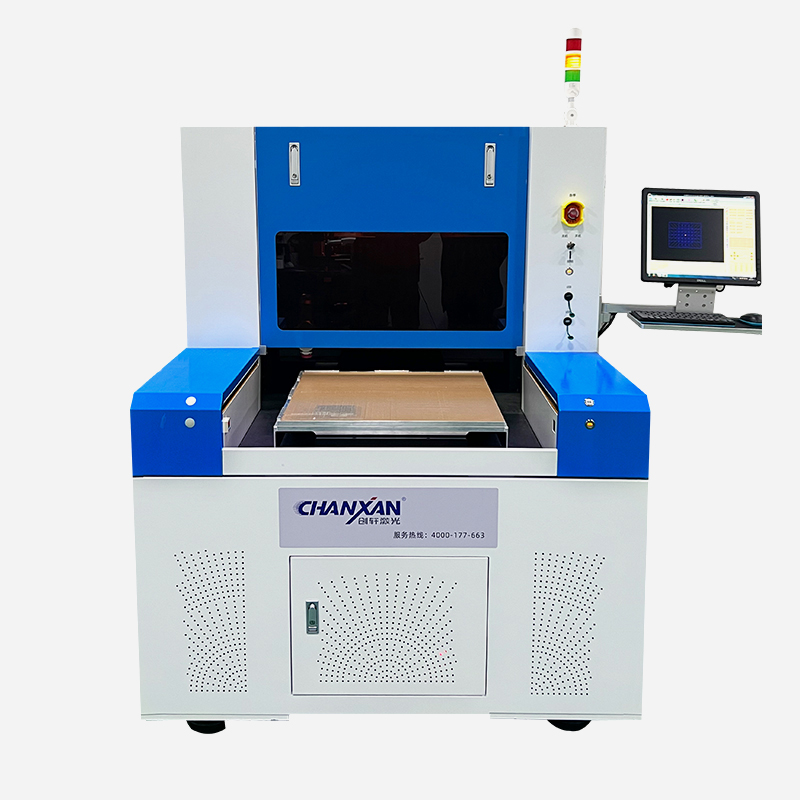
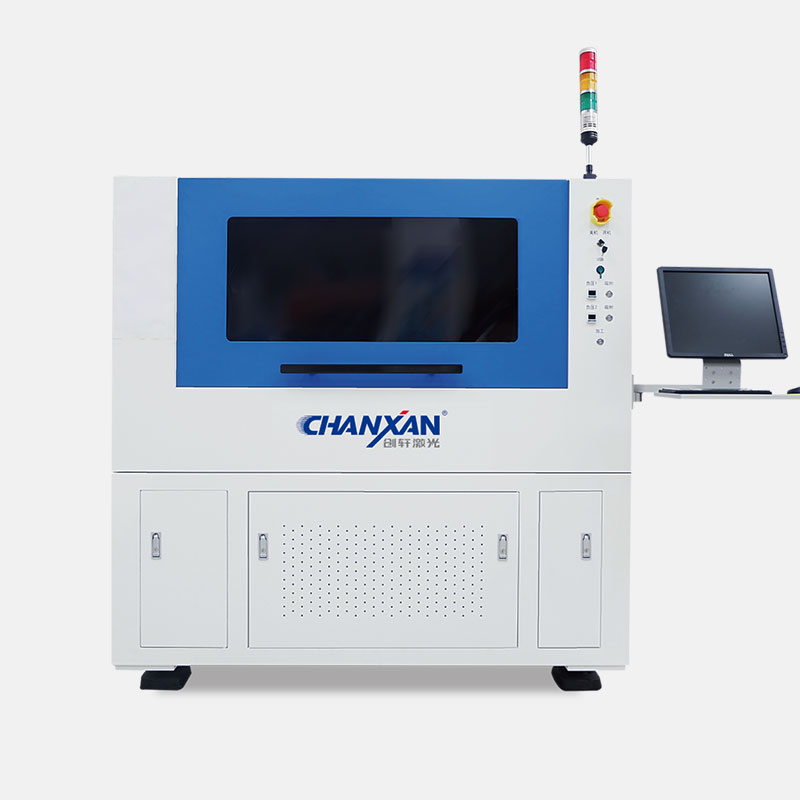
Chanxan Laser provides precision laser processing solutions for photovoltaic backsheets and other advanced materials. Its UV, ultrafast, and CO₂ laser systems are designed for heat-sensitive multilayer photovoltaic backsheet films, enabling clean shape cutting, profiling, drilling, and scoring with minimal thermal damage. For manufacturers facing complex geometries or frequent design changes, Chanxan Laser offers both equipment and process development support to make laser profiling a reliable production tool.
| Free solution
Previous: Hole Drilling in Photovoltaic Backsheets: Precision, Sealing, and Reliability
Next: Photovoltaic Backsheet Slitting and Cutting: How Roll Stock Becomes Module-Ready