
Key Words: Silicon Wafer Dicing PCB Depaneling Glass Cutting
Home > News > Industry News
【Description】:
Learn how contactless laser micro-machining reduces defect rates in EV battery separator production. Eliminate burrs, dust contamination, and downtime to boost yields.
As EV battery manufacturers scale up Gigafactory production to meet global demand, reducing unit production costs while maintaining strict safety standards is paramount. In modern high-energy density cells, the battery separator plays a critical role in preventing thermal runaway while enabling rapid lithium-ion transport. However, conventional mechanical slitting, die-cutting, and mechanical punching techniques often introduce critical defects into separator membranes.
Transitioning to contactless laser micro-machining offers battery producers a robust, high-speed solution to eliminate manufacturing defects, maximize overall equipment effectiveness (OEE), and significantly boost cell yields across continuous production lines.
Traditional mechanical tooling relies on physical contact to cut, slot, or perforate ultra-thin polymer and ceramic-coated separator materials. This contact introduces several yield-killing failure modes:
Tool Wear & Edge Burrs: Mechanical blades and punch dies degrade over time. As tools wear down, they create edge micro-burrs, fraying, and irregular cuts along separator margins, increasing the risk of localized internal short circuits.
Particle Contamination: Mechanical shearing crushes ceramic coatings (e.g., Al2O3, ZrO2), generating airborne particulate debris. Settled dust on separator surfaces compromises insulation integrity and creates failure hot spots.
Web Tension Instability & Slit Tears: Ultra-thin membranes (often under 10–15 μm) are prone to stretching, distortion, or edge tearing under mechanical shearing forces, leading to web breaks and catastrophic downtime on high-speed R2R lines.
Frequent Line Stops for Maintenance: Replacing worn dies and sharpening slitting blades requires scheduled downtime, dragging down throughput and lowering factory OEE.
Laser micro-machining applies focused optical energy directly to the material without physical contact, fundamentally transforming separator slitting, scoring, and micro-perforation:
Cold Ablation: Picosecond and femtosecond lasers deliver peak power in ultra-short pulses, vaporizing material before heat can conduct into surrounding zones. This "cold processing" mechanism preserves thermal stability and prevents melt-lips or edge shrinkage.
Zero Mechanical Stress: Contactless processing eliminates tensile stress on delicate films, allowing ultra-thin polymer and ceramic separators to be processed at high line speeds without edge tearing or stretching.
Smooth Edge Morphology: Laser-cut edges feature smooth, burr-free contours, dramatically reducing the rate of dielectric breakdown during cell assembly and testing.
Consistent Processing Quality: Unlike mechanical tooling that degrades over millions of cycles, laser beams provide consistent cutting precision without tool wear, maintaining high yield rates across continuous production runs.
The comparison below illustrates how laser micro-machining optimizes yield and quality metrics against traditional mechanical methods:
| Performance Metric | Mechanical Processing | Laser Micro-Machining |
|---|---|---|
| Tool Wear & Maintenance | High blade/die wear; requires frequent tool sharpening | Zero mechanical wear; consistent optical performance |
| Edge Quality & Burr Risk | Prone to edge burrs, micro-tears, and tension distortion | Smooth, burr-free edge profile without mechanical stress |
| Particulate & Debris Generation | Significant dust from ceramic coating flaking | Minimal; debris vaporized and extracted in real-time |
| Line Downtime & Changeover | Long downtime for mechanical tool changes | Instant pattern changes via digital software control |
Beyond cold ablation, modern laser micro-machining systems integrate automated quality control technologies to maintain zero-defect standards across continuous Gigafactory operations:
Real-Time AOI Vision Tracking: High-speed optical cameras inspect cut edges, hole pitch, and slit widths on the fly, immediately alerting operators or adjusting laser power if process drift occurs.
Integrated Dust Extraction Systems: Synchronized negative-pressure air extraction units pull vaporized particulates directly away from the work zone, keeping the web environment clean.
Digital Pattern Management: Switching separator dimensions or perforation layouts requires only a software upload—eliminating physical re-tooling costs and reducing product changeover times to seconds.
Replacing mechanical cutting with contactless laser micro-machining directly targets the root causes of separator defect rates. By mitigating edge burrs, particle contamination, and line stops, battery manufacturers can increase production yields, improve cell safety, and lower overall operational costs.
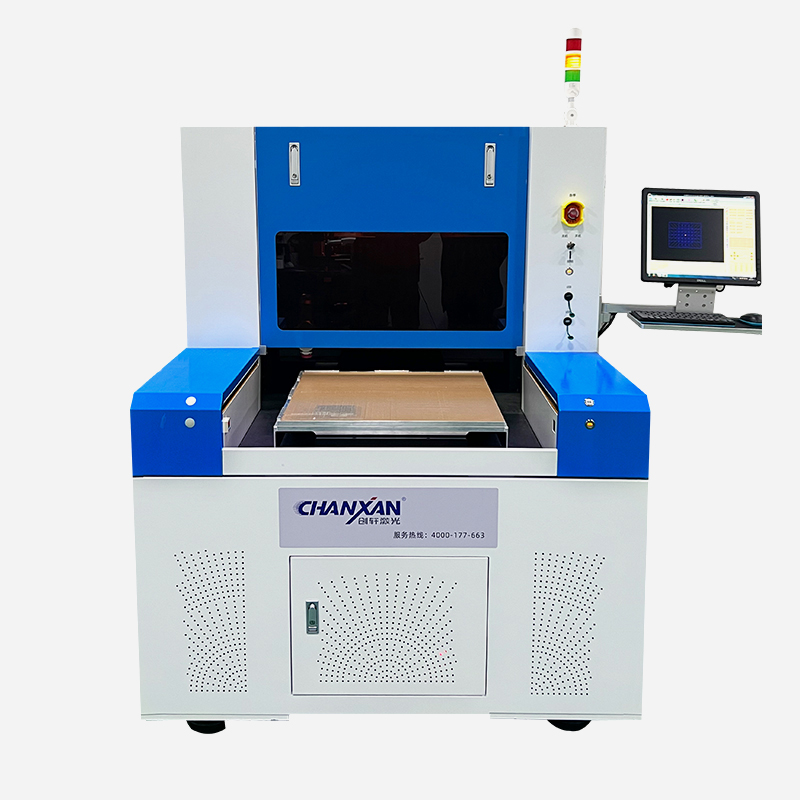
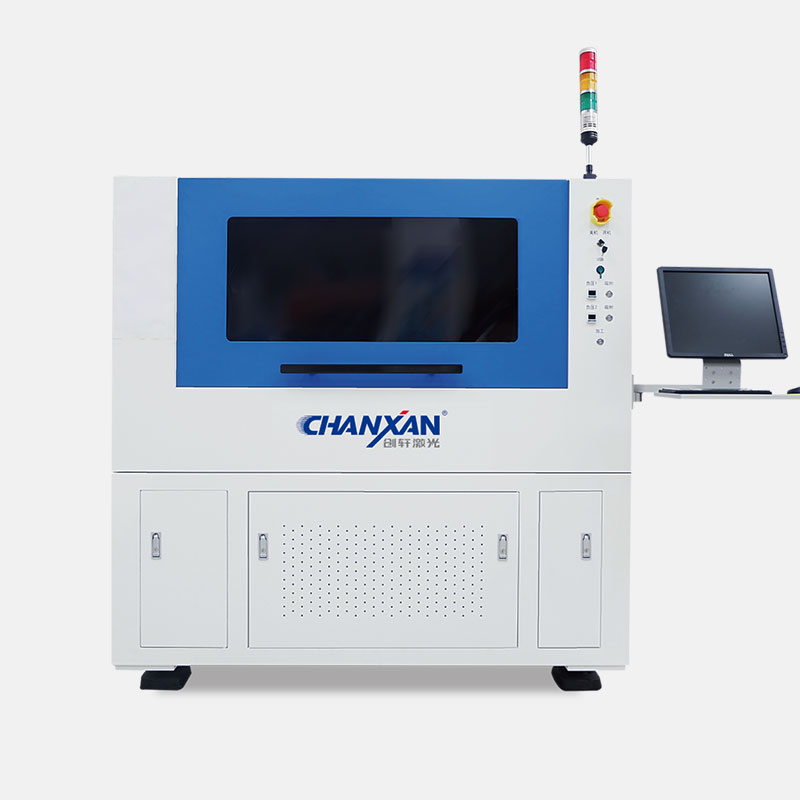
As an industry-leading provider of industrial laser micro-machining solutions, Chanxan Laser offers high-precision laser separator slitting and micro-perforation systems engineered for EV battery manufacturing lines. Equipped with ultrafast lasers, dynamic focus compensation, and automated Roll-to-Roll web handling, Chanxan Laser helps Gigafactories maximize yields and streamline high-volume production.
| Free solution
Previous: What is a Photovoltaic Backsheet? Material Types & Functions
Next: Solid-State Battery Separators: Micro-Perforation Parameter Optimization