
Key Words: Silicon Wafer Dicing PCB Depaneling Glass Cutting
Home > News > Industry News
【Description】:
What is a picosecond laser system, and when should manufacturers use one? This guide explains picosecond laser technology, cold ablation benefits, wavelength selection, and key applications in FPC cutting, ultra-thin glass, advanced PCB materials, metal films, and precision industrial manufacturing.
Manufacturing engineers working with flexible circuits, ultra-thin glass, fine-pitch PCB new materials, and precision optical components increasingly face the same problem: the material is too sensitive for nanosecond laser processing, but the production volume cannot justify femtosecond laser equipment costs. Picosecond laser systems were developed precisely to fill this gap — and in practice, they have become the most strategically important laser technology in advanced electronics manufacturing today.

A picosecond laser emits pulses with durations between 1 and 100 picoseconds (10⁻¹² seconds) — roughly 100 to 1,000 times shorter than nanosecond pulses. At this timescale, a fundamentally different material interaction mechanism takes over.
When a nanosecond pulse hits a material, heat diffuses into surrounding areas during the pulse itself, creating a heat-affected zone (HAZ). A picosecond pulse deposits its energy so rapidly that the material cannot thermally equilibrate during the interaction window. The dominant removal mechanism shifts from thermal melting and vaporization toward direct bond breaking and cold ablation — a process sometimes called "non-thermal ablation" in the literature.
The result is material removal with dramatically reduced HAZ compared to nanosecond processing, and correspondingly cleaner edges, finer features, and less subsurface damage in sensitive substrates.
Typical picosecond laser configurations:
IR picosecond lasers (1030–1064 nm) — high power, used for metal films, thick dielectrics, and robust materials
Green picosecond lasers (515–532 nm) — reduced absorption depth; preferred for copper films, indium tin oxide (ITO), and optically sensitive coatings
UV picosecond lasers (343–355 nm) — shortest wavelength, finest spot size, used for highest-precision applications on glass, ceramics, and polymer films
Picosecond laser sources have become significantly more reliable and cost-competitive over the past five years, making them practical for high-volume production deployment rather than just R&D or specialty applications.
The central value proposition of a picosecond laser system is the precision-productivity balance — significantly better material quality than nanosecond processing, at throughput levels that support production economics.
Minimal heat-affected zone. The near-cold ablation mechanism eliminates the melting, recast, and microcracking that accompany nanosecond processing on sensitive materials. For ultra-thin glass, flexible polyimide, and fine-pitch circuitry, this directly translates to higher yield and better functional performance.
Clean edge quality without post-processing. Nanosecond-cut edges on glass and ceramics typically require edge finishing to remove microcracks and chipping. Picosecond-cut edges on the same materials often meet quality specifications directly from the laser process, eliminating grinding, polishing, or chemical etching steps.
Processing of materials nanosecond lasers cannot handle cleanly. Ultra-thin glass below 0.3 mm, UTG (ultra-thin glass) for foldable displays, and flexible polyimide films exhibit thermal sensitivity that makes nanosecond processing unreliable. Picosecond systems can process these substrates with consistent quality at production speed.
Competitive cost relative to femtoseconds. Picosecond systems cost substantially less than femtosecond systems — typically 40–65% less for comparable specifications — while delivering process quality that meets requirements for the large majority of precision electronics applications. For most production environments, femtosecond performance is not needed; picosecond performance is sufficient and economically justified.
Broad wavelength availability. UV, green, and IR picosecond sources address a wide range of material absorption characteristics, giving engineers the flexibility to optimize wavelength for each substrate.
Flexible printed circuits (FPC) are among the most demanding laser processing substrates. The combination of thin copper traces, polyimide dielectric, and adhesive layers requires precise material removal without delamination, burring, or thermal distortion.
FPC cutting and singulation — clean singulation of flexible circuits from panel format without edge melt or delamination of copper-polyimide interfaces
PI (polyimide) film removal for stencil and screen printing — selective removal of PI film from stencil substrates used in screen printing processes; picosecond ablation removes PI cleanly without damaging underlying metal
Selective layer removal — controlled removal of individual layers in multi-layer FPC stacks without damaging adjacent conductors
Thin glass processing is one of the highest-growth application areas for picosecond lasers, driven by demand for foldable smartphone displays and wearable device covers.
Ultra-thin glass cutting (< 0.3 mm) — mechanical cutting of glass below 0.3 mm thickness produces unacceptable edge cracking rates; picosecond laser cutting achieves clean edges on glass as thin as 0.03 mm
UTG (ultra-thin glass) cutting for foldable displays — UTG thicknesses of 30–100 µm used in foldable OLED displays require picosecond precision to maintain edge strength during repeated bending cycles
Chamfering, bevel cutting, and arc cutting — non-linear edge profiles including chamfers, bevels, and curved contours in glass that are impossible with blade cutting and impractical with nanosecond lasers due to thermal edge damage
Inclined edge and radius cutting — complex 3D edge geometries in cover glass for smartphones and wearables
As PCB laminate technology advances, new materials are entering production that nanosecond lasers cannot process cleanly.
L9 and other next-generation PCB laminates — new high-frequency, high-speed laminates such as L9 (and similar PTFE-composite materials) have low UV absorption at nanosecond timescales, causing poor drilling quality; picosecond sources at UV or green wavelengths overcome this absorption limitation and produce clean blind vias
Fine-pitch high-density interconnect (HDI) via drilling — sub-50-µm blind vias in advanced HDI PCBs for 5G modules and AI hardware
Metal thin film cutting — precision cutting of copper, aluminum, and nickel thin films on flexible and rigid substrates without substrate damage
ITO and TCO patterning — removal of transparent conductive oxide films for touch sensor and display electrode patterning
Metal stencil laser cutting — picosecond lasers cut SMT solder paste stencils from stainless steel foil with aperture geometry and edge quality exceeding nanosecond alternatives.
Consumer electronics is the primary driver of picosecond laser adoption. Every smartphone containing a foldable display, UTG cover glass, or high-density flexible circuit is a candidate for picosecond laser processing in its manufacturing chain.
5G and telecommunications — high-frequency PCB substrates (PTFE, LCP, L9) for antenna modules, base station components, and millimeter-wave devices require the precision and material compatibility of picosecond processing.
Wearable and medical devices — thin and flexible substrates in wearable health monitors, hearing aids, and implantable device PCBs benefit from the low thermal damage of picosecond processing.
Display manufacturing — UTG cutting for foldable OLED panels is a high-value volume application where picosecond laser processing has become the manufacturing standard.
Automotive electronics — advanced driver-assistance system (ADAS) cameras, radar modules, and LiDAR receiver PCBs use HDI substrates that benefit from picosecond drilling precision.
Semiconductor packaging — fine-pitch via drilling in fan-out wafer-level packaging (FOWLP) substrates and advanced packaging interposers.
Yield improvement on sensitive materials. The primary source of picosecond laser ROI for most adopters is yield improvement on substrates where nanosecond processing produces unacceptable edge quality or thermal damage. For UTG and FPC applications, picosecond processing can improve singulation yield by 5–15 percentage points relative to nanosecond or mechanical alternatives — an improvement whose value far exceeds the incremental equipment cost.
Elimination of post-processing steps. Clean picosecond-cut glass edges often eliminate the grinding or chemical strengthening step required after nanosecond or blade cutting. Removing a process step reduces cycle time, capital investment, and process variation.
Material cost protection. UTG substrates and advanced PCB laminates are expensive materials. Scrap reduction from improved cutting quality directly reduces material cost per shipped unit.
Process consolidation. A single UV picosecond system can often replace multiple tools (mechanical cutter + edge grinder + inspection station) with a single processing step, reducing floor space, labor, and tooling cost.
Throughput at precision. Modern picosecond laser systems with high-speed galvo scanning achieve processing speeds competitive with nanosecond systems on many applications — the precision advantage comes without a proportional productivity penalty.
Wavelength for your material:
UV (343–355 nm) — best for glass, ceramics, and polyimide; finest achievable spot size and highest surface absorption on most dielectrics
Green (515–532 nm) — optimal for copper thin films, ITO, and reflective metal coatings where UV power efficiency is limiting
IR (1030–1064 nm) — for high-power material removal on metals and composites where HAZ minimization is important but UV absorption is not required
Pulse duration within picosecond range: Shorter pulses within the picosecond range (1–10 ps) deliver cleaner ablation than longer pulses (50–100 ps) on the most sensitive substrates. For UTG and FPC applications, systems below 15 ps pulse duration are generally preferred.
Repetition rate and burst mode: High repetition rate (≥ 200 kHz) is critical for production throughput. Some picosecond systems offer burst mode operation — delivering multiple closely-spaced pulses per burst — which can improve cutting efficiency on specific materials.
Beam quality and focusability: For sub-50-µm feature processing, M² < 1.2 is a practical requirement. Verify beam quality specification for UV-wavelength systems where beam degradation across the optical path can be significant.
System integration requirements: Glass cutting applications typically require multi-axis stages with precision motion (< 1 µm repeatability) and integrated crack-detection vision. FPC cutting requires substrate handling systems compatible with thin, flexible material. Evaluate integration capability alongside the laser source specification.
When to consider femtosecond instead: If your application involves materials harder than glass (SiC, diamond), requires absolute minimal HAZ below what picosecond can deliver, or involves medical device marking with regulatory traceability requirements for corrosion resistance — evaluate femtosecond systems. For most advanced electronics applications, picosecond delivers sufficient process quality at a more favorable economics point.
Picosecond laser systems have established themselves as the primary production laser technology for advanced electronics manufacturing — covering the space between cost-effective nanosecond processing and the premium capabilities of femtosecond systems with a combination of precision, throughput, and economic feasibility that fits production-scale deployment.
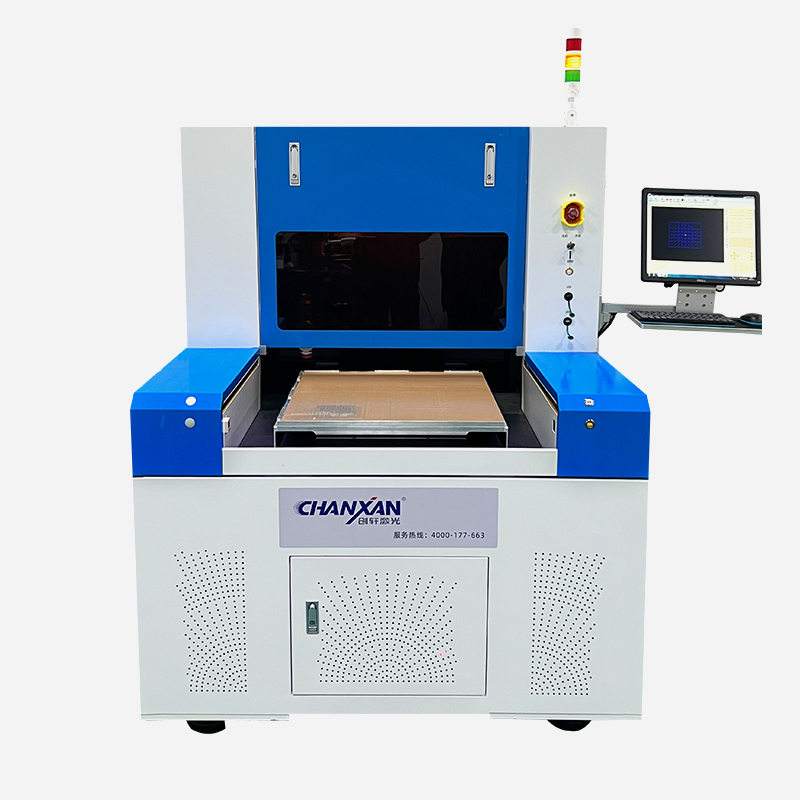
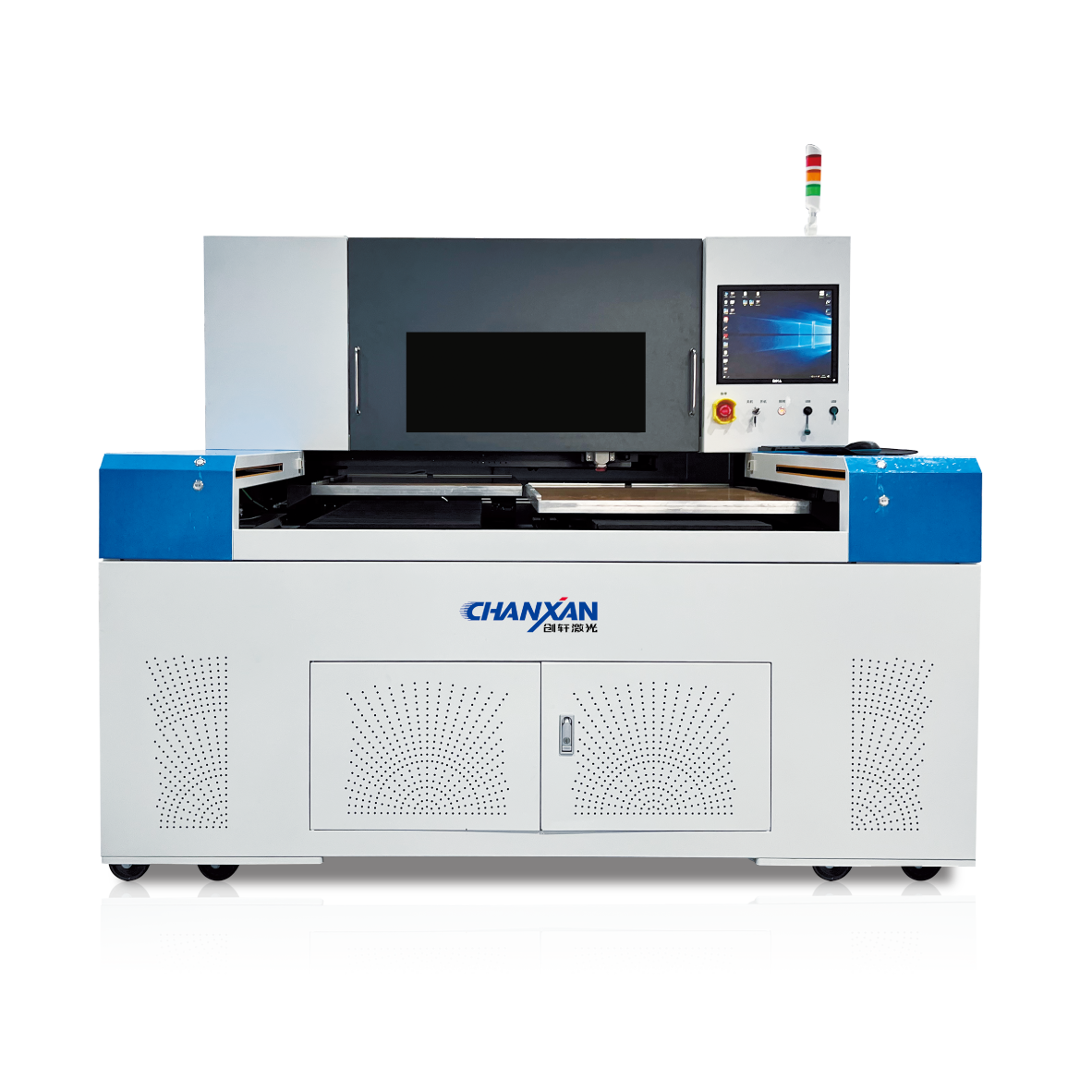
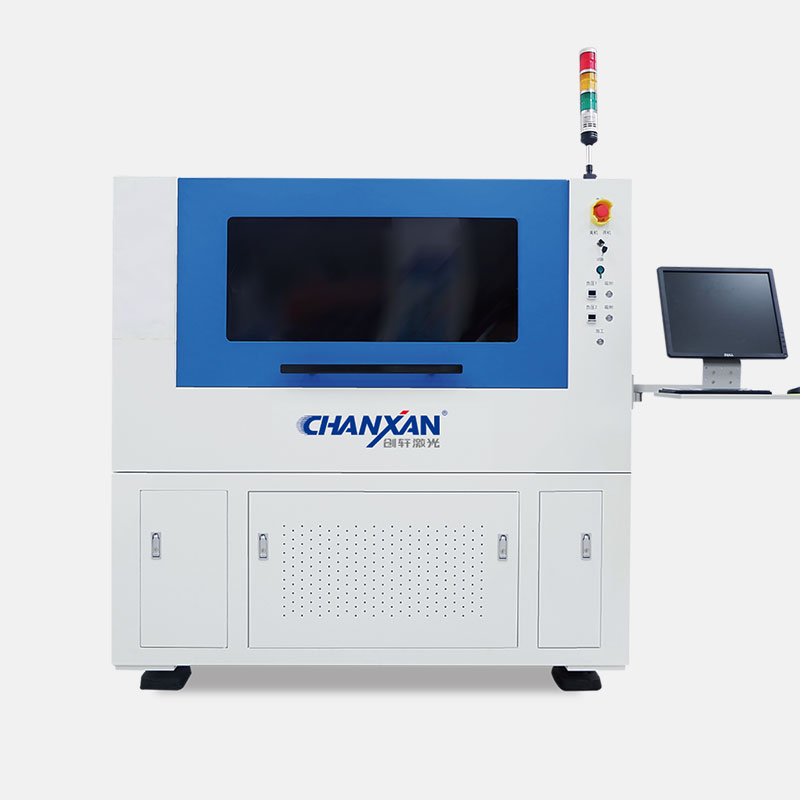
Chanxan Laser provides picosecond laser processing systems for FPC cutting, ultra-thin glass processing, advanced PCB drilling, and metal film processing, with configurations tailored for high-volume electronics and display manufacturing environments.
| Free solution
Previous: What Is a Nanosecond Laser System? Applications, Benefits, and Manufacturing Value
Next: What Is a Femtosecond Laser System? Applications, Advantages, and Industrial Value