
Key Words: Silicon Wafer Dicing PCB Depaneling Glass Cutting
Home > News > Industry News
【Description】:
Learn how to control thermal deformation, shrinkage, and warping in PET film laser cutting. Explore Chanxan's high-precision laser solutions.
TL;DR Too Long; Didn't Read
PET (Polyethylene Terephthalate) film is widely used in flexible electronics because of its low cost, transparency, and roll-to-roll compatibility. However, during PET film laser cutting, thermal deformation is one of the most common quality issues. Unlike brittle fracture or material burning, PET mainly fails through warp, shrink, curl, and loss of flatness. These dimensional changes directly affect registration accuracy, especially in RFID, printed electronics, and flexible label production. The key to stable processing is controlling heat input and maintaining uniform energy distribution during laser cutting.
In polyester laser cutting and Mylar laser cutting, PET (Polyethylene Terephthalate) film remains one of the most common substrates.
Typical applications include RFID antenna inlays, flexible labels, printed electronics, membrane switches, disposable sensor strips, and low-cost flexible circuits.
PET is popular because it is low-cost, lightweight, flexible, and compatible with roll-to-roll production. However, PET has one key weakness: dimensional instability under heat.
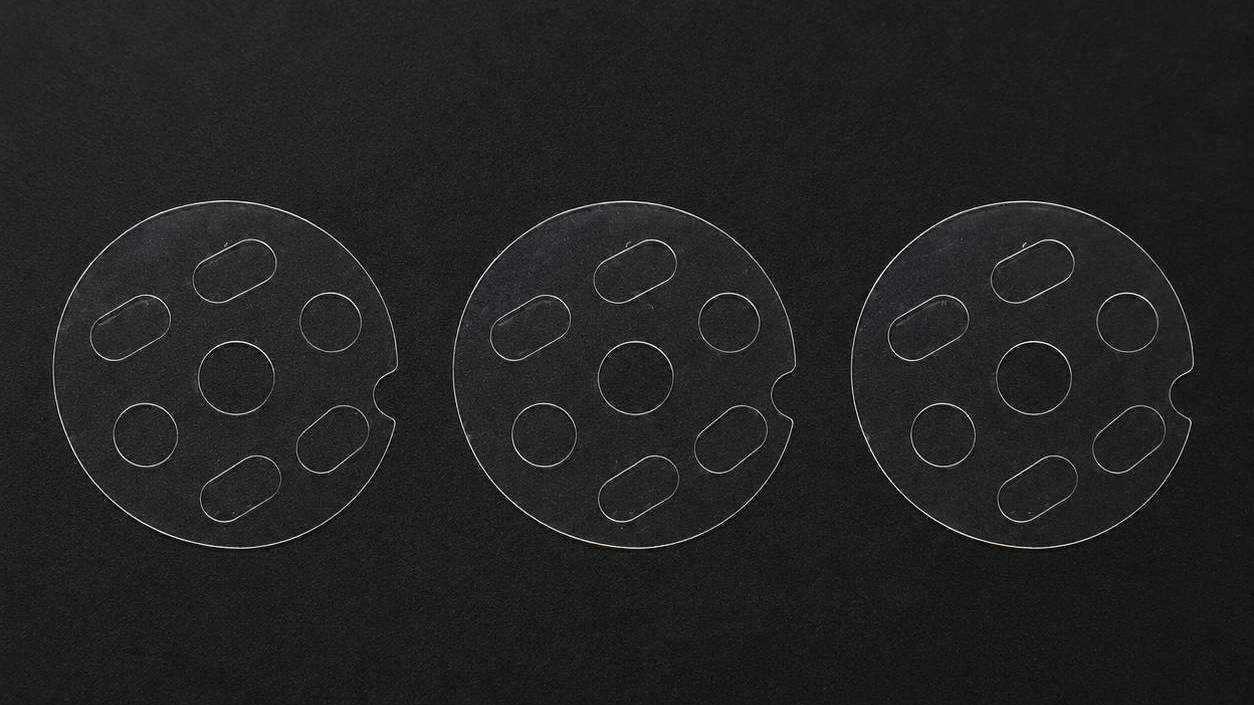
Thermal deformation refers to unwanted shape change during or after laser processing.
Thermal deformation in PET film laser cutting refers to unwanted shape changes that occur when the material responds to localized heat during processing. Instead of remaining dimensionally stable, the PET film reacts through warp, shrinkage, edge curl, and loss of flatness, which can also lead to pattern misalignment.
Unlike rigid materials, PET does not fracture under laser exposure. It softens under heat and then re-solidifies in a deformed state. This makes dimensional stability the key challenge in PET-based flexible electronics.
During laser cutting, heat is absorbed into the film faster than it can dissipate. This creates local temperature build-up, which softens the polymer matrix and triggers PET warping. At the same time, internal stress introduced during film manufacturing is released. The material contracts unevenly, resulting in film shrinkage and edge distortion.
Deformation is further amplified when laser energy distribution is not uniform. Slight differences in scanning intensity can create localized overheating zones, causing edge curling and uneven contraction. This effect becomes more pronounced in thin PET films, typically in the 25–125 μm range, where even small energy variations can permanently alter the structure.
In practical manufacturing, these physical changes directly affect flatness and registration accuracy. In applications such as printed electronics and RFID antenna production, even minor dimensional shifts can lead to misaligned patterns, reduced electrical consistency, and lower assembly yield. In roll-to-roll PET laser processing, accumulated deformation can also cause web tension instability, tracking deviation, and registration drift across continuous production.
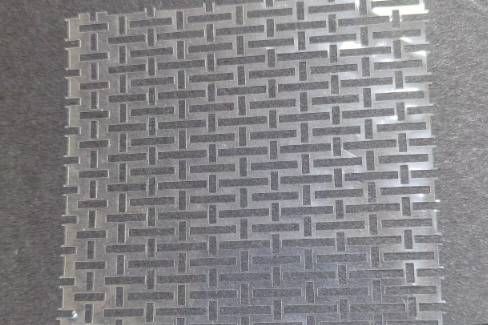
Reducing energy density is the most direct way to control PET thermal deformation. Lower pulse energy and optimized power settings help reduce excessive heat accumulation in the processing zone. By minimizing thermal load, the material remains closer to its original dimensional stability, especially in thin PET films used for flexible electronics.
Higher scanning speed reduces the interaction time between the laser and the material surface. Shorter exposure limits heat diffusion into surrounding areas and reduces thermal buildup. In roll-to-roll PET laser processing, continuous motion helps stabilize long-sheet behavior.
An uneven beam profile or inconsistent scan overlap can create localized hot spots. Stable beam distribution ensures consistent material response across the entire cutting path.
Thermal deformation is not only caused by laser energy, but also by insufficient heat removal. Effective cooling and gas flow help dissipate residual heat immediately after ablation.
Different laser types interact with PET film differently, especially in terms of heat load and energy coupling.
For PET film laser cutting applications:
CO₂ laser systems are widely used for high-speed bulk cutting of PET, polyester, and Mylar films due to strong absorption at 10.6 μm wavelength.
Ultrafast lasers (picosecond/femtosecond) provide significantly reduced thermal impact and are preferred for fine structures, precision features, and high-registration flexible electronics.
| Material | Stability | Typical Issue |
|---|---|---|
| PET | Medium | Thermal deformation |
| PI | High | Delamination |
| PEN | Higher | Minimal deformation |
PET is cost-effective but most sensitive to thermal distortion.
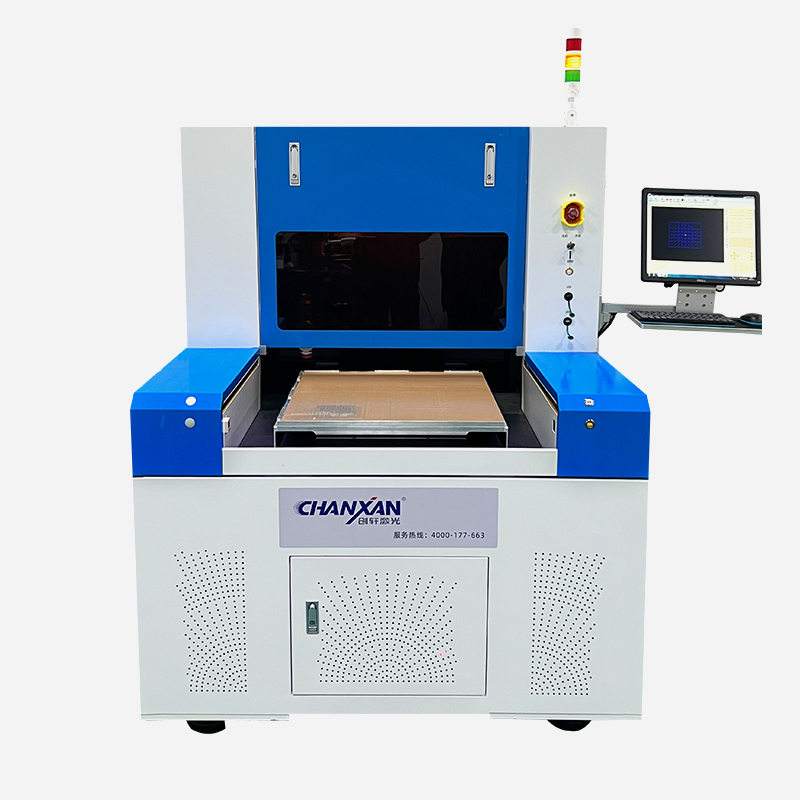
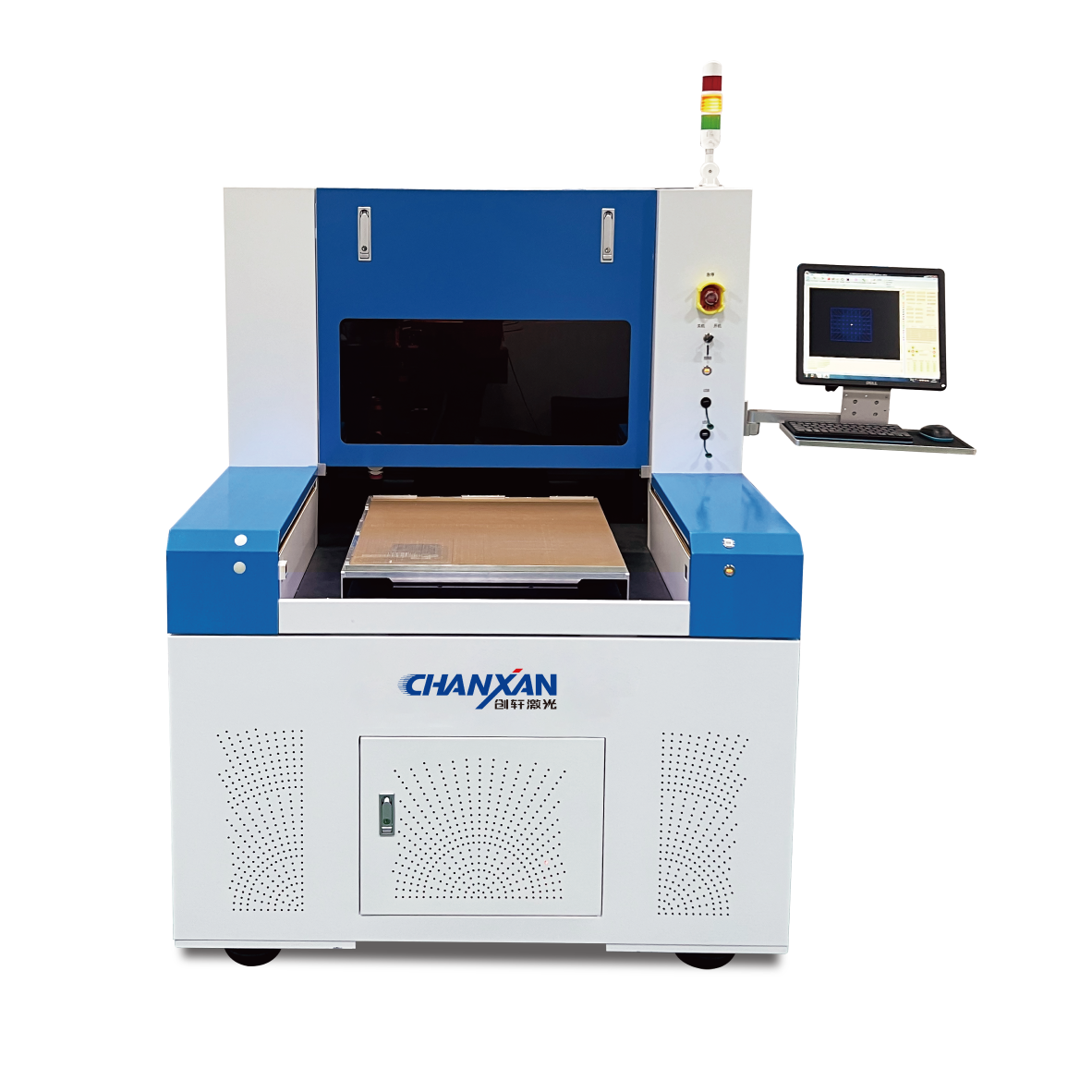
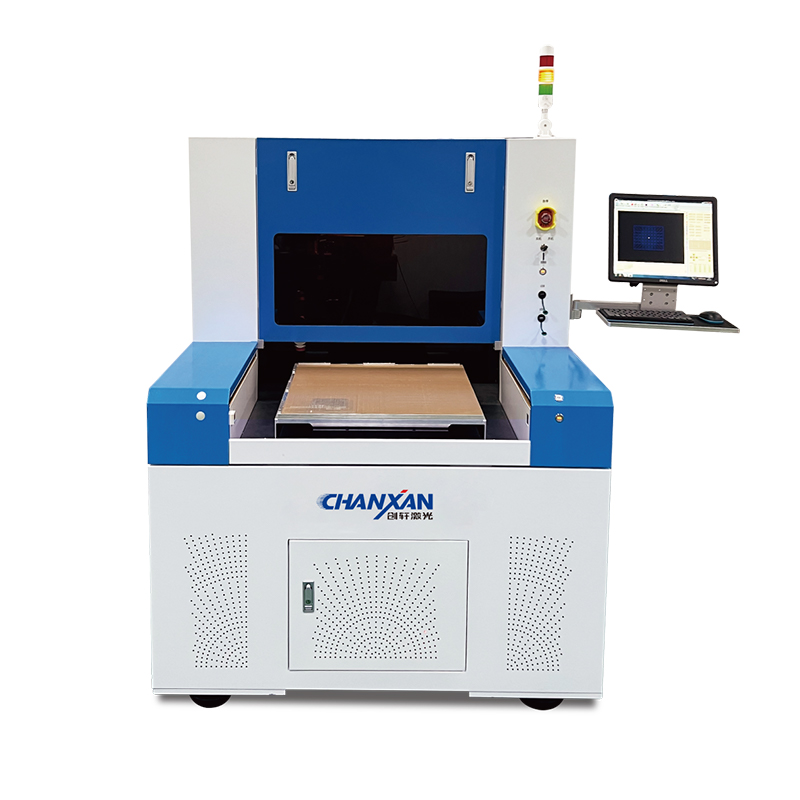
Chanxan provides high-stability PET film laser cutting systems designed for industrial flexible electronics production.
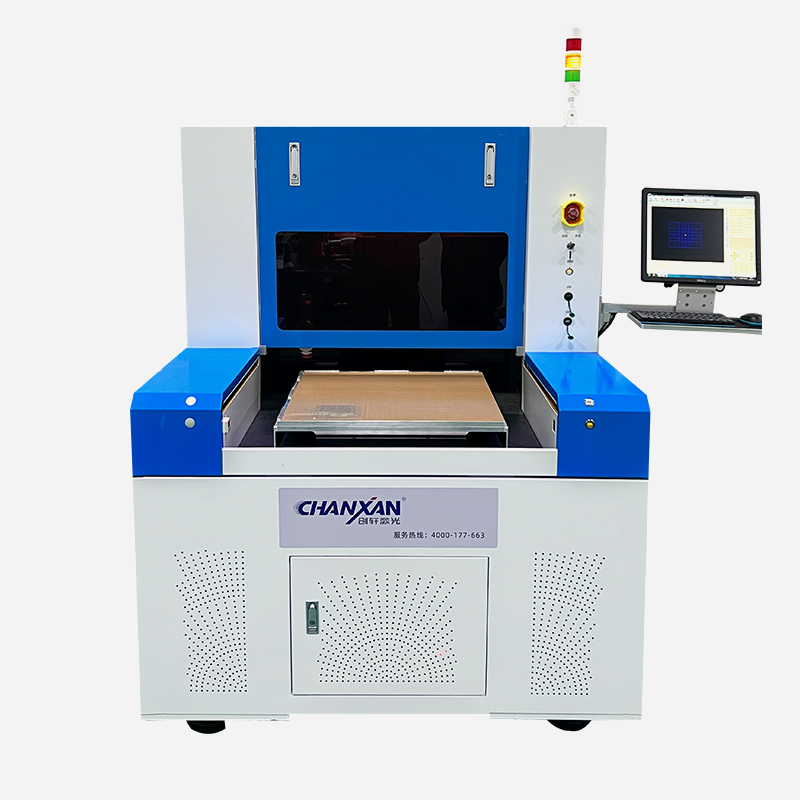
Our systems are optimized for:
PET laser cutting
Polyester laser cutting
Mylar laser cutting
Roll-to-roll flexible processing
RFID antenna profiling
Printed electronics singulation
With precise motion control, stable beam output, and optimized energy management, Chanxan laser systems help manufacturers achieve:
✔ Stable dimensional accuracy
✔ Reduced PET warping
✔ Improved flatness control
✔ High yield in flexible electronics production
For high-volume manufacturing, this ensures consistent quality across long roll-to-roll production runs.
Related reading:
Heat-Affected Zone (HAZ) Control in Flexible PCB Laser Cutting
Delamination in Polyimide Laser Cutting: Root Causes and Prevention
Carbonization in Polymer Laser Processing: Causes and Fixes
Burr Formation in Flexible PCB Laser Cutting: Causes and Solutions
| Free solution
Previous: Carbonization in Polymer Laser Processing: Causes and Prevention
Next: Delamination in Polyimide Laser Cutting: Root Causes and Prevention